
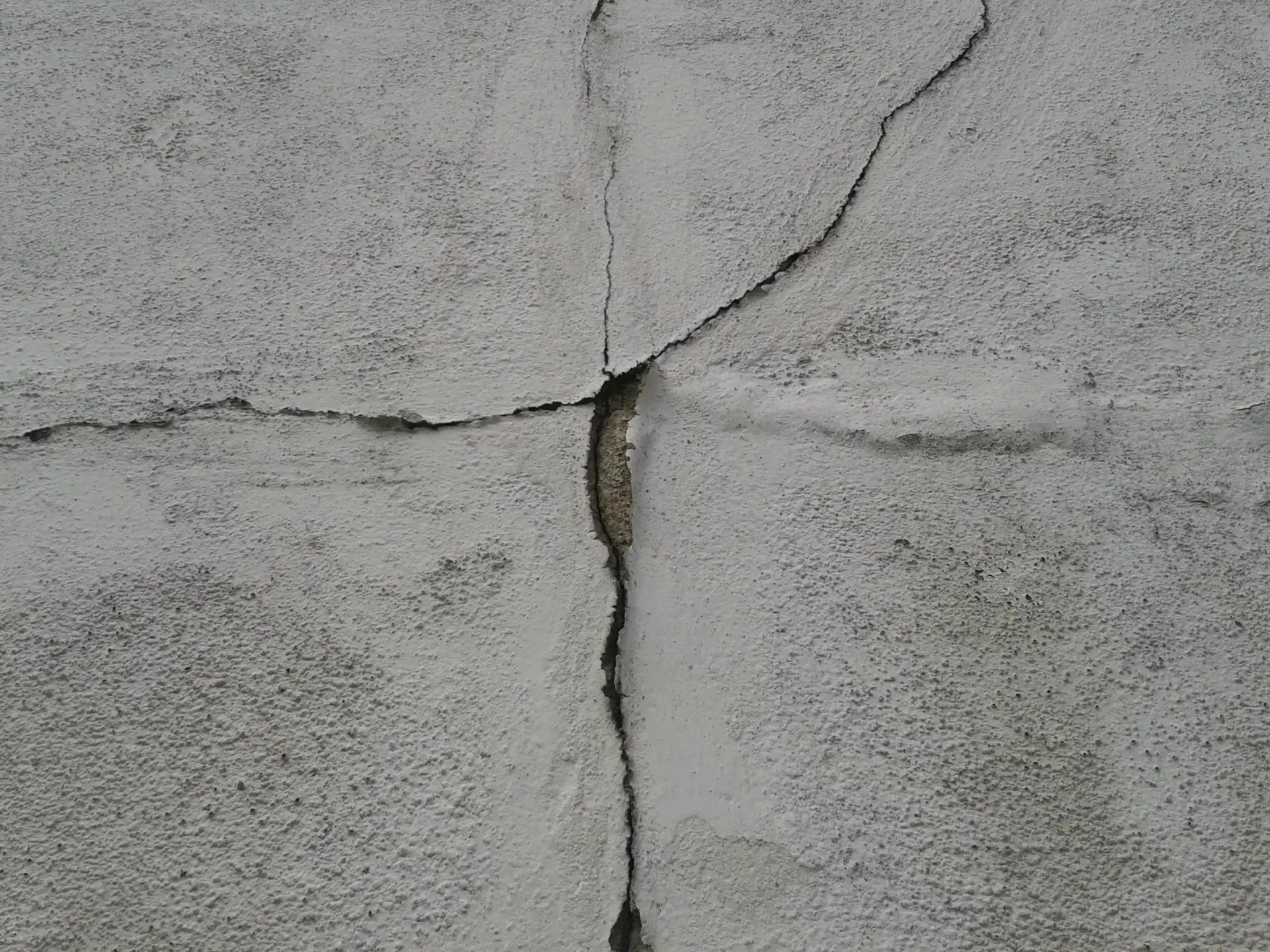
Foundation Wall Cracks: Reading What Your Basement Walls Are Telling You
Some cracks are minor settling. Others signal structural distress or active water pathways. Knowing the difference is the first step toward protecting your home.
Not sure which fix applies to your situation? Browse our full range of solutions for basement waterproofing.
[ 01 ] Watch For These Signs
Signs a Foundation Crack Needs Professional Attention Now
Horizontal Cracks in a Block or Poured Wall
Horizontal cracks at or near mid-height of a basement wall are the most serious pattern. They indicate the wall is bowing inward under lateral soil pressure. Any measurable bowing or displacement at the crack warrants immediate structural evaluation.
Cracks Wider Than One-Quarter Inch
Cracks wider than a quarter inch have moved beyond typical concrete shrinkage range and suggest active displacement. Water enters freely through gaps this wide, accelerating deterioration and allowing soil fines to wash into the basement.
Active Water Seepage Through a Crack
Any crack that shows visible seeping, dripping, or staining during or after rainfall is an active water pathway. These cracks require both waterproofing treatment and structural evaluation to determine whether the crack is growing.
Stair-Step Cracking in Multiple Courses
In concrete block foundations, cracks that follow mortar joints in a diagonal stair-step pattern across multiple courses indicate differential settlement. When this pattern appears in multiple areas of the wall, soil bearing problems beneath the footing are the likely cause.
When Middle Tennessee's red clay soil absorbs water, it expands and pushes inward against basement walls. Repeated cycles of expansion and contraction over many years create horizontal cracks, typically in the middle third of a block or poured concrete wall where the bending stress is greatest.
Poured concrete walls naturally shrink slightly as they cure. This produces thin vertical hairline cracks, often near corners or at mid-span locations. While typically not a structural concern on their own, these cracks create water pathways if the exterior waterproofing has failed.
When different sections of a foundation settle at different rates, diagonal stair-step cracks form in block walls or diagonal cracks radiate from corners of poured concrete walls. This pattern indicates the foundation is moving unevenly, often due to soil conditions or inadequate bearing beneath footings.
Middle Tennessee experiences multiple freeze-thaw cycles each winter. Water that has seeped into a crack expands approximately nine percent when it freezes, mechanically widening the crack with each cycle. Over several winters, a hairline crack can become a significant structural opening.
Large trees near the foundation draw moisture from clay soil, causing it to shrink and pull away from the wall. This differential movement can crack both the footing and the wall above it. Conversely, decaying roots leave voids in the soil that allow uneven settling.
[ 03 ] Recommended Solutions
How Ground Up fixes this
[ 04 ] Regional Context
Why Middle Tennessee foundations fail
Middle Tennessee's expansive clay soils shrink in dry summers and swell after rain, cycling significantly in volume. Davidson, Williamson, and Rutherford County homes built on this clay face ongoing movement pressure. Ground Up diagnoses and permanently stabilizes foundations across the region.
The first thing I look at when evaluating a crack is its orientation. Vertical cracks and horizontal cracks tell completely different stories. One is usually a waterproofing issue; the other is a structural one. Getting that diagnosis right determines everything about how we proceed.
[ 05 ] Why Ground Up
The difference is in the diagnosis
Get several quotes and you'll see a wide range of prices. The gap isn't luck. It's whether the contractor finds the actual cause and stands behind the work.
- In-house certified crews: we never subcontract your repair
- Optional independent third-party engineer review on larger jobs
- Honest three-tier triage: we tell you what can wait, in writing
- Family owned from the same Shelbyville Highway address since 2009
[ 06 ] FAQ
Foundation Wall Cracks questions
Thin vertical hairline cracks under one-eighth of an inch wide are usually normal concrete shrinkage and are primarily a waterproofing concern. Horizontal cracks of any width, diagonal cracks wider than one-quarter inch, and any crack with measurable wall displacement are serious structural concerns. When in doubt, have a foundation professional evaluate the crack rather than assuming it is cosmetic.
Hydraulic cement and polyurethane caulk are sold for DIY crack sealing and can temporarily reduce water entry through hairline cracks. However, they do not address the cause of the crack or stop it from widening. Professional polyurethane or epoxy injection properly fills the crack through its full depth and thickness, providing a waterproof, flexible seal that accommodates minor future movement.
The rate depends on the cause. Shrinkage cracks may remain stable for decades. Cracks caused by hydrostatic pressure, the force of water-saturated soil pressing against the wall, or differential settlement can widen meaningfully within a single wet season if the underlying soil condition is not addressed. We recommend monitoring new cracks by marking the ends with a pencil line and date, then checking for extension monthly.
Yes, and significantly so in many cases. Structural cracks disclosed during a sale typically trigger buyer requests for professional evaluation and repair. Waterproofing and crack repair completed before listing, with documentation and a written warranty, typically recover much of their cost at closing and prevent deals from falling through during inspection.
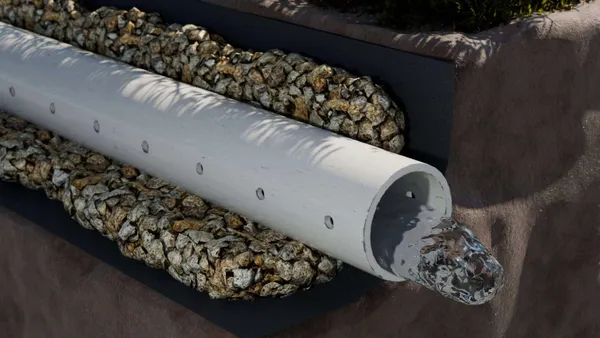
Interior crack injection with polyurethane foam is the most common and least invasive approach for active water entry through poured concrete walls. It seals the crack from the inside without excavation. Exterior excavation and membrane repair addresses the source but involves significant cost and disruption. The appropriate method depends on the crack type, severity, and whether structural repair is also needed.

Free guide
Get the free dry basement guide
- Where basement water comes from in Middle Tennessee
- A checklist of signs to look for
- How a drain and sump pump system works
Your guide is on its way.
Check your inbox for an email from Ground Up Foundation Repair. If it is not there in a few minutes, check your spam or promotions folder.
More Problem Signs
Other signs to watch for
Basement Flooding
Basement flooding is one of the most alarming and costly water damage events a Middle Tennessee homeowner can face. Whether water is pooling across the entire floor or entering in a concentrated area near a wall or floor joint, flooding indicates that more water is entering the space than any existing drainage can handle. Nashville and surrounding Middle Tennessee communities average over 50 inches of rain annually, with heavy storm events common from March through November. Clay-dense soils in Rutherford, Williamson, and Davidson counties become saturated quickly during intense rain, driving hydrostatic pressure, the force that saturated soil exerts against a foundation wall, and forcing water through every available entry point. Without an interior drainage system and sump pump sized for the water volume your basement receives, flooding is the result.
Basement Water Intrusion
Basement water intrusion occurs when groundwater, surface runoff, or hydrostatic pressure, the force saturated soil exerts against a foundation, forces moisture through foundation walls, floor joints, or cracks. Middle Tennessee homeowners face this problem at higher-than-average rates because of the region's heavy annual rainfall (averaging 47 inches per year), its dense red clay soil that holds moisture rather than draining it, and the natural topography that funnels water toward residential foundations. Water intrusion can appear as a slow seep along a wall joint, puddles on the floor after heavy rain, or a chronic dampness that never fully dries between storms. Left unaddressed, it accelerates concrete deterioration, supports mold colonies, and undermines the structural integrity of the foundation itself.
Condensation on Basement Windows
Condensation on basement windows appears as water droplets or streaks on the glass surface, most commonly during summer months when outdoor air is warm and humid. The window glass stays cooler than the surrounding air because the basement itself is cooler than grade-level spaces. When warm, moisture-laden air contacts that cool glass surface, water vapor drops below its dew point and condenses into liquid. In Middle Tennessee, where summer relative humidity routinely exceeds 80 percent and outdoor temperatures climb above 90°F from June through September, basement window condensation is a reliable seasonal indicator that basement humidity is elevated. While condensation on the glass itself is a surface phenomenon, it reflects a broader moisture environment that also saturates wall materials, wood framing, stored items, and insulation. Persistent condensation indicates that the basement is not adequately sealed or dehumidified and that conditions favorable to mold growth exist throughout the space.
Efflorescence on Basement Walls
Efflorescence is the white or grayish chalky crust that forms on masonry surfaces when water carries dissolved minerals through concrete, block, or brick and deposits them on the surface as it evaporates. It looks like salt, chalk, or a powdery coating and often appears on basement walls, foundation blocks, and concrete floors near walls. While efflorescence itself is not structurally damaging, it is an unmistakable indicator of water movement through the masonry, which is the real concern.
Mold Growth in the Basement
Basement mold growth appears in several forms depending on the moisture source and affected material. Black, green, gray, or white fuzzy patches on concrete block, drywall, wood framing, insulation, or stored cardboard are the most visible signs. Dark staining on wood floor joists and the bottom chord of framing in the floor assembly above the basement is common in spaces with chronically elevated humidity. A musty, earthy odor throughout the basement and often migrating into the home's main living areas is the olfactory signature of active mold colonies producing microbial volatile organic compounds. In Middle Tennessee, where basement relative humidity during summer months frequently reaches 75 to 90 percent in unprotected spaces, mold growth is an expected consequence of inadequate waterproofing rather than an anomaly. Mold requires both moisture and an organic material to colonize, concrete alone does not support mold, but wood framing, drywall paper, cardboard, and fabric storage items provide the organic substrate. Any basement with elevated moisture will eventually develop mold colonies on these materials. Remediation of existing mold followed by elimination of the moisture source is the only path to a permanently mold-free basement.
Musty Odors in the Basement
A musty or earthy smell in the basement is one of the clearest indicators that moisture levels are elevated and mold has established. Unlike odors from products or furnishings, musty basement smells are persistent, worsen after rain or in humid weather, and do not respond to ventilation or air fresheners because the source, damp surfaces and mold growth, is continuously generating the odor compounds. In finished or semi-finished basements, the odor often penetrates walls and flooring and affects upper living areas.
Seeing these signs in your home?
We'll find the cause and tell you honestly what it needs, free.