
Sump Pump Installation: Your Basement's Last Line of Defense Against Flooding
A high-quality sump pump with battery backup keeps your basement dry even when Middle Tennessee storms knock out the power.
On cost: $800 to $2,500 for primary pump installation; $1,500 to $3,500 with battery backup system
Overview
Sump Pump Installation
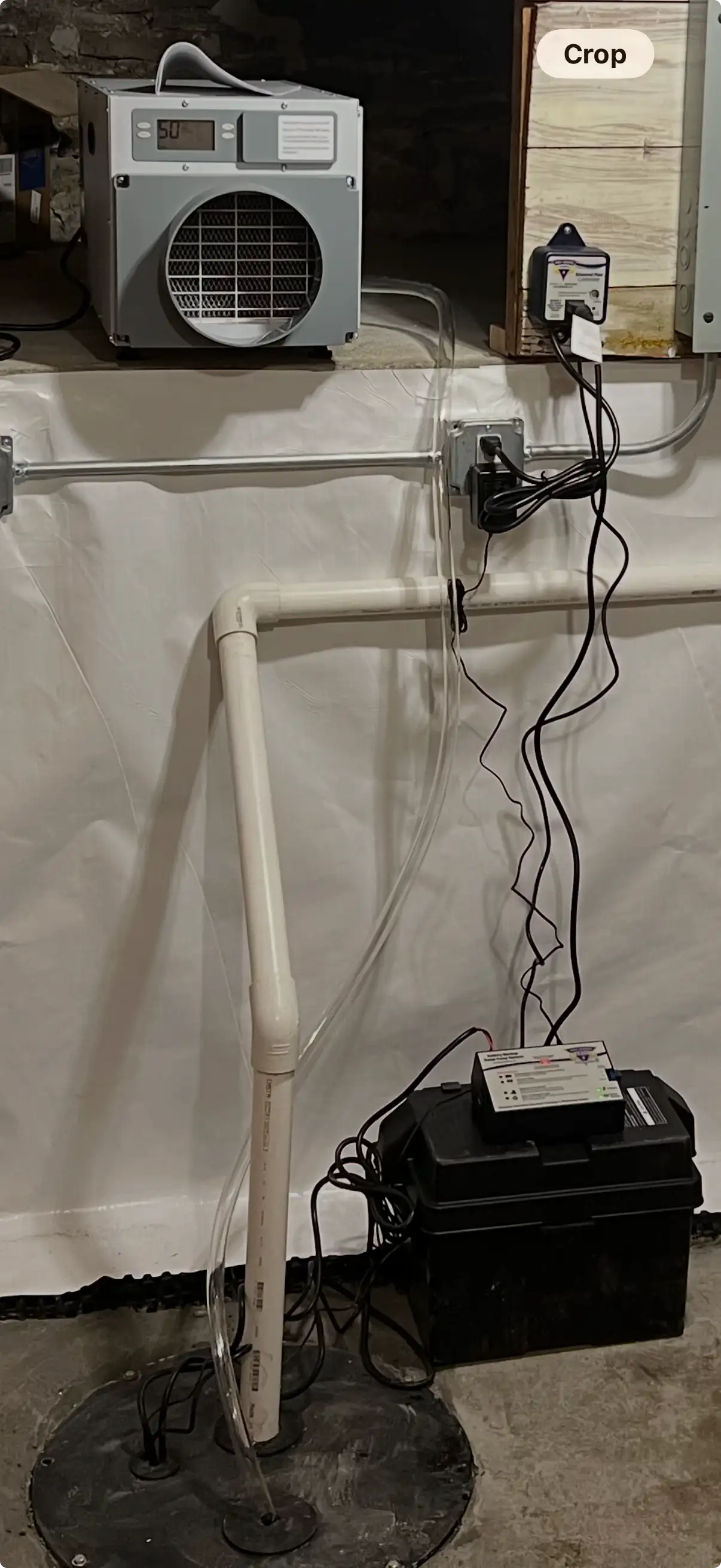
A sump pump is the active component at the heart of any basement waterproofing system. While drainage channels and vapor barriers are passive systems that move and manage water, the sump pump is what actually removes water from the structure and discharges it safely away from the home. Ground Up Foundation Repair installs properly sized primary and backup sump pump systems matched to the specific water volume and conditions of each basement. In Middle Tennessee, where spring storms regularly produce inches of rain in short periods and power outages are common during severe weather, a battery backup sump pump is not an optional upgrade but a critical component of any complete waterproofing solution. Without backup protection, a primary pump failure during a storm can result in thousands of dollars of flooding damage in a matter of hours.
A sump pump is installed in a pit (sump basin) set into the lowest point of the basement floor. Water collected by perimeter drainage channels or arriving naturally through the floor and walls flows into this basin. A float switch detects when the water level in the basin rises to a set point and automatically activates the pump motor. The pump draws water from the basin and forces it through a discharge pipe that exits the foundation and routes to an appropriate outdoor discharge point (typically at least 10 feet from the foundation). When the basin empties to the pump's off setpoint, the float switch deactivates the motor. The entire cycle repeats automatically as needed. A battery backup pump operates on the same principle using a 12-volt battery-powered motor that activates either when the primary pump fails or when the basin fills faster than the primary can empty it.
Wondering if this is the right fix for what you are seeing? Learn more about the warning signs: Basement Flooding and Wet Basement Floors and Basement Water Intrusion . Or browse the full Problem Signs library for basement waterproofing.
Installation Process
How we install sump pump installation
Site Assessment and Sump Location Selection
The lowest point in the basement, typically where water naturally collects, is identified as the sump basin location. Soil type, depth to footing, and proximity to the drainage channel route are all considered in selecting the optimal location. Discharge routing is planned to ensure water is expelled at least 10 feet from the foundation and directed away from the home.
Sump Basin Excavation and Installation
A pit is excavated to the appropriate depth and diameter for the selected basin. The basin (typically 18 to 24 inches in diameter and 24 to 30 inches deep) is set in place and surrounded with clean gravel to promote water inflow through perforations. The top of the basin is set flush with or slightly below the finished floor level.
Primary Pump Selection and Installation
A primary pump is selected based on the expected water volume, head pressure (vertical lift plus discharge line length), and basin diameter. Residential systems in Middle Tennessee typically require a pump rated between 1/3 and 3/4 horsepower. The pump is installed in the basin with its float switch set to activate at the appropriate water level, and it is connected to the discharge line.
Discharge Line Routing
The discharge pipe is routed from the pump through the foundation wall or up and out through the floor above, exiting to an appropriate outdoor discharge location. The pipe includes a check valve to prevent discharged water from flowing back into the basin when the pump shuts off. The outdoor discharge end is fitted with a screen to prevent pest intrusion.
Battery Backup System Installation
A battery backup pump is installed in the same basin alongside the primary, set to activate at a water level slightly above the primary pump's on-level. The backup pump connects to its own discharge line (which can share the primary discharge through a check-valve manifold). The backup battery system is connected to a standard outlet for trickle charging and includes an alarm that sounds if the primary pump fails or backup activates.
System Testing and Homeowner Walkthrough
Both pumps are tested by filling the basin with water to verify activation, pumping, and shutoff at correct levels. Discharge flow is verified at the exterior outlet. The homeowner receives a complete walkthrough of system operation, maintenance schedule, alarm meanings, and warranty documentation.
A sump pump is the workhorse of a basement waterproofing system. We put as much thought into sizing and positioning the pump as any other component, because an undersized or improperly placed pump is going to fail the homeowner at the worst possible moment.
Why Ground Up
The difference is in the diagnosis
Get several quotes and you'll see a wide range of prices. The gap isn't luck. It's whether the contractor finds the actual cause and stands behind the work.
- In-house certified crews: we never subcontract your repair
- Optional independent third-party engineer review on larger jobs
- Honest three-tier triage: we tell you what can wait, in writing
- Family owned from the same Shelbyville Highway address since 2009
FAQ
Sump Pump Installation questions
A quality primary sump pump motor typically lasts 7 to 10 years with normal use. Pumps in high-water-table areas that cycle frequently may reach the end of their service life sooner. We recommend annual testing and preventive replacement at the 7 to 10 year mark rather than waiting for failure, since pump failure during a storm is when it causes the most damage.
Ground Up repairs and replaces existing sump pumps. We check the pump first to see whether a quick repair is enough or whether the pump should be replaced.
In Middle Tennessee, yes. The storms that generate the most water also most frequently knock out power. The primary pump is useless without electricity. A battery backup provides 5 to 8 hours of pumping capacity on a single charge, which is enough to get through most power outage events during storms. We consider battery backup an essential component of any complete waterproofing installation.
Discharge should exit at least 10 feet from the foundation, sloped away from the home, and directed toward a natural drainage course, dry well, or municipal storm drain where permitted. Discharging too close to the foundation recycles the water back through the soil toward the basement, undermining the purpose of the system entirely.
Basic sump pump replacement is within the capability of a skilled DIYer if a basin already exists. However, excavating a new basin, routing a discharge line through the foundation, and ensuring proper check valve installation are tasks best handled by a professional. Improper installation can result in pump failure, back-flooding, or voided equipment warranties.
Most Middle Tennessee homes require a 1/3 to 1/2 horsepower pump for typical conditions. Homes in low-lying areas, those with large drainage system catchment areas, or properties near creek flood plains may need a 3/4 HP or larger pump, or a dual primary pump configuration. We calculate the required capacity based on observed inflow rates and drainage system dimensions during our assessment.

Free guide
Get the free dry basement guide
- Where basement water comes from in Middle Tennessee
- A checklist of signs to look for
- How a drain and sump pump system works
Your guide is on its way.
Check your inbox for an email from Ground Up Foundation Repair. If it is not there in a few minutes, check your spam or promotions folder.
More Solutions
Other solutions we offer
Downspout Extensions
Your gutters collect a surprising amount of water during a Middle Tennessee rainstorm, a typical roof can shed hundreds of gallons per inch of rainfall. When downspouts discharge that volume at the base of your foundation, the surrounding soil becomes saturated quickly, creating the hydrostatic pressure, the force that saturated soil places against your basement wall, that drives basement moisture and flooding. Ground Up Foundation Repair installs downspout extensions, including surface extensions, flexible rollout models, and underground piped discharge systems, to move roof runoff well away from your structure before it can become a basement problem.
Exterior Waterproofing Membranes
Exterior waterproofing membranes are applied directly to the outer face of the foundation wall after excavation exposes the wall from footing to grade. The membrane forms a continuous moisture barrier across the entire exterior wall surface, sealing cracks and preventing water under hydrostatic pressure, the force that saturated soil exerts as it presses against the wall from outside, from migrating through the concrete. When combined with a foundation drainage board and footing-level drain tile, exterior waterproofing provides the most complete protection available for a basement. Ground Up Foundation Repair installs exterior waterproofing as a standalone system and as part of combined interior-exterior waterproofing packages for severe water intrusion situations.
French Drain Installation
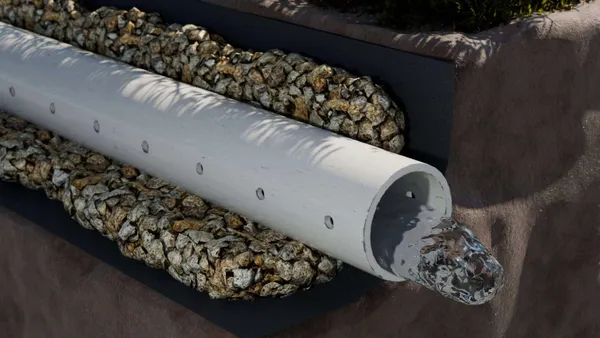
French drains are subsurface drainage systems that intercept and redirect groundwater, surface runoff, and laterally migrating soil moisture away from a foundation or problem area. A trench filled with clean stone and a perforated drain pipe captures water moving through the soil and carries it by gravity to a safe discharge point. Ground Up Foundation Repair installs French drains as perimeter foundation drains, yard drainage solutions, and hillside intercept drains for Middle Tennessee properties where groundwater movement or surface drainage is contributing to basement moisture, yard flooding, or saturated soil conditions.
Grading & Yard Sloping
The ground immediately surrounding your home should slope away from the foundation at a minimum grade of 6 inches over the first 10 feet. When that slope is flat, reversed, or has settled unevenly over time, rainwater and snowmelt drain toward your basement instead of away from it. Ground Up Foundation Repair corrects improper yard grading across Middle Tennessee by adding and reshaping soil to establish the right slope profile, one of the least invasive steps a homeowner can take to prevent basement moisture problems.
Interior Drainage Systems
An interior basement drainage system is the most reliable long-term solution for chronic basement water intrusion in Middle Tennessee homes. Rather than attempting to stop water at the exterior, an interior system accepts that some water will reach the foundation and channels it away harmlessly before it can cause damage. Ground Up Foundation Repair installs complete interior drainage systems including perimeter channels, sump basins, and primary and battery backup pumps sized to handle the water volumes common during Middle Tennessee storm events.
Vapor Barriers
Basement vapor barriers are heavy-duty polyethylene or reinforced sheeting systems installed on foundation walls and floors to prevent moisture vapor from migrating through concrete into the living space. In Middle Tennessee's humid climate, unsaturated concrete walls and floors can transmit significant moisture even when no active seepage is present, enough to sustain mold growth, warp wood, and keep relative humidity at damaging levels. Ground Up Foundation Repair installs vapor barriers as standalone moisture control systems or as part of a complete interior drainage and waterproofing package.
Found a problem? Get a straight answer
Free inspection, written estimate, honest triage. No pressure.