
Wet Basement Floors: Finding the Source Before the Damage Spreads
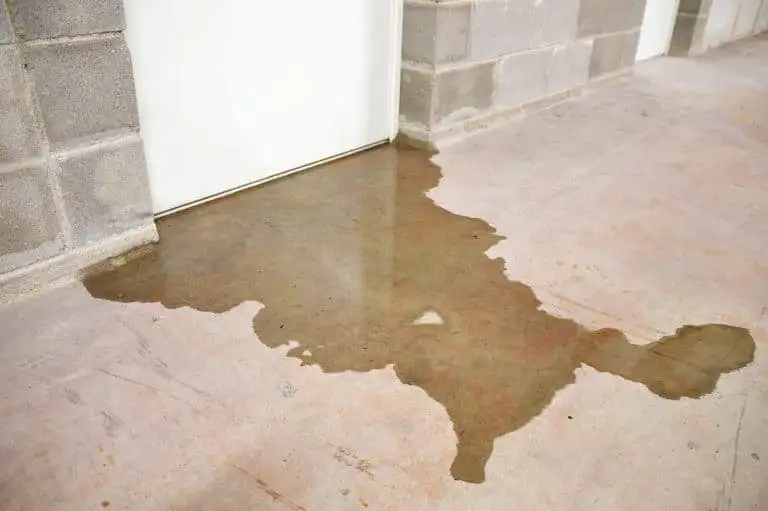
Water appearing on a concrete basement floor is not random. It follows a predictable path from outside the home to inside, and that path can be sealed.
Not sure which fix applies to your situation? Browse our full range of solutions for basement waterproofing.
[ 01 ] Watch For These Signs
Signs Your Wet Floor Problem Is Getting Worse
Pooling Water After Every Rain Event
If water appears on the floor predictably within hours of rainfall, the entry point has a direct hydraulic connection to exterior water. This pattern indicates the problem will worsen as the exterior soil continues to settle and drainage conditions change over time.
Rust Stains on the Slab or Stored Items
Iron-bearing minerals in seeping water deposit rust-colored stains on concrete surfaces and on anything stored directly on the floor. Rust rings from metal containers or furniture legs are reliable evidence of chronic floor moisture even during dry periods when the floor appears dry.
Soft or Deteriorating Concrete Surface
Repeated moisture cycling causes concrete to spall and pit at the surface. If the floor feels sandy underfoot or shows flaking and surface deterioration, years of moisture exposure have weakened the top layer of the slab, which makes future waterproofing work more complex.
Failed Flooring Materials
Carpet that smells persistently musty, tile adhesive that has released, laminate flooring with edge swelling and buckling, or wood flooring that has cupped all indicate the flooring system has been exposed to chronic moisture from below. Replacing flooring without fixing the moisture source leads to repeated failures.
When the water table rises after heavy rainfall, water under pressure seeks the path of least resistance. Thin spots, aggregate voids, or hairline cracks in the basement slab provide pathways for this water to weep upward onto the floor surface. This is especially common during the wet spring season in Middle Tennessee.
The joint where the basement floor slab meets the foundation wall is called the cove joint. This is a cold joint, meaning it is where two separately poured concrete sections meet, and it is rarely fully sealed. Water under hydrostatic pressure finds this joint and seeps along the wall-floor perimeter, often producing a ring of moisture around the room.
Settling, shrinkage, and soil movement create cracks in basement floor slabs over time. These cracks become direct water entry points during high water table periods. Water entering through floor cracks is often cleaner than wall seepage, making it harder to detect until it has already pooled significantly.
During summer months, warm humid air entering an uninsulated basement contacts the cold concrete slab and condenses, depositing moisture directly on the floor surface. This moisture looks like seepage from below but originates from above. It typically worsens when basement doors or windows are opened during humid weather.
[ 03 ] Recommended Solutions
How Ground Up fixes this
[ 04 ] Regional Context
Why Middle Tennessee foundations fail
Middle Tennessee's expansive clay soils shrink in dry summers and swell after rain, cycling significantly in volume. Davidson, Williamson, and Rutherford County homes built on this clay face ongoing movement pressure. Ground Up diagnoses and permanently stabilizes foundations across the region.
A wet floor is almost always a pressure problem. The water table rises after our heavy spring rains and pushes upward through any weakness in the slab. The goal of the fix is to give that water a controlled path out of the structure before it reaches the floor surface.
[ 05 ] Why Ground Up
The difference is in the diagnosis
Get several quotes and you'll see a wide range of prices. The gap isn't luck. It's whether the contractor finds the actual cause and stands behind the work.
- In-house certified crews: we never subcontract your repair
- Optional independent third-party engineer review on larger jobs
- Honest three-tier triage: we tell you what can wait, in writing
- Family owned from the same Shelbyville Highway address since 2009
[ 06 ] FAQ
Wet Basement Floors questions
Spring is when Middle Tennessee receives its heaviest and most sustained rainfall, and when snowmelt from any winter accumulation adds to soil saturation. The water table rises closest to the surface during this period, creating the most hydrostatic pressure beneath your slab. A wet floor only in spring still signals a real drainage or waterproofing deficiency that will worsen if not addressed.
The moisture itself poses risks to anything stored on the floor and to any flooring materials installed over the slab. More significantly, chronic slab moisture creates the humidity conditions that support mold growth in wall cavities, insulation, and stored organic materials. Over many years it can also weaken the concrete slab and allow soil fines to wash out from beneath it.
Installing flooring over an unresolved moisture problem is not recommended. Carpet, wood, and laminate flooring trap moisture beneath them, accelerating mold growth and deteriorating the flooring system within one to three years. Ceramic or porcelain tile set in appropriate adhesive is more tolerant but not immune. Address the moisture source first, then install appropriate flooring.
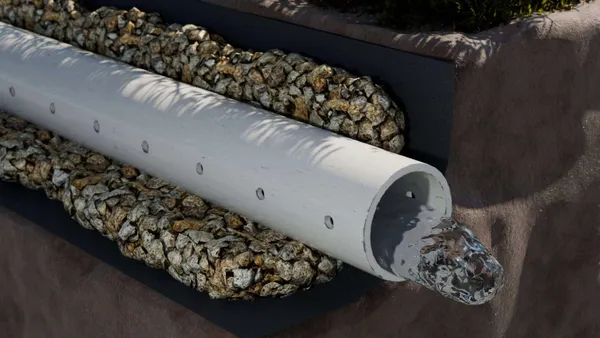
The most effective and lasting solution for floor moisture in Middle Tennessee is an interior drainage channel system installed around the perimeter at the cove joint level. This system collects water before it reaches the floor surface and channels it to a sump pump, which removes it from the structure. This approach works regardless of water table depth and handles cove joint seepage, floor crack entry, and wall seepage simultaneously.
An exterior French drain installed at the footing level intercepts groundwater before it reaches the foundation, reducing hydrostatic pressure beneath the slab. It is particularly effective when combined with grading corrections that redirect surface water away from the home. For many Middle Tennessee properties, a combination of exterior French drain and interior drainage system provides the most comprehensive protection.

Free guide
Get the free dry basement guide
- Where basement water comes from in Middle Tennessee
- A checklist of signs to look for
- How a drain and sump pump system works
Your guide is on its way.
Check your inbox for an email from Ground Up Foundation Repair. If it is not there in a few minutes, check your spam or promotions folder.
More Problem Signs
Other signs to watch for
Basement Flooding
Basement flooding is one of the most alarming and costly water damage events a Middle Tennessee homeowner can face. Whether water is pooling across the entire floor or entering in a concentrated area near a wall or floor joint, flooding indicates that more water is entering the space than any existing drainage can handle. Nashville and surrounding Middle Tennessee communities average over 50 inches of rain annually, with heavy storm events common from March through November. Clay-dense soils in Rutherford, Williamson, and Davidson counties become saturated quickly during intense rain, driving hydrostatic pressure, the force that saturated soil exerts against a foundation wall, and forcing water through every available entry point. Without an interior drainage system and sump pump sized for the water volume your basement receives, flooding is the result.
Basement Water Intrusion
Basement water intrusion occurs when groundwater, surface runoff, or hydrostatic pressure, the force saturated soil exerts against a foundation, forces moisture through foundation walls, floor joints, or cracks. Middle Tennessee homeowners face this problem at higher-than-average rates because of the region's heavy annual rainfall (averaging 47 inches per year), its dense red clay soil that holds moisture rather than draining it, and the natural topography that funnels water toward residential foundations. Water intrusion can appear as a slow seep along a wall joint, puddles on the floor after heavy rain, or a chronic dampness that never fully dries between storms. Left unaddressed, it accelerates concrete deterioration, supports mold colonies, and undermines the structural integrity of the foundation itself.
Condensation on Basement Windows
Condensation on basement windows appears as water droplets or streaks on the glass surface, most commonly during summer months when outdoor air is warm and humid. The window glass stays cooler than the surrounding air because the basement itself is cooler than grade-level spaces. When warm, moisture-laden air contacts that cool glass surface, water vapor drops below its dew point and condenses into liquid. In Middle Tennessee, where summer relative humidity routinely exceeds 80 percent and outdoor temperatures climb above 90°F from June through September, basement window condensation is a reliable seasonal indicator that basement humidity is elevated. While condensation on the glass itself is a surface phenomenon, it reflects a broader moisture environment that also saturates wall materials, wood framing, stored items, and insulation. Persistent condensation indicates that the basement is not adequately sealed or dehumidified and that conditions favorable to mold growth exist throughout the space.
Efflorescence on Basement Walls
Efflorescence is the white or grayish chalky crust that forms on masonry surfaces when water carries dissolved minerals through concrete, block, or brick and deposits them on the surface as it evaporates. It looks like salt, chalk, or a powdery coating and often appears on basement walls, foundation blocks, and concrete floors near walls. While efflorescence itself is not structurally damaging, it is an unmistakable indicator of water movement through the masonry, which is the real concern.
Mold Growth in the Basement
Basement mold growth appears in several forms depending on the moisture source and affected material. Black, green, gray, or white fuzzy patches on concrete block, drywall, wood framing, insulation, or stored cardboard are the most visible signs. Dark staining on wood floor joists and the bottom chord of framing in the floor assembly above the basement is common in spaces with chronically elevated humidity. A musty, earthy odor throughout the basement and often migrating into the home's main living areas is the olfactory signature of active mold colonies producing microbial volatile organic compounds. In Middle Tennessee, where basement relative humidity during summer months frequently reaches 75 to 90 percent in unprotected spaces, mold growth is an expected consequence of inadequate waterproofing rather than an anomaly. Mold requires both moisture and an organic material to colonize, concrete alone does not support mold, but wood framing, drywall paper, cardboard, and fabric storage items provide the organic substrate. Any basement with elevated moisture will eventually develop mold colonies on these materials. Remediation of existing mold followed by elimination of the moisture source is the only path to a permanently mold-free basement.
Musty Odors in the Basement
A musty or earthy smell in the basement is one of the clearest indicators that moisture levels are elevated and mold has established. Unlike odors from products or furnishings, musty basement smells are persistent, worsen after rain or in humid weather, and do not respond to ventilation or air fresheners because the source, damp surfaces and mold growth, is continuously generating the odor compounds. In finished or semi-finished basements, the odor often penetrates walls and flooring and affects upper living areas.
Seeing these signs in your home?
We'll find the cause and tell you honestly what it needs, free.