
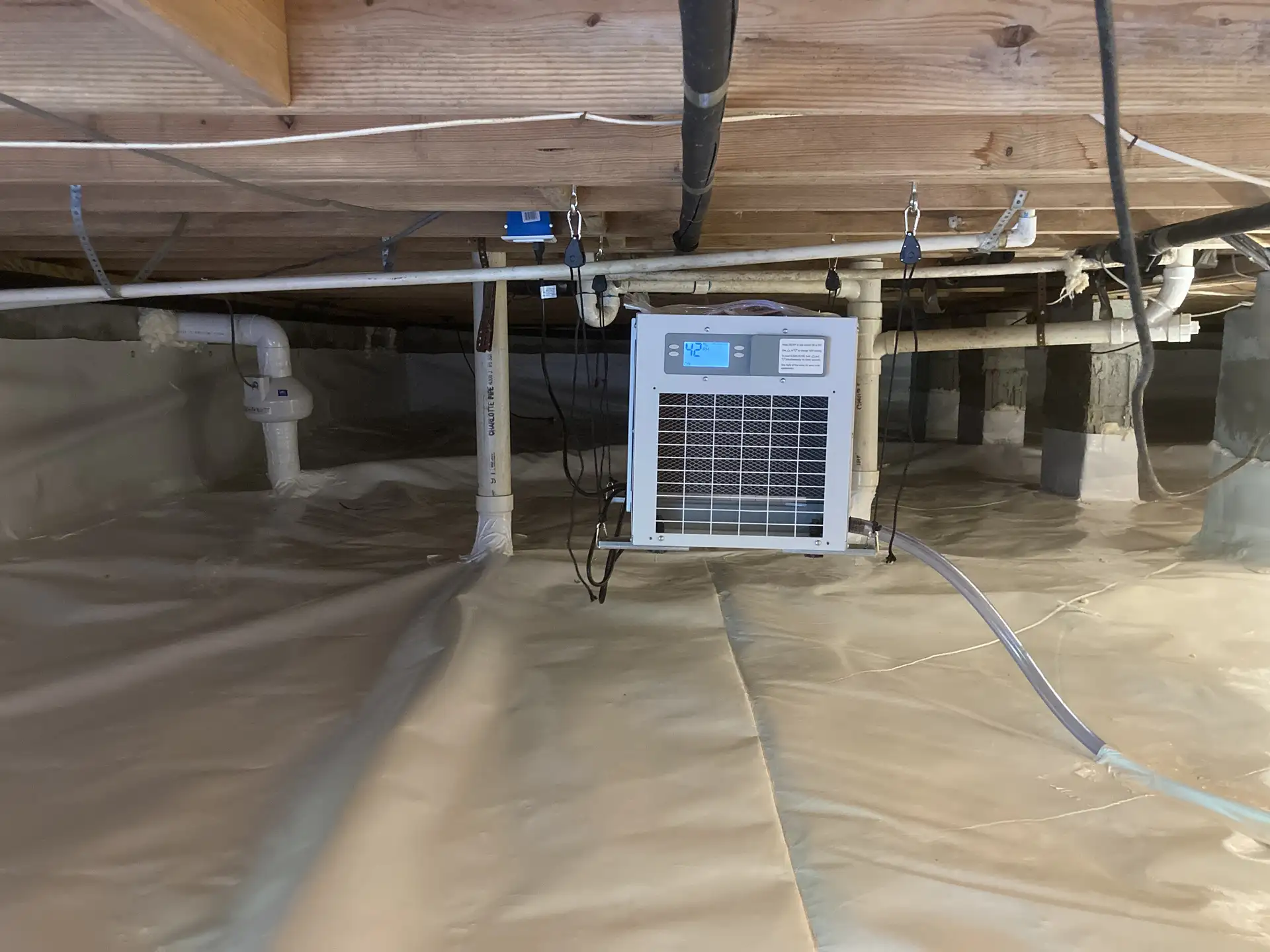
A Crawl Space Dehumidifier Maintains the Dry Environment Your Encapsulation Creates
After the vapor barrier seals ground moisture and the vents are closed, a properly sized dehumidifier maintains target humidity levels automatically, protecting framing, insulation, and air quality year-round.
On cost: $1,200 to $2,500 installed, depending on unit capacity and drain line routing requirements.
Overview
Crawl Space Dehumidifiers
A vapor barrier and sealed foundation vents dramatically reduce crawl space moisture, but they do not eliminate it entirely. Residual moisture vapor, infiltration through minor gaps, and humidity that enters during crawl space access all need to be managed. A commercial-grade crawl space dehumidifier handles this ongoing load automatically, maintaining relative humidity below 60 percent, the threshold above which mold growth and wood decay accelerate, without manual intervention. It is the active component that keeps a complete encapsulation system performing year-round.
A crawl space dehumidifier draws air across refrigerated coils, condensing moisture from the air into liquid water that drains continuously through a gravity drain line or condensate pump to the exterior. The unit cycles on and off based on a built-in humidistat, activating when humidity rises above the set point and shutting off when the target is reached. Commercial-grade units designed for crawl spaces are more durable than household units, tolerate the temperature range of the crawl space environment, and have higher moisture removal capacity per energy unit. They require minimal maintenance, typically an annual coil cleaning and filter check.
Wondering if this is the right fix for what you are seeing? Learn more about the warning signs: Musty Odors in the Home from the Crawl Space . Or browse the full Problem Signs library for crawl space repair.
Installation Process
How we install crawl space dehumidifiers
Load Calculation and Unit Sizing
We calculate the appropriate dehumidifier capacity based on crawl space square footage, ceiling height, vapor barrier status, climate zone, and any remaining moisture sources. Undersized units run continuously without reaching target humidity; oversized units cycle too infrequently. Correct sizing is essential.
Location Selection
The dehumidifier is positioned for optimal air circulation, typically near the center of the crawl space or in a location where the unit's intake and discharge can reach all areas. Placement near the vapor barrier and away from foundation wall drainage entry points is preferred.
Electrical Connection
Commercial crawl space dehumidifiers require a dedicated 15 or 20-amp circuit. The circuit is run to the unit location and connected to a weatherproof outlet or direct wired depending on the unit specifications.
Drain Line Installation
A condensate drain line is routed from the dehumidifier to an exterior daylight point, sump basin, or floor drain. Gravity drainage is preferred when grade allows; a condensate pump is added when gravity drainage is not possible.
Commissioning and Set Point Configuration
The unit is powered on, the humidistat is set to the target relative humidity (typically 50 to 55 percent), and operation is verified. We confirm the drain line is flowing correctly and that the unit is cycling as expected under current conditions.
The dehumidifier is what keeps the system honest. The barrier stops the ground moisture. The dehumidifier handles everything else, the air that gets in, the seasonal humidity. Together they keep the crawl space below the threshold where mold and rot happen.
Why Ground Up
The difference is in the diagnosis
Get several quotes and you'll see a wide range of prices. The gap isn't luck. It's whether the contractor finds the actual cause and stands behind the work.
- In-house certified crews: we never subcontract your repair
- Optional independent third-party engineer review on larger jobs
- Honest three-tier triage: we tell you what can wait, in writing
- Family owned from the same Shelbyville Highway address since 2009
FAQ
Crawl Space Dehumidifiers questions
Household dehumidifiers are not designed for crawl space conditions. They are not rated for the lower temperatures typical of crawl spaces in winter, do not have continuous drain capability, require frequent bucket emptying, and are not built for the humidity loads and temperature ranges of a below-grade space. Commercial crawl space dehumidifiers are purpose-built for this environment and have significantly longer service lives when used as intended.
Commercial crawl space dehumidifiers typically draw 7 to 8 amps and use 700 to 800 watts when running. At typical run times in a properly encapsulated crawl space, the annual operating cost is generally $150 to $300 per year depending on local electricity rates and how much humidity load the crawl space receives. Energy Star-rated units are available and offer improved efficiency.
Most commercial crawl space dehumidifiers require annual maintenance: cleaning the evaporator and condenser coils, checking and cleaning the air filter, confirming the drain line is clear, and verifying the humidistat calibration. Some units have washable filters that benefit from quarterly cleaning. We offer service agreements that include annual maintenance visits.
We recommend maintaining relative humidity between 50 and 55 percent in the crawl space. Below 50 percent, the environment is dry enough to inhibit mold and dust mite activity while not over-stressing wood framing. Above 60 percent, mold growth risk increases significantly. The dehumidifier humidistat should be set to 50 to 55 percent and verified seasonally.
Yes, in most cases. The vapor barrier addresses soil moisture. A dehumidifier addresses residual humidity from air infiltration, minor vapor transmission, and seasonal humidity changes. In Middle Tennessee's warm, humid summers, a correctly sized dehumidifier is necessary to maintain target humidity even in well-encapsulated crawl spaces.

Free guide
Get the free crawl space guide
- Why Middle Tennessee crawl spaces get damp
- A checklist for your crawl space
- What encapsulation includes
Your guide is on its way.
Check your inbox for an email from Ground Up Foundation Repair. If it is not there in a few minutes, check your spam or promotions folder.
More Solutions
Other solutions we offer
Crawl Space Moisture Control
Crawl space moisture control is not a single product. It is a strategy that combines multiple solutions to address the different sources of moisture that affect a crawl space. In Middle Tennessee homes, moisture enters the crawl space as vapor from the soil, as condensation from warm humid outdoor air, as liquid water from rain intrusion, and from plumbing or HVAC leaks. Effective moisture control identifies which of these sources are active in a specific crawl space and applies the appropriate solutions in the correct sequence. The goal is a crawl space that maintains relative humidity below 60 percent throughout the year without continuous intervention.
Crawl Space Access Doors
The crawl space access door is the primary maintenance access point for the crawl space and, in a sealed encapsulated crawl space, the last gap in the moisture and pest barrier. A standard wood-framed or uninsulated access door is a significant thermal and moisture bypass: it allows outdoor air and humidity to enter the sealed crawl space during inspection or maintenance access, and between visits if the door fits poorly. Ground Up installs sealed, insulated crawl space access doors that fit tightly, are weatherstripped, and include a latch that maintains compression against the frame.
Crawl Space Drainage Systems
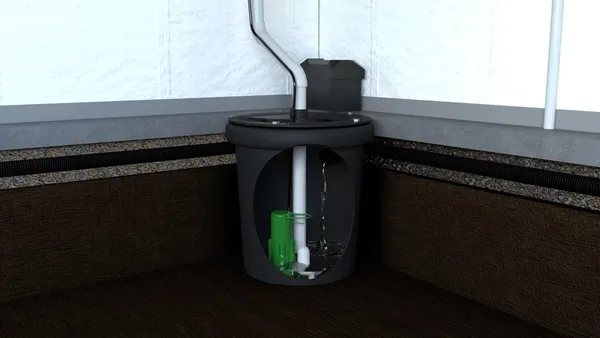
A crawl space drainage system is an interior water management solution installed at the perimeter of the crawl space floor to intercept water that enters through stem walls, rises from the soil, or drains off the crawl space walls. The system channels that water to a sump basin where a pump discharges it away from the home. In Middle Tennessee, where clay soils retain water after heavy rain and seasonal water table elevation is common in many neighborhoods, interior drainage is often the most practical and durable solution for crawl spaces that experience recurring water entry.
Crawl Space Jacks and Adjustable Support Posts
Crawl space jacks, also called adjustable support posts or screw jacks, are steel support columns installed in the crawl space to shore up sagging main beams, replace failed wooden support posts, or add supplemental support where beam span is too long for the original framing. In Middle Tennessee homes built on pier-and-beam foundations, the original support posts were often solid wood or short masonry piers. When the wood rots or the masonry piers settle and tip over time, the main beam loses its mid-span support and sags, causing the floors above to deflect.
Crawl Space Water Removal
Crawl space water removal is the process of extracting standing or pooled water from the crawl space floor, assessing the scope of any damage caused, identifying the water source, and developing a plan to prevent recurrence. In Middle Tennessee, crawl space flooding most commonly occurs during and after heavy rain events when drainage systems are overwhelmed, when downspouts discharge near the foundation, or when the seasonal water table rises to the crawl space floor level. Ground Up provides water removal service as part of a comprehensive assessment: we pump out the standing water, identify the entry source, document any damage to framing, insulation, and mechanical systems, and present a repair and prevention plan.
Crawl Space Waterproofing
Crawl space waterproofing is the process of preventing or managing water entry into the crawl space to keep framing dry and structurally sound. In Middle Tennessee, crawl spaces deal with three primary water sources: surface water that flows in through foundation vents or over grade during rain events, groundwater that seeps through the perimeter stem walls during extended wet periods, and condensation that forms when humid summer air contacts cooler surfaces inside the crawl space. An effective waterproofing system addresses all three sources, redirecting surface water with grading and downspout extensions, capturing seepage with interior drainage channels, and reducing condensation with vapor barriers and sealed enclosures. Ground Up designs and installs crawl space waterproofing systems sized for each home's specific conditions.
Found a problem? Get a straight answer
Free inspection, written estimate, honest triage. No pressure.