
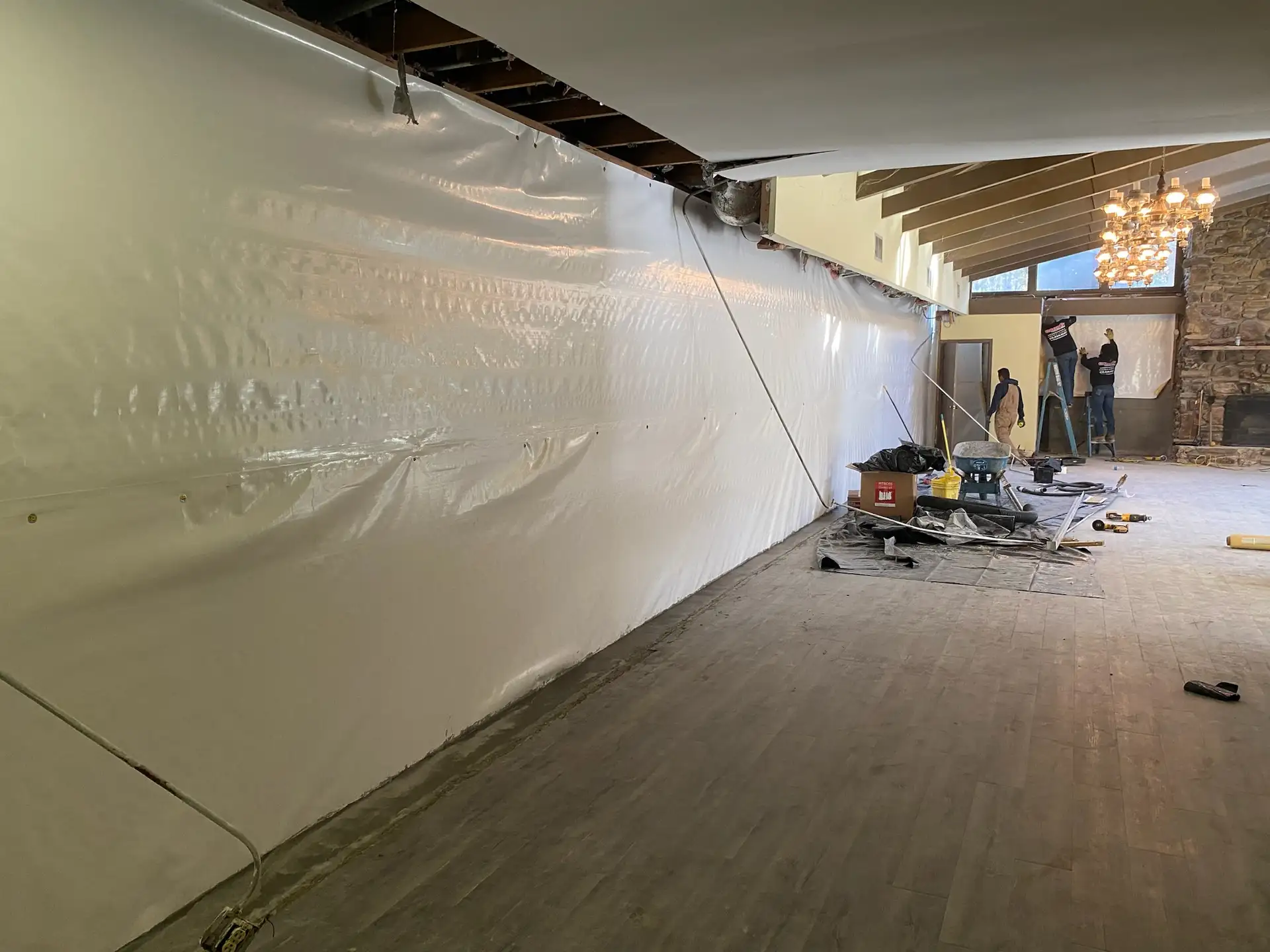
Channel Basement Wall Moisture Before It Reaches Finished Surfaces
[ 01 ] The Honest Answer
What you should know about basement vapor barrier installation
Why Basement Vapor Barriers Are Part of a Complete Waterproofing System
Even after an interior drainage channel and sump pump are installed, moisture that seeps through porous block or poured concrete walls can still wick into wall cavities, damage insulation, and raise interior humidity. A basement wall vapor barrier, typically a dimple-mat drainage panel or heavy polyethylene liner applied to the interior foundation wall, intercepts this migrating moisture and channels it down to the floor-level drain rather than allowing it to spread into the living space.
Ground Up Foundation Repair installs basement vapor barrier systems as part of comprehensive interior waterproofing projects or as a standalone upgrade for homes that already have drainage in place but still experience wall dampness and elevated interior humidity.
What Basement Vapor Barriers Do
- Intercept wall seepage: The panel or liner creates a continuous drainage plane between the foundation wall and the interior space, capturing moisture and directing it downward
- Reduce interior humidity: By channeling moisture to the perimeter drain rather than allowing it to evaporate into the basement air, wall liners lower ambient relative humidity in the space
- Protect finishes and insulation: Any wall coverings, insulation, or framing installed over the liner are isolated from direct wall moisture contact
- Improve air quality: Reducing wall evaporation reduces airborne moisture and the mold potential that comes with chronic dampness
When a Basement Vapor Barrier Is the Right Solution
If your basement walls feel damp to the touch after rain, show efflorescence (white mineral deposits), or have a persistent musty smell despite a functioning sump and drain system, wall moisture is the remaining issue. A vapor barrier panel addresses that specific problem without requiring additional excavation or floor work.
Call us at (615) 624-1027 to discuss whether a basement vapor barrier is the right next step for your waterproofing system.
[ 02 ] How It Works
What to expect, start to finish
Wall Moisture Assessment
We inspect the foundation walls for seepage patterns, efflorescence, and moisture mapping to determine where water is migrating through the wall and what liner system is appropriate.
Surface Preparation
The wall surface is cleaned and any protruding material or debris that would prevent the liner from lying flat is removed. Existing drainage channel connections are verified.
Liner Installation
The vapor barrier panel or liner is installed against the interior foundation wall, mechanically fastened at the top and sealed at the base to direct moisture into the perimeter drain channel.
Inspection and Humidity Check
The completed liner installation is inspected for gaps or unsealed transitions. Interior humidity is checked and we confirm the liner is properly connected to the drainage system.
A drainage channel and sump pump handle the water that comes through the floor. A wall liner handles the moisture that seeps through the wall itself. Both work together, without the liner, you're still dealing with evaporation off the wall face, which keeps humidity high and eventually grows mold.
[ 03 ] Why Ground Up
The difference is in the diagnosis
Get several quotes and you'll see a wide range of prices. The gap isn't luck. It's whether the contractor finds the actual cause and stands behind the work.
- In-house certified crews: we never subcontract your repair
- Optional independent third-party engineer review on larger jobs
- Honest three-tier triage: we tell you what can wait, in writing
- Family owned from the same Shelbyville Highway address since 2009
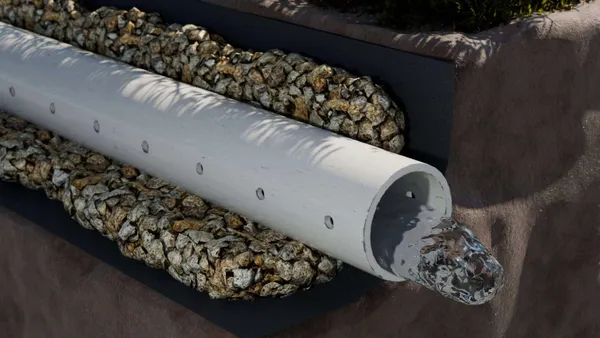
Basement Vapor Barrier Installation questions

Free guide
Get the free dry basement guide
- Where basement water comes from in Middle Tennessee
- A checklist of signs to look for
- How a drain and sump pump system works
Your guide is on its way.
Check your inbox for an email from Ground Up Foundation Repair. If it is not there in a few minutes, check your spam or promotions folder.
Where we work
Headquartered in Murfreesboro,
serving Middle Tennessee
From red-clay Rutherford County soil to Nashville’s high water tables and Cookeville’s karst limestone, we know the ground beneath your home.
Also serving: La Vergne, Hendersonville, Gallatin, Lebanon, Clarksville, Tullahoma, Nolensville, Antioch + 100 more cities →
Found a problem? Get a straight answer
Free inspection, written estimate, honest triage. No pressure.