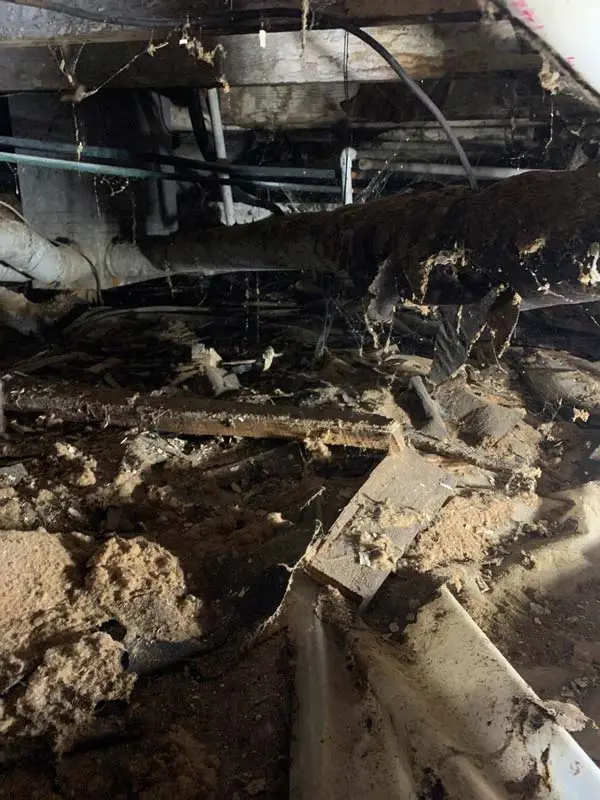
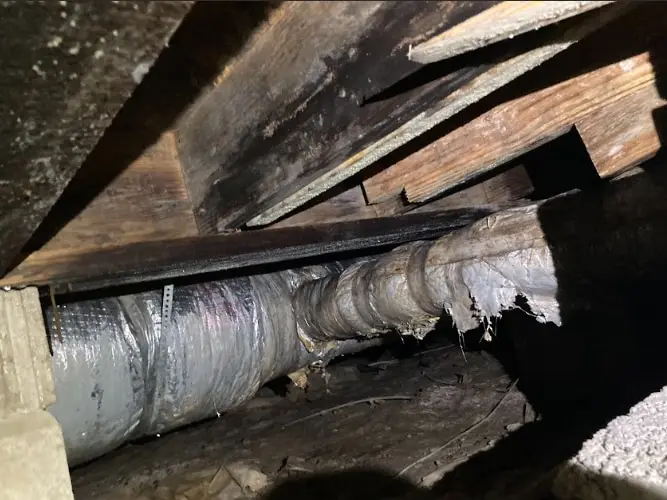
Floor systems are engineered to carry load with minimal deflection. When you walk across the floor and it moves noticeably, a springy bounce with each step, a flex you can feel through the soles of your feet, one or more structural members below has softened, cracked, or lost its bearing. In crawl space homes, the usual suspects are joists that have absorbed enough moisture to lose their stiffness, beams that have deflected from overload or decay, or spans built without adequate mid-span support. The problem is rarely in the subfloor itself; it is almost always in the framing below it.
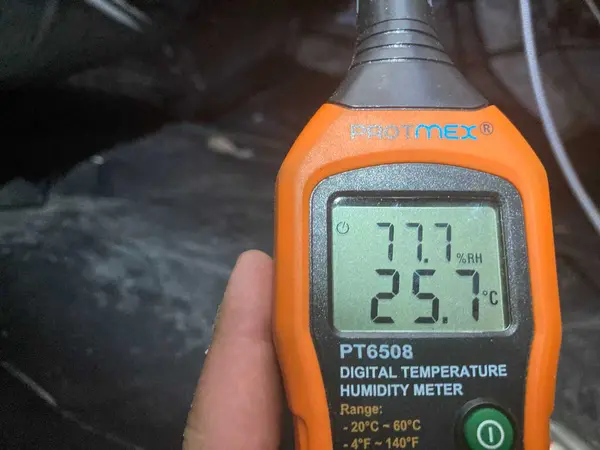
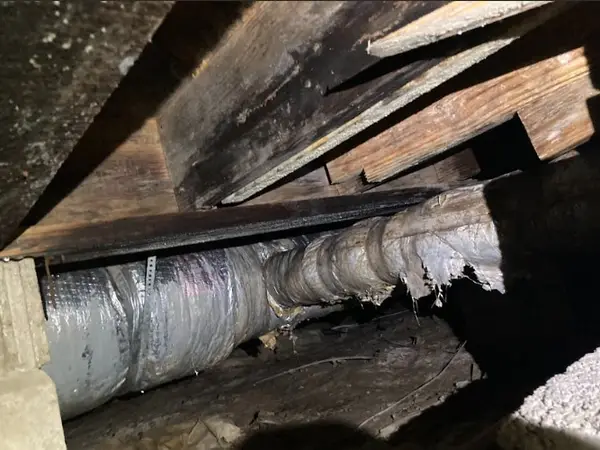
Mold in a crawl space is almost always a moisture problem that has been present for an extended period. Most mold species require sustained relative humidity above 70 percent to colonize and grow on wood surfaces. In Middle Tennessee's climate, an unsealed or poorly vented crawl space commonly reaches those humidity levels for weeks or months at a time. When mold is found in a crawl space, it is typically visible as dark patches or white fuzzy growth on the undersides of floor joists, the faces of beams, and on any insulation materials. The damage extends beyond appearance. Mold actively degrades organic materials including wood, and the spores it releases enter the living space. A crawl space with visible mold needs both remediation of the existing growth and correction of the moisture conditions that caused it.
When household members experience worsening allergy or respiratory symptoms indoors, particularly sneezing, runny nose, itchy eyes, coughing, or asthma flare-ups that improve when they leave the home, the crawl space is a common but overlooked cause. Through natural air movement patterns, a damaged crawl space delivers mold spores, dust mite allergens, rodent dander, pest droppings, and decaying organic matter directly into the living areas above it. The stack effect, in which warm air rises and pulls replacement air upward from below, ensures that crawl space air quality affects the whole home.
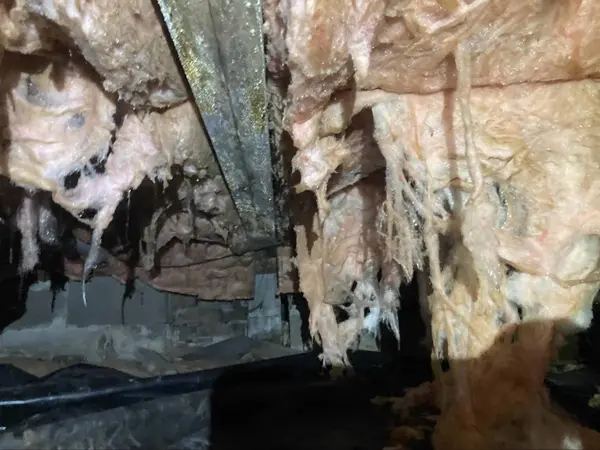
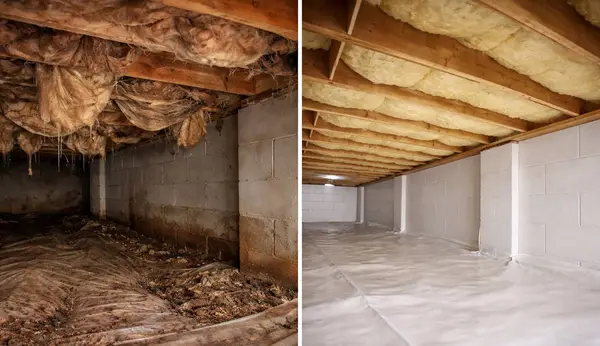
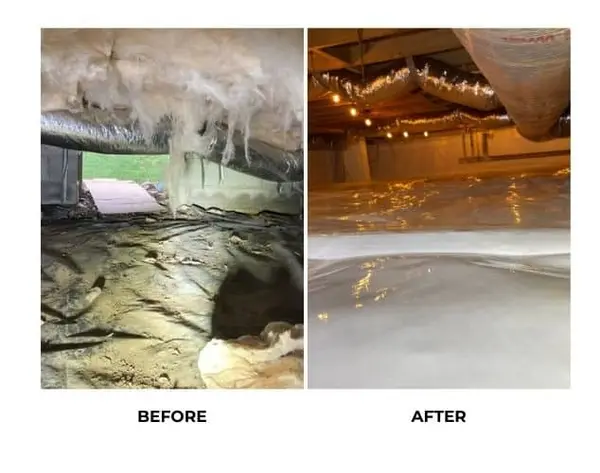
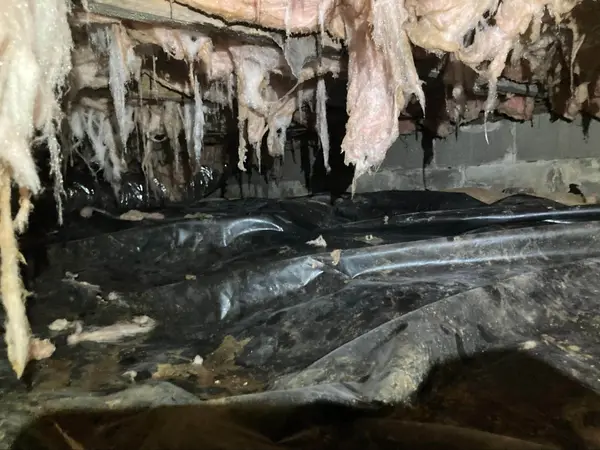
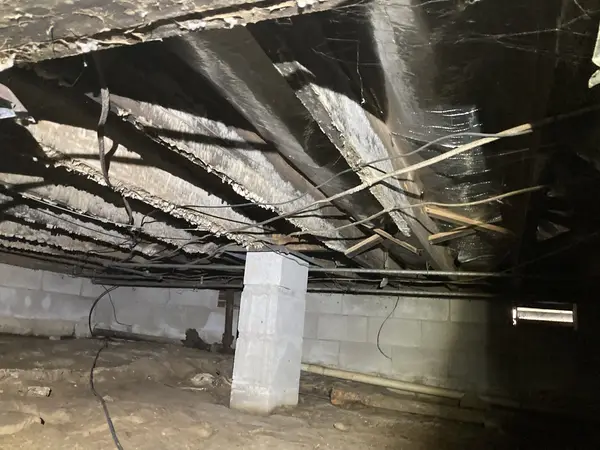
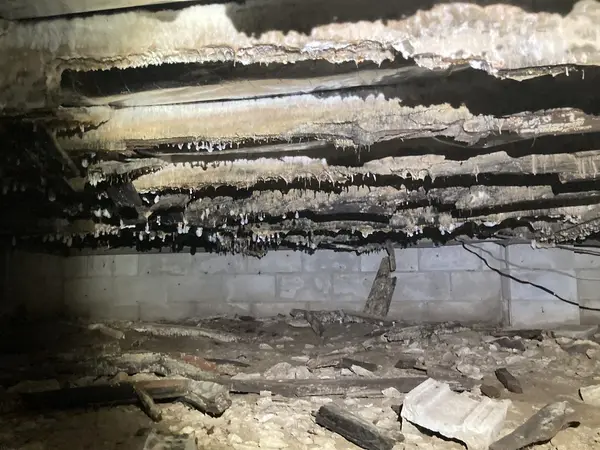
Fiberglass batt insulation installed between floor joists in an unencapsulated crawl space is constantly exposed to moisture, pest activity, and temperature cycling. Over time, it absorbs humidity and loses its loft and thermal resistance, sags, and eventually falls from between the joists onto the crawl space floor. Fallen or moisture-damaged insulation loses most of its R-value, contributes to cold floors and energy loss, and may host mold growth that introduces allergens into the home above. Removing deteriorated insulation, and addressing the moisture that caused the deterioration, stops the ongoing damage to the floor framing and improves air quality in the home above.
In Middle Tennessee homes built on crawl space foundations, unevenness in the floor is almost always a structural signal from below. When the wood beam system that holds up your floors loses support, because a pier has settled into clay soil, a beam has softened from moisture exposure, or a joist has cracked under load, the floor above follows. You may notice that furniture sits tilted, that a marble rolls toward one corner, or that you can feel a noticeable slope when walking from one room to another. These are not finish-floor problems. The cause is in the crawl space.
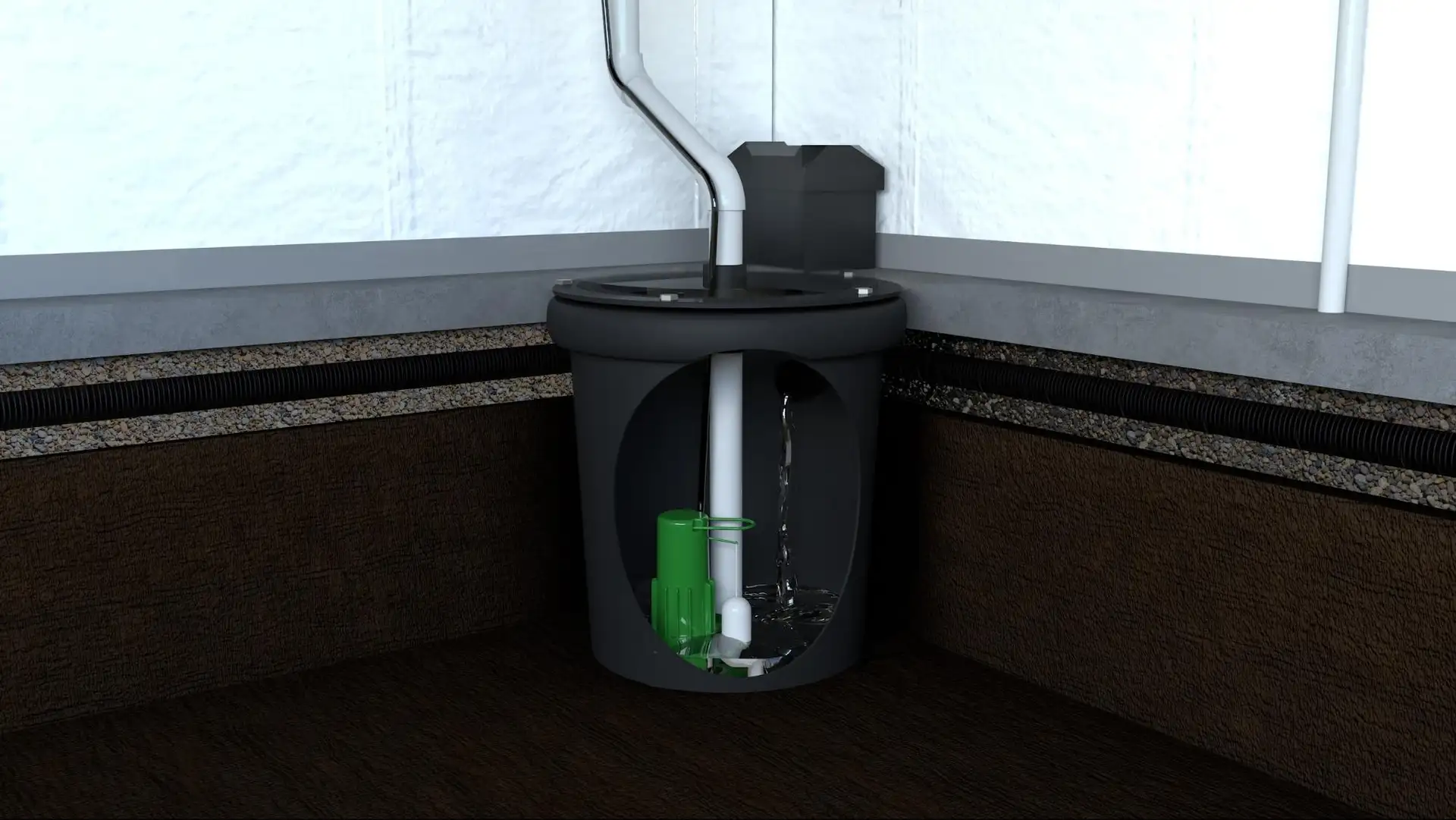
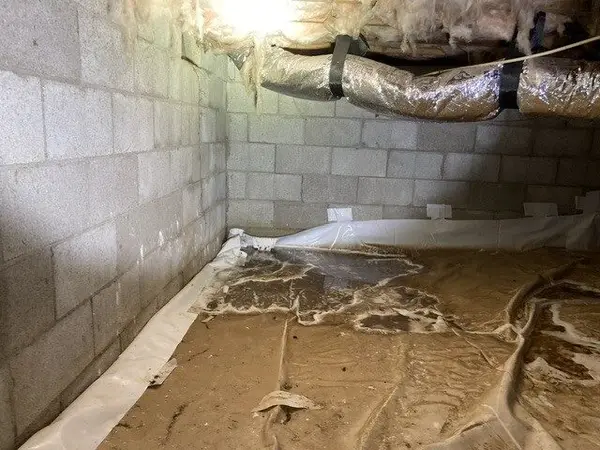
Groundwater seepage into a crawl space is distinct from surface water intrusion: it occurs when the water table is elevated near the home, when soil becomes saturated after extended rain, or when hydrostatic pressure, the force of saturated soil pushing water against the foundation, pushes water through cracks and voids in the stem wall or concrete block foundation. The result is water that appears in the crawl space not from a visible opening above grade but from below or through the wall itself. In Middle Tennessee, the clay-heavy soils in many areas retain water after rain events for days or weeks. Homes built in low areas, near seasonal streams, or on sites with a shallow seasonal water table are particularly vulnerable. Groundwater seepage is often first noticed after consecutive days of heavy rain when the homeowner sees water on the vapor barrier or standing at the low spots of the crawl space floor.
The crawl space accounts for a significant portion of a home's thermal envelope. When the crawl space is poorly insulated, has air gaps and bypasses, or is chronically humid, it compromises the efficiency of the whole home's heating and cooling system. Wet or fallen insulation between floor joists loses most of its thermal resistance, allowing cold air in winter or heat in summer to radiate through the floor directly into the living space. The HVAC system must run longer and more often to maintain setpoint temperatures. High crawl space humidity also overloads the HVAC system's dehumidification function, requiring the system to remove moisture from the air it conditions in addition to controlling temperature.
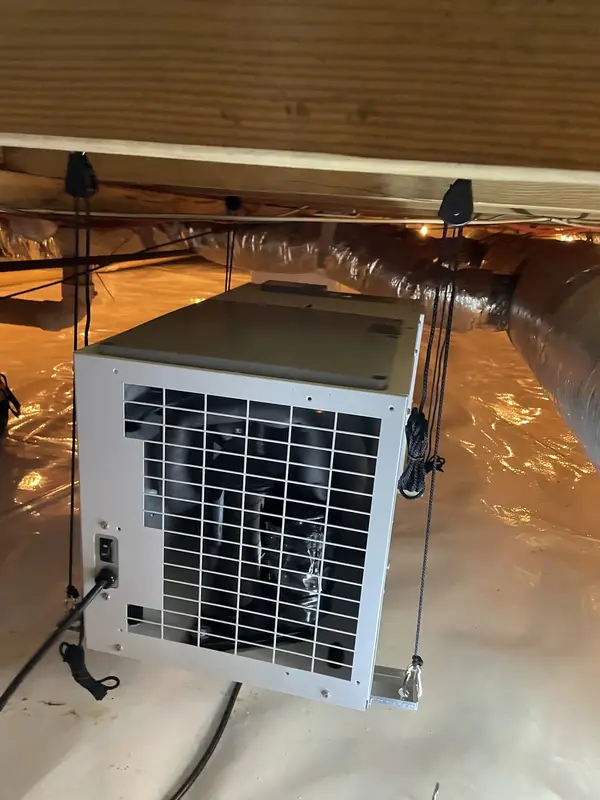
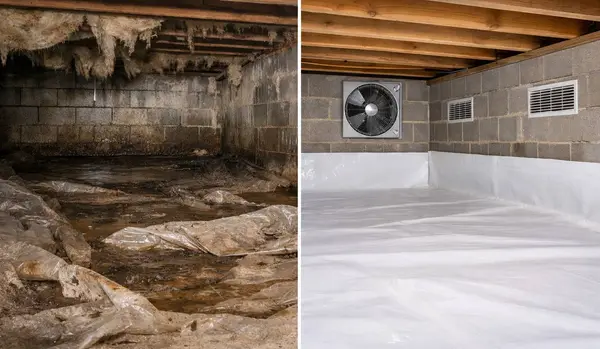
Moisture is the root cause of most crawl space problems. In Middle Tennessee, the combination of clay soils that hold water, high outdoor humidity in summer, and heavy annual rainfall creates conditions where an unprotected crawl space is almost continuously exposed to elevated moisture levels. Ground moisture evaporates through the soil surface and saturates the crawl space air. Rain intrudes through vents or foundation cracks. Condensation forms on cold structural surfaces when humid outdoor air enters. Plumbing leaks add additional point sources. The result, often before any visible damage is apparent, is a crawl space where relative humidity exceeds 70 percent regularly, insulation is damp and losing effectiveness, wood framing is absorbing moisture and beginning the slow process of decay, and mold is establishing in isolated colonies.
Musty odors in a home with a crawl space almost always originate below the floor. The smell is the byproduct of mold and mildew metabolizing organic materials in a damp environment. In Middle Tennessee, an unsealed or poorly vented crawl space experiences elevated relative humidity year-round, and wood framing, insulation, and soil organic matter provide abundant food for mold colonies. The odor rises into the living space through gaps in the subfloor around plumbing penetrations, HVAC boots, and electrical chases. Homeowners typically notice the smell first thing in the morning, when the home has been closed overnight and the concentration of crawl space air in the living area is highest. A musty smell that improves when windows are opened or when the occupants leave the home is a strong indicator that the source is inside the structure, almost certainly in the crawl space.
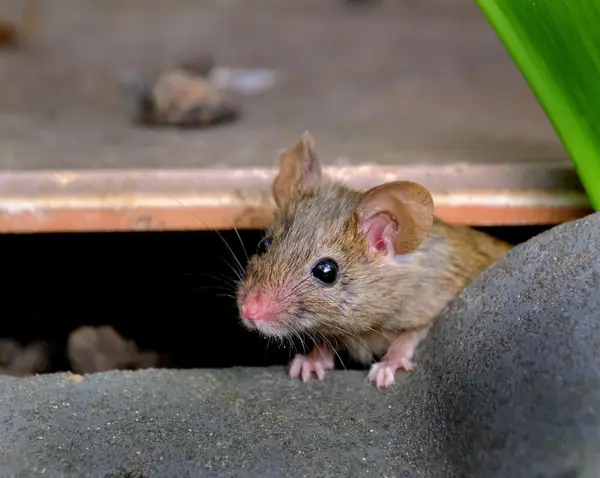
A crawl space that is chronically moist, has rotting wood framing, and has gaps in its perimeter enclosure provides exactly what pest species need: shelter, moisture, nesting material, and in the case of wood-destroying insects, food. Ground-level vents, foundation cracks, pipe penetrations, and gaps where the sill plate meets the foundation all serve as entry points. Once inside, rodents nest in insulation and chew through plumbing and wiring; carpenter ants excavate galleries in moisture-damaged wood; and powder post beetles attack exposed wood surfaces. Pest presence in the crawl space is a structural concern, not just a nuisance, because wood-destroying species accelerate damage that was already initiated by moisture.
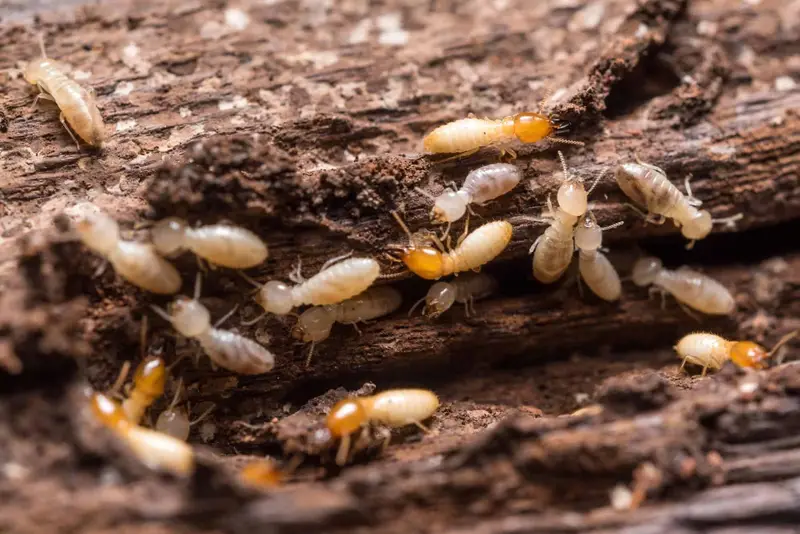
A crawl space that has not been properly sealed and dried provides exactly what pests need: warmth, humidity, food in the form of wood and insulation, and shelter from weather and predators. Rodents enter through gaps as small as a dime in the stem wall or around utility penetrations. They nest in insulation batts, chew through wiring and plumbing lines, and contaminate the crawl space with waste that creates health hazards and odors that rise into the living space. Termites, which are endemic throughout Middle Tennessee, require moisture to thrive and prefer damp wood that has begun softening from fungal decay. Evidence of pest activity including droppings, shed insulation, damaged wood, or mud tubes on foundation walls warrants immediate investigation.
Floor joists are the dimensional lumber members that span between the exterior sill plates and the center girder beam, carrying the subfloor and everything above it. In a Middle Tennessee crawl space, these joists are in a persistently humid environment, often with direct exposure to ground moisture vapor, seasonal flooding, and in many cases inadequate ventilation. Over years, the combination of moisture and fungal organisms degrades the wood fibers. The joist does not fail suddenly; it becomes gradually softer, losing its stiffness before visible rot appears at the surface. By the time you can see or feel the damage from above, a bouncy floor, a soft spot, or a floor that has started to sag locally, the joist has often lost a significant portion of its structural capacity.
In a crawl space home, the main girder beam runs down the center of the crawl space, supported by posts or piers, carrying the load of the floor joists that span from the beam out to the perimeter sill plates. When this beam deflects, either from moisture damage that has softened the wood, from lost support at a mid-span post, or from original undersizing, the center of the floor drops relative to the perimeter. The result is a floor that slopes toward the center of the home, floors that feel springy across a broad area, and often doors that stick on interior walls near the beam line.
When floors above a crawl space sag, bounce under foot traffic, or develop soft spots, the structural wood beneath has typically been weakened by moisture, rot, or pest damage. Middle Tennessee homes built on pier-and-beam foundations rely on a network of joists, beams, and support posts to carry the floor above. When moisture enters the crawl space through ground vapor, rain intrusion, or plumbing leaks, the wood absorbs moisture and becomes susceptible to fungal decay. A joist weakened by rot loses the ability to carry its design load, and the floor above begins to deflect. Homeowners usually first notice soft spots near bathrooms, utility rooms, or exterior walls.
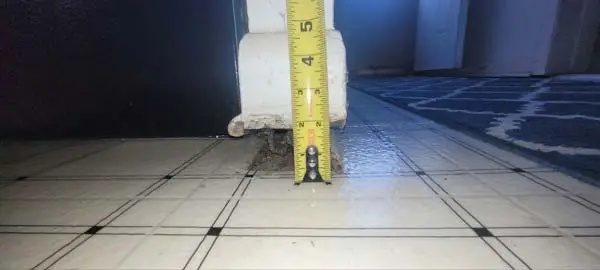
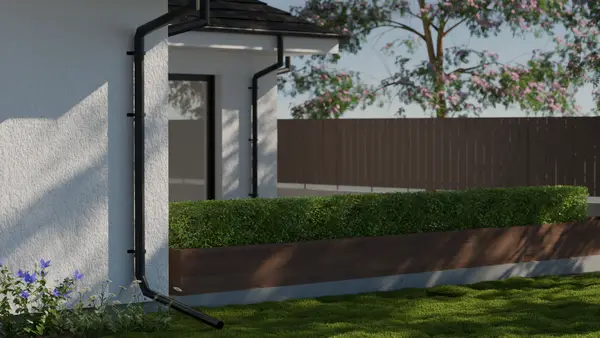
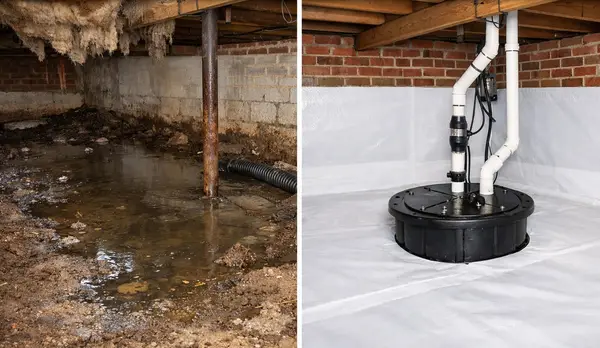
Standing water in a crawl space is one of the most damaging conditions a Middle Tennessee homeowner can face under their home. Unlike elevated humidity, which works slowly, pooled water creates an immediate environment where wood saturation occurs within hours and mold can colonize actively growing surfaces within 24 to 72 hours. In Middle Tennessee, standing water most commonly appears after significant rain events, when storm drainage is overwhelmed, when downspout discharge saturates the soil near the foundation, or when a seasonal high water table rises to the crawl space floor level. Once present, water in a crawl space often lingers for days or weeks because the enclosed space provides little opportunity for evaporation and no drainage path.
A door that sticks is one of the most reliably noticed signs of structural movement in a home. Interior door frames are set plumb and square when the home is built. When the crawl space structure below shifts, a pier settles, a beam deflects, a sill plate compresses, the floor changes elevation, and the wall framing above it follows. A door frame that was square becomes a parallelogram, and a door that once swung freely now drags at the top corner or refuses to latch. In crawl space homes, this pattern is almost always connected to what is happening below the floor level.
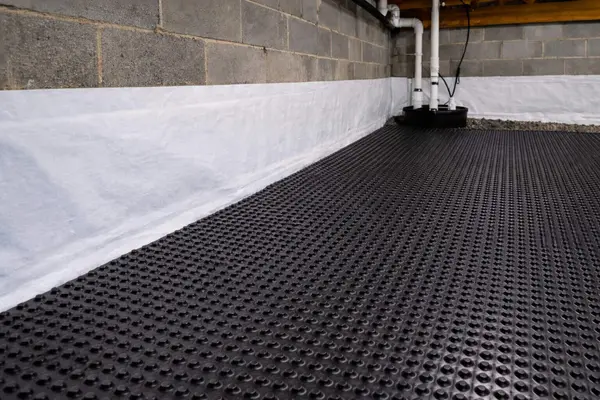
Water in a crawl space can enter through several pathways: surface water flowing in through foundation vents during heavy rain, groundwater rising through the soil during prolonged wet periods, condensation forming on cold surfaces in humid conditions, and plumbing leaks that drip into the crawl space over time. Regardless of the source, the result is the same, the crawl space maintains a persistently wet environment that accelerates fungal decay in the wood framing above, creates conditions for mold colonization, and attracts pest species that exploit moist, rotting wood. Ground Up identifies the water source and installs the drainage and waterproofing systems needed to keep the crawl space dry.
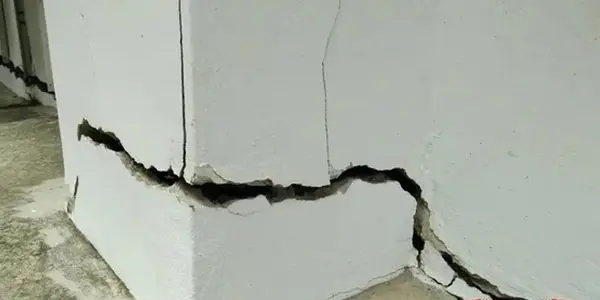
Interior wall and ceiling cracks in a crawl space home are frequently connected to what is happening below the floor. When the beam and joist system settles unevenly, one area dropping more than another because of a failed pier or softened beam, the walls above that zone are pulled or pushed out of their original position. The drywall, which is rigid but not flexible, responds by cracking. Diagonal cracks at door and window corners are particularly telling, as they trace the direction of structural movement through the framing behind the drywall. In a crawl space home, these cracks often worsen progressively as the underlying cause continues.
Learn more
Why Ground Up
The difference is in the diagnosis
Get several quotes and you'll see a wide range of prices. The gap isn't luck. It's whether the contractor finds the actual cause and stands behind the work.
01In-house certified crews: we never subcontract your repair
02Optional independent third-party engineer review on larger jobs
03Honest three-tier triage: we tell you what can wait, in writing
04Family owned from the same Shelbyville Highway address since 2009
15+
Years in Middle TN
Family owned since 2009
35+
Years combined experience
On every crew we send
Lifetime
Transferable warranty
On piered sections
$0
For your inspection
No pressure, written quote
Our Process
Take the first step toward a stable home
01
Schedule your inspection
A local specialist visits, evaluates the foundation, and answers your questions on site, no cost, no obligation.
02
Get a clear written estimate
We sort every finding into urgent, planned, or monitor and send a scope tailored to your home, usually within one business day.
03
Get lasting repairs
Our certified crews complete the work on schedule and back it with a lifetime transferable warranty on piered sections.