
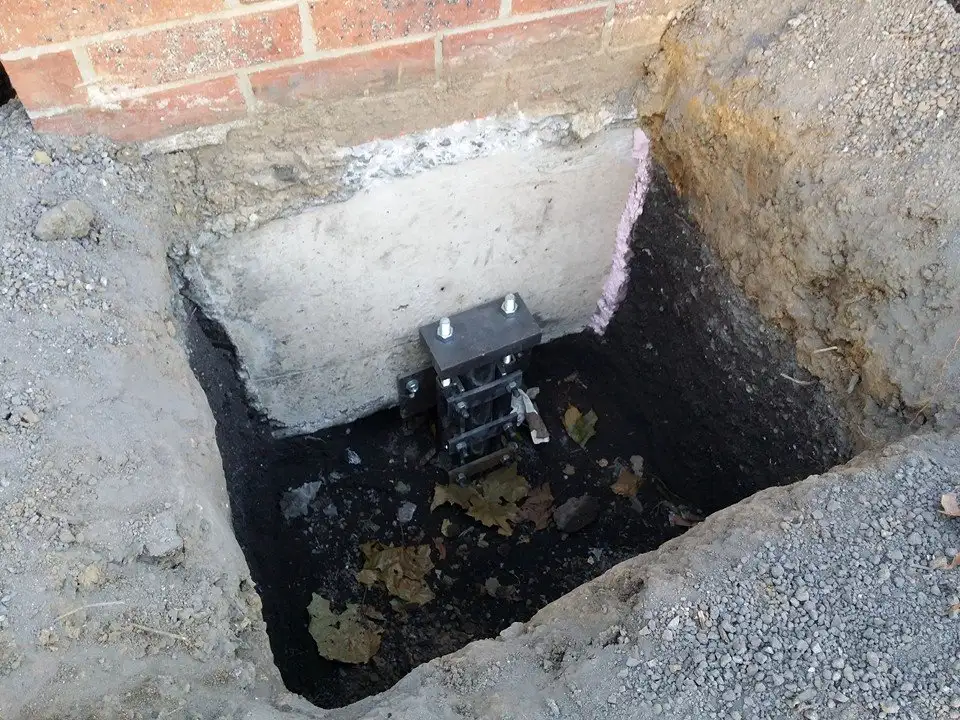
Grain Bin Foundation Failure, Protecting Agricultural Storage in Middle Tennessee
Grain bin foundations settling in Middle Tennessee's agricultural counties. Repair the foundation ring before storage capacity and structural integrity are compromised.
Not sure which fix applies to your situation? Browse our full range of solutions for commercial.
[ 01 ] Watch For These Signs
Signs that indicate foundation movement
Visible gap between the bin ring and the foundation concrete
A gap opening between the steel bin ring and the concrete foundation is one of the clearest signs of foundation settlement.
Bin structure that does not plumb vertically
A bin that is visibly out of plumb has experienced differential foundation settlement.
Cracked or heaved concrete around the bin perimeter
Cracking at the foundation ring perimeter indicates settlement of the outer ring section while the interior remains supported or vice versa.
Wet or soft soil directly around the foundation
Consistently wet or soft ground around the base of a grain bin after rainfall has dried elsewhere is a sign of poor drainage or a subsurface water issue.
Many older grain bin pads in Middle Tennessee's agricultural counties were installed without engineered subbase preparation. Fill material placed without proper compaction consolidates under the weight of a loaded bin.
The red clay soils common in Lincoln, Bedford, Marshall, and Maury counties expand during wet periods and shrink during dry summers. This seasonal movement creates vertical and lateral stress on bin foundation rings.
Water pooling around the bin perimeter softens the soil beneath the outer edge of the foundation ring, causing perimeter settlement while the center remains supported.
Bins that have been loaded to capacity for many consecutive seasons impose sustained load on the foundation. Progressive consolidation can occur over years.
[ 03 ] Recommended Solutions
How Ground Up fixes this
[ 04 ] Regional Context
Why foundations fail in Kentucky, Georgia, Alabama, Indiana, and Tennessee.
Expansive clay soils across Kentucky, Georgia, Alabama, Indiana, and Tennessee shrink in dry summers and swell after rain, cycling significantly in volume. Commercial and multi-family buildings built on this clay face ongoing movement pressure. Ground Up diagnoses and permanently stabilizes foundations across the region.
A grain bin foundation problem rarely announces itself until it is already a significant structural issue. The gap between the ring and the concrete is usually the first visible sign.
[ 05 ] Why Ground Up
The difference is in the diagnosis
Get several quotes and you'll see a wide range of prices. The gap isn't luck. It's whether the contractor finds the actual cause and stands behind the work.
- In-house certified crews: we never subcontract your repair
- Optional independent third-party engineer review on larger jobs
- Honest three-tier triage: we tell you what can wait, in writing
- Family owned from the same Shelbyville Highway address since 2009
[ 06 ] FAQ
Grain Bin Foundation Failure questions
In some cases, yes. The repair approach depends on the settlement type, the bin's load at the time of repair, and the structural condition of the ring. We assess each situation individually.
Yes. Agricultural repair schedules are built around the operational calendar. We plan grain bin foundation repairs for periods when bins are emptied or at low fill levels.
More Problem Signs
Other signs to watch for
Cart Path Slab Settlement
Golf course cart path settlement creates two problems that course operators deal with every season: safety liability and player experience. A cart path with stepped joints or lifted slab edges creates a bump hazard for cart traffic. In Middle Tennessee, where wet springs and dry summers cycle through reliably every year, cart path settlement is a predictable maintenance issue on courses built on the region's expansive clay soils.
Commercial Slab Settlement
Commercial slab settlement occurs when the soil beneath a concrete slab loses its bearing capacity, causing sections of the slab to drop below their original elevation. In Middle Tennessee commercial buildings, this shows up as uneven warehouse floors that create forklift hazards, settled loading dock aprons that gap at the building wall, and cracked retail and office floors visible through flooring.
Failing Retaining Walls
A failing retaining wall in a commercial setting is both a structural liability and a safety concern. Commercial retaining walls experience significant lateral soil pressure from Middle Tennessee's expansive red clay, and where wall drainage is inadequate, trapped groundwater adds hydrostatic pressure, extra force from water pushing against the wall, on top of that soil load. When that combined pressure exceeds the wall's original design capacity, the wall begins to deflect, tilt, or slide outward. Warning signs appear gradually: hairline cracks that widen over months, surface staining from water weeping through the wall, bulging in wall sections, and gaps opening at wall-to-footing joints.
Multi-Unit Foundation Movement
Foundation movement in a multi-family building shows up differently than in a single-family home because the building type distributes the signs across more units and more surfaces. A corner apartment with sticking doors, diagonal cracks at window corners, and gaps forming at the baseboard may be experiencing differential settlement at that building corner while other units remain unaffected.
Solar Array Ground Issues
Solar array ground mount systems in Middle Tennessee depend on the pier foundations beneath them to hold position through decades of wind load, panel weight, and seasonal soil movement. When ground mount foundations are inadequate, the first signs appear as panel tilt, row misalignment, or visible movement in the racking structure.
Seeing these signs in your home?
We'll find the cause and give you a straight, written scope.