
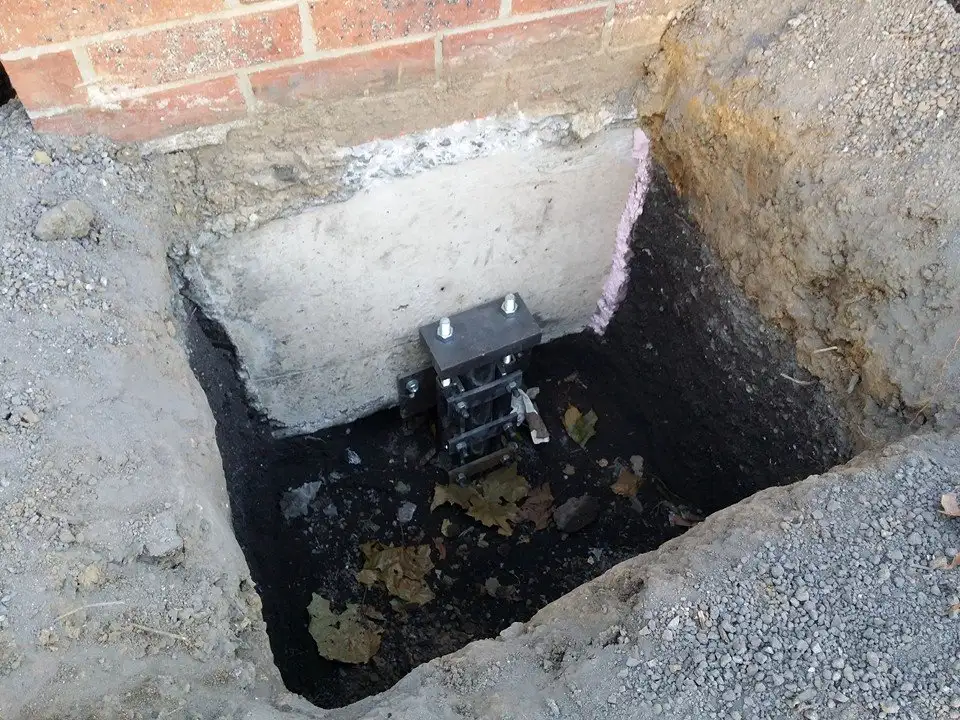
Floor Leveling Services: Correcting Uneven, Sloping, and Bouncy Floors in Middle Tennessee Homes
Ground Up Foundation Repair provides free crawl space inspections throughout Nashville and Middle Tennessee.
On cost: Floor leveling cost depends on the size of the affected area, the cause identified, and whether foundation work is also required. Ground Up provides a written estimate after the free inspection.
Overview
Floor Leveling Services
Uneven floors are more than a cosmetic problem, they signal that the framing or foundation beneath them has shifted, weakened, or settled unevenly. Ground Up Foundation Repair diagnoses the root cause of sloping, bouncy, or sagging floors and develops a targeted leveling plan. Depending on the cause, floor leveling may involve jacking sagging joists, sistering damaged members, installing or adjusting steel support posts, or addressing the foundation settlement that started the movement. We restore floors to level without disturbing finished flooring wherever possible.
Floor leveling begins with a crawl space inspection to identify whether the problem originates in the joists, the carrier beam, the support posts, or the foundation itself. Once the cause is confirmed, the appropriate repair is executed: damaged joists are sistered, sagging beams are supported with new or repositioned posts, and settled foundation elements are stabilized. Where the floor has dropped significantly, adjustable steel columns are used to raise the framing incrementally, slowly enough to avoid cracking finish materials above. The process ends when the floor is within the tolerance agreed upon during the estimate.
Leveling often goes hand in hand with sagging floor repair at the joists, beams and posts.
Wondering if this is the right fix for what you are seeing? Learn more about the warning signs: Sagging Floor Joists and Broken or Cracked Floor Joists in the Crawl Space and Rotted Floor Joists . Or browse the full Problem Signs library for framing repair.
Installation Process
How we install floor leveling services
Floor Level Survey
The technician walks the affected area with a long level and moisture meter, mapping the slope and identifying the low point. Readings are taken at the walls, center of the room, and along joists to determine whether the problem is isolated or spans multiple bays.
Crawl Space Cause Identification
The technician enters the crawl space and traces the floor's low point to its framing source, checking for cracked or sagging joists, a deflected carrier beam, a settled or missing post, or an inadequate footing beneath a support post.
Temporary Support Installation
Adjustable steel columns are positioned under the affected joists or beam to bear the load while the permanent repair is made. This prevents further movement and provides a controlled lifting point.
Structural Repair
The underlying cause is corrected, sistering cracked joists, replacing rotted members, repairing or replacing the carrier beam, or installing new permanent steel support posts on concrete footings where the existing post system is inadequate.
Incremental Elevation Correction
Where the floor has sagged, the adjustable columns are turned incrementally to raise the framing toward level. On older structures or where tile and drywall are above, elevation is increased gradually, typically no more than one-eighth inch per visit, to prevent cracking finish materials.
Final Verification and Closeout
The technician re-surveys the floor elevation from above and confirms the crawl space framing is secure, all fasteners are in place, and the vapor barrier is intact. A written summary of the work completed and any remaining movement tolerance is provided.
The floor is the last thing to show problems and the first thing homeowners notice. By the time a floor is visibly sloping, the framing beneath it has usually been stressed for years. We fix the cause, the joist, the beam, the post, and then we bring the floor back to level.
Why Ground Up
The difference is in the diagnosis
Get several quotes and you'll see a wide range of prices. The gap isn't luck. It's whether the contractor finds the actual cause and stands behind the work.
- In-house certified crews: we never subcontract your repair
- Optional independent third-party engineer review on larger jobs
- Honest three-tier triage: we tell you what can wait, in writing
- Family owned from the same Shelbyville Highway address since 2009
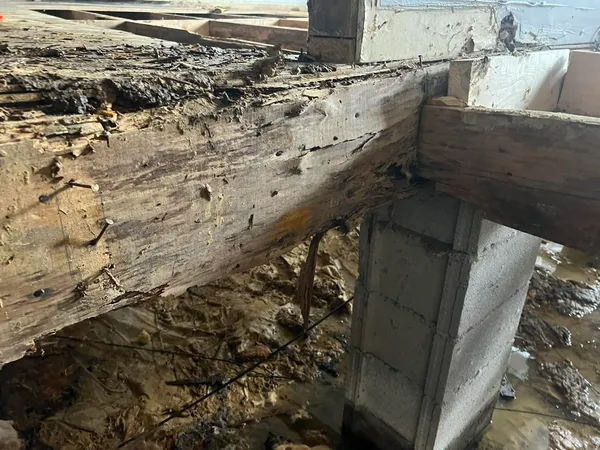
FAQ
Floor Leveling Services questions
The most common causes in Middle Tennessee crawl space homes are sagging or cracked floor joists, a deflected carrier beam, settled or deteriorated support posts, and in some cases foundation settlement or differential movement. Moisture in the crawl space accelerates all of these by softening wood and corroding metal hardware.
In most cases, yes. Floor leveling is performed from the crawl space below. The finished floor, subfloor, and any floor covering above are left untouched. Minor exceptions occur if access panels need to be cut or if the subfloor itself needs repair, but we identify those situations during the estimate.
We aim for floors to be within a quarter-inch over an 8-foot span, which is the standard building tolerance. In practice, the achievable correction depends on how long the floor has been out of level, what finish materials are above it, and the condition of the framing. Floors that have been sloping for many years may require incremental correction over multiple visits to avoid damaging tile grout lines or drywall.
A typical floor leveling job, one room or one section of a home, is usually completed in one to two days once the diagnosis is confirmed. Jobs requiring foundation repair as a root cause may take longer. We give you a clear scope and timeline during the free estimate.
Yes, as long as the underlying cause is corrected and moisture is controlled. A floor that is leveled by sistering damaged joists or replacing failed posts will remain level indefinitely in a dry, stable environment. If active moisture or foundation movement is present and not addressed, the floor may move again over time, which is why we always identify and treat the root cause, not just the symptom.
More Solutions
Other solutions we offer
Beam Repair
Structural beams throughout a crawl space home serve distinct load-carrying roles, the sill plate transfers floor loads to the foundation wall, rim joists close off the floor system at the perimeter, and secondary beams support floor joists between the main carrier and the foundation. When any of these members is damaged by rot, insect activity, or physical stress, the floor system above loses support. Ground Up Foundation Repair identifies the affected beam, determines the appropriate repair method, and restores full structural capacity without disrupting the living space above.
Structural Beam Replacement
The main girder beams and support beams in a crawl space are the primary load-bearing members of the floor system. They span between foundation walls and piers, carrying the floor joists that in turn support the subfloor and everything above. When these beams are compromised by moisture-driven rot, pest infestation, or overloading, the consequences extend throughout the floor system above. Structural beam replacement is the appropriate solution when beams have degraded beyond the point where repair or reinforcement is sufficient. Ground Up Foundation Repair provides beam replacement in crawl spaces throughout Middle Tennessee, using properly sized dimensional lumber or engineered lumber products to restore full structural capacity.
Carrier Beam Repair
The carrier beam, also called the main girder, is the primary horizontal member that supports your floor joists and transfers their load to posts and the foundation. When a carrier beam cracks, sags, or rots, every joist it carries becomes compromised, causing widespread floor movement across an entire section of your home. Ground Up Foundation Repair assesses carrier beam damage, determines whether repair or replacement is appropriate, and restores full load capacity with minimal disruption to the living space above.
Crawl Space Jack Installation
Crawl space support jacks are adjustable steel columns installed on concrete footings beneath the floor framing of a crawl space home. They provide permanent supplemental support for floor joists and carrier beams that have deflected beyond what sistering alone can address, for spans that are too long for the existing framing depth, or for homes where the original post spacing was inadequate. Because they are adjustable after installation, crawl space jacks also allow incremental floor leveling without additional structural work. Ground Up Foundation Repair sizes, spaces, and installs support jacks to match the load conditions of each specific home.
Floor Joist Repair Plates
Floor joist repair plates, also called mending plates, joist plates, or structural connector plates, are heavy-gauge galvanized steel plates fastened across a crack, split, or notched section of a floor joist to restore local bending and shear capacity. They are most effective when damage is localized to a specific point along an otherwise sound joist, rather than distributed along its length. Repair plates are a faster and lower-cost solution than sistering in specific circumstances, and they are frequently used in combination with sistering when a joist has both a discrete crack point and overall reduced stiffness. Ground Up evaluates each joist individually and recommends the repair method, plates, sistering, or full replacement, that matches the actual damage pattern.
Floor Joist Repair
Floor joists are the horizontal structural members that span from beam to beam beneath your subfloor, carrying the weight of everything in your home. When they are damaged by moisture, rot, or pests, they lose load-bearing capacity and the floors above begin to flex, bounce, or sag. Floor joist repair restores the structural capacity of compromised framing through sistering, partial replacement, or full joist replacement, depending on the extent and nature of the damage. Ground Up Foundation Repair specializes in crawl space framing repair across Middle Tennessee, where humid conditions make joist damage an especially common problem.
Found a problem? Get a straight answer
Free inspection, written estimate, honest triage. No pressure.