
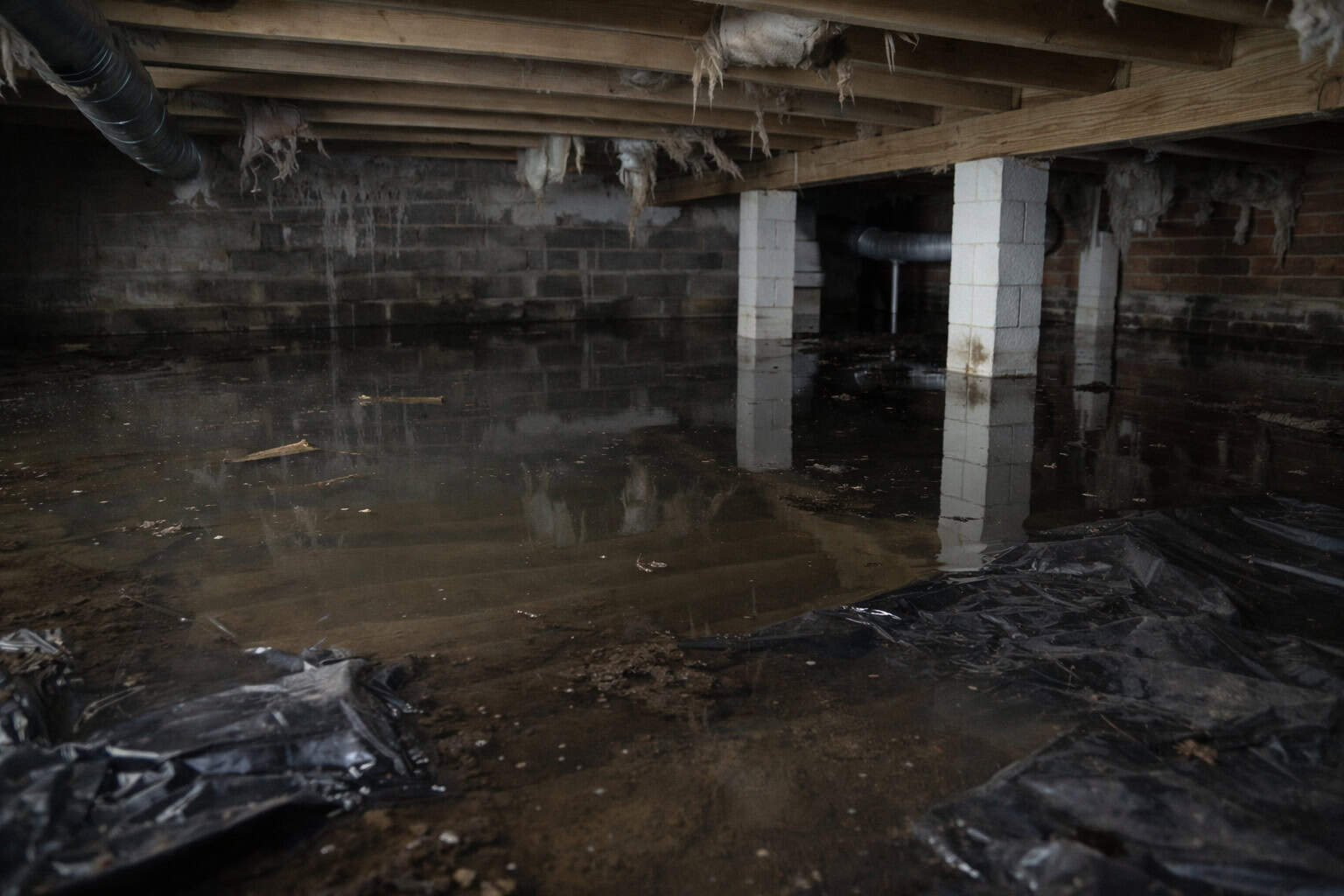
Open Crawl Space Vents Let Humidity and Moisture Into Your Home
[ 01 ] The Honest Answer
What you should know about crawl space vent sealing
Why Crawl Space Vent Sealing Matters
For decades, building codes required foundation vents in crawl spaces based on the idea that outside airflow would dry out any moisture that accumulated. Research and field experience have largely reversed that guidance, particularly in humid climates like Middle Tennessee. When outdoor air with 70–80% relative humidity flows into a crawl space, it contacts cooler surfaces, floor joists, vapor barrier, ductwork, and the moisture condenses. Instead of drying the crawl space, open foundation vents actively introduce moisture during the humid months that matter most.
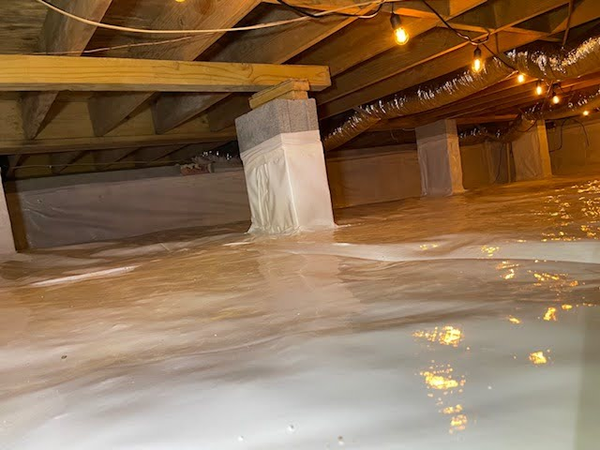
Sealing foundation vents eliminates that moisture pathway entirely. Rather than ventilating a crawl space with humid outdoor air, a properly encapsulated crawl space is sealed and then controlled with a dehumidifier that actively maintains safe humidity levels. This approach consistently produces drier, healthier crawl spaces in Tennessee's climate compared to vented systems.
How Crawl Space Vent Sealing Works
- Vent cover inserts: Rigid foam or magnetic vent covers installed from inside that block airflow through existing foundation vents
- Foam sealing: Expanding foam applied around vent frames and gaps to eliminate air infiltration around the vent perimeter
- Vent well backfilling: In some configurations, exterior vent wells are backfilled after vent closure to prevent moisture accumulation in the well itself
- Penetration sealing: Pipe, wire, and utility penetrations through the foundation wall are also sealed during the vent sealing process
Is Vent Sealing Allowed by Code in Tennessee?
Modern building codes, including IRC 2018 and later, provide an exception that permits unvented crawl spaces when mechanical ventilation or conditioning is provided, which a dehumidifier satisfies. In Tennessee, sealed crawl spaces are a recognized and code-compliant approach when the space is conditioned or actively dehumidified. We confirm code applicability for your specific jurisdiction during the evaluation.
Crawl space vent sealing is typically performed as part of a complete encapsulation project. Call Ground Up Foundation Repair at (615) 880-6449 to schedule a free inspection.
[ 02 ] How It Works
What to expect, start to finish
Free Crawl Space Inspection
We count and measure existing foundation vents, check for air infiltration points, and assess the crawl space's current humidity and moisture conditions.
Vent Sealing Plan
We document each vent location, determine the appropriate sealing method for each, and confirm that dehumidification is adequate to maintain the sealed space.
Vent and Penetration Sealing
We install vent covers or foam inserts, seal perimeters with expanding foam, and address pipe, wire, and utility penetrations to eliminate air infiltration through the foundation wall.
Post-Sealing Humidity Verification
After sealing, we verify humidity levels in the crawl space and confirm that the dehumidifier is operating correctly to maintain the sealed environment.
People are often surprised when I tell them their foundation vents are making the problem worse, not better. In Tennessee summers, the air coming through those vents is more humid than the air inside the crawl space. Sealing them out is one of the most cost-effective improvements you can make.
[ 03 ] Why Ground Up
The difference is in the diagnosis
Get several quotes and you'll see a wide range of prices. The gap isn't luck. It's whether the contractor finds the actual cause and stands behind the work.
- In-house certified crews: we never subcontract your repair
- Optional independent third-party engineer review on larger jobs
- Honest three-tier triage: we tell you what can wait, in writing
- Family owned from the same Shelbyville Highway address since 2009
Crawl Space Vent Sealing questions
Where we work
Headquartered in Murfreesboro,
serving Middle Tennessee
From red-clay Rutherford County soil to Nashville’s high water tables and Cookeville’s karst limestone, we know the ground beneath your home.
Also serving: La Vergne, Hendersonville, Gallatin, Lebanon, Clarksville, Tullahoma, Nolensville, Antioch + 100 more cities →
Found a problem? Get a straight answer
Free inspection, written estimate, honest triage. No pressure.