
Exterior Waterproofing Membranes: Stopping Water at the Foundation Wall
Exterior waterproofing addresses basement water intrusion at its source, the outside of your foundation wall. Applied before water ever reaches the interior, a properly installed membrane is the most comprehensive waterproofing solution available.
On cost: $8,000 to $30,000 depending on wall length, excavation depth, site access, and site restoration requirements
Overview
Exterior Waterproofing Membranes
Exterior waterproofing membranes are applied directly to the outer face of the foundation wall after excavation exposes the wall from footing to grade. The membrane forms a continuous moisture barrier across the entire exterior wall surface, sealing cracks and preventing water under hydrostatic pressure, the force that saturated soil exerts as it presses against the wall from outside, from migrating through the concrete. When combined with a foundation drainage board and footing-level drain tile, exterior waterproofing provides the most complete protection available for a basement. Ground Up Foundation Repair installs exterior waterproofing as a standalone system and as part of combined interior-exterior waterproofing packages for severe water intrusion situations.
Exterior waterproofing requires excavating the soil from the exterior of the foundation wall down to the footing level. The exposed wall surface is cleaned and prepared, and a waterproofing membrane, typically a spray-applied rubberized asphalt or sheet membrane, is applied across the entire wall face. A drainage board is then installed over the membrane to protect it during backfill and to channel water that reaches the wall down to a footing drain rather than against the membrane under pressure. The footing drain carries intercepted water away from the structure to daylight or a sump. The trench is then backfilled with clean stone and native soil.
Wondering if this is the right fix for what you are seeing? Learn more about the warning signs: Basement Flooding and Water in the Basement and Wet Basement Walls . Or browse the full Problem Signs library for basement waterproofing.
Installation Process
How we install exterior waterproofing membranes
Excavation
We excavate the soil from the exterior of the foundation walls that will receive waterproofing, exposing the wall surface from grade down to the top of the footing. Excavation is typically 2 to 4 feet wide to allow working room.
Wall Surface Preparation
The exposed foundation wall is cleaned of soil, roots, old parging, and deteriorated material. Cracks are routed and filled with hydraulic cement or flexible sealant before membrane application to ensure full contact between the membrane and wall surface.
Waterproofing Membrane Application
The waterproofing membrane is applied to the prepared wall surface. Spray-applied systems provide seamless coverage across the entire wall face. Sheet membrane systems are rolled on and lapped at joints. The membrane is extended below the footing level at the base to eliminate the footing-to-wall joint as a water entry point.
Drainage Board Installation
A dimpled drainage board is installed over the membrane surface. The drainage board protects the membrane from backfill damage and creates a drainage plane that directs water downward to the footing drain rather than holding it in contact with the membrane under pressure.
Footing Drain Installation
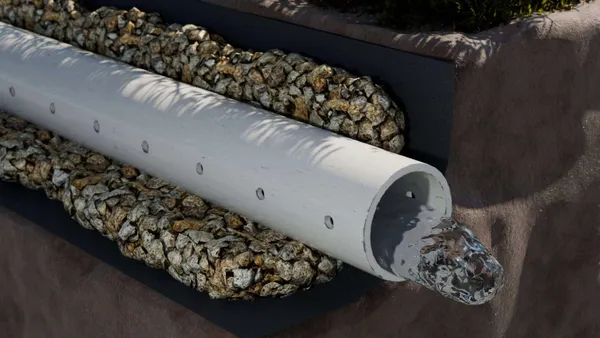
A perforated drain pipe is installed at the footing level in a bed of clean stone. The drain collects water that reaches the base of the wall and carries it away from the foundation to a discharge point, sump basin, or daylight outlet.
Backfill and Site Restoration
The excavated trench is backfilled in lifts with clean granular material at the drain level and then with native soil. Grade is restored to slope away from the foundation. Disturbed landscaping, concrete, or hardscape is repaired or replaced.
Exterior waterproofing is the gold standard because it addresses the problem at the wall itself rather than after water has already crossed into the structure. When site conditions allow it, nothing provides more complete protection.
Why Ground Up
The difference is in the diagnosis
Get several quotes and you'll see a wide range of prices. The gap isn't luck. It's whether the contractor finds the actual cause and stands behind the work.
- In-house certified crews: we never subcontract your repair
- Optional independent third-party engineer review on larger jobs
- Honest three-tier triage: we tell you what can wait, in writing
- Family owned from the same Shelbyville Highway address since 2009
FAQ
Exterior Waterproofing Membranes questions
Exterior waterproofing is recommended when the wall itself has significant cracks that need to be sealed, when the goal is to prevent any water from crossing the wall rather than just managing it after entry, and when the exterior is accessible without major obstacles such as decks, driveways, or mature landscaping directly against the foundation. Interior drainage is preferred when exterior access is limited or when cost is a primary factor.
Exterior waterproofing involves excavating a 2 to 4 foot wide trench along the affected foundation walls down to footing depth. Landscaping, plantings, and hardscape adjacent to the foundation will be disturbed and partially removed. Site restoration is included in the project scope, but major landscaping features such as mature trees close to the foundation and attached structures may limit where exterior work is practical.
High-quality exterior waterproofing membranes properly installed are designed for the life of the structure. Failure typically results from improper preparation leaving voids under the membrane, inadequate drainage leading to sustained hydrostatic loading, or roots penetrating the membrane over time. With proper installation and drainage, an exterior membrane is a permanent solution.
Requirements vary by municipality. Most exterior waterproofing projects in the Nashville and Murfreesboro areas do not require permits when no structural work is involved. Ground Up confirms local requirements for each project before work begins.
Yes, and in severe water intrusion cases this combination provides the most complete protection. Exterior membrane plus footing drain stops water from crossing the wall. Interior drainage handles any residual moisture and provides a backup system. Ground Up designs combined systems when the wall condition or intrusion severity warrants both approaches.

Free guide
Get the free dry basement guide
- Where basement water comes from in Middle Tennessee
- A checklist of signs to look for
- How a drain and sump pump system works
Your guide is on its way.
Check your inbox for an email from Ground Up Foundation Repair. If it is not there in a few minutes, check your spam or promotions folder.
More Solutions
Other solutions we offer
Downspout Extensions
Your gutters collect a surprising amount of water during a Middle Tennessee rainstorm, a typical roof can shed hundreds of gallons per inch of rainfall. When downspouts discharge that volume at the base of your foundation, the surrounding soil becomes saturated quickly, creating the hydrostatic pressure, the force that saturated soil places against your basement wall, that drives basement moisture and flooding. Ground Up Foundation Repair installs downspout extensions, including surface extensions, flexible rollout models, and underground piped discharge systems, to move roof runoff well away from your structure before it can become a basement problem.
French Drain Installation
French drains are subsurface drainage systems that intercept and redirect groundwater, surface runoff, and laterally migrating soil moisture away from a foundation or problem area. A trench filled with clean stone and a perforated drain pipe captures water moving through the soil and carries it by gravity to a safe discharge point. Ground Up Foundation Repair installs French drains as perimeter foundation drains, yard drainage solutions, and hillside intercept drains for Middle Tennessee properties where groundwater movement or surface drainage is contributing to basement moisture, yard flooding, or saturated soil conditions.
Grading & Yard Sloping
The ground immediately surrounding your home should slope away from the foundation at a minimum grade of 6 inches over the first 10 feet. When that slope is flat, reversed, or has settled unevenly over time, rainwater and snowmelt drain toward your basement instead of away from it. Ground Up Foundation Repair corrects improper yard grading across Middle Tennessee by adding and reshaping soil to establish the right slope profile, one of the least invasive steps a homeowner can take to prevent basement moisture problems.
Interior Drainage Systems
An interior basement drainage system is the most reliable long-term solution for chronic basement water intrusion in Middle Tennessee homes. Rather than attempting to stop water at the exterior, an interior system accepts that some water will reach the foundation and channels it away harmlessly before it can cause damage. Ground Up Foundation Repair installs complete interior drainage systems including perimeter channels, sump basins, and primary and battery backup pumps sized to handle the water volumes common during Middle Tennessee storm events.
Vapor Barriers
Basement vapor barriers are heavy-duty polyethylene or reinforced sheeting systems installed on foundation walls and floors to prevent moisture vapor from migrating through concrete into the living space. In Middle Tennessee's humid climate, unsaturated concrete walls and floors can transmit significant moisture even when no active seepage is present, enough to sustain mold growth, warp wood, and keep relative humidity at damaging levels. Ground Up Foundation Repair installs vapor barriers as standalone moisture control systems or as part of a complete interior drainage and waterproofing package.
Yard Drainage Solutions
When your yard fails to drain after rain, water pools against your foundation and soaks into the surrounding soil. Over time, that sustained hydrostatic pressure, the force of that saturated soil pressing against your foundation walls, forces moisture through basement walls and floors, leading to flooding, mold, and structural damage. Ground Up Foundation Repair installs comprehensive yard drainage systems across Middle Tennessee, including catch basins, channel drains, pop-up emitters, and underground discharge lines, engineered to capture surface runoff and route it safely away from your home.
Found a problem? Get a straight answer
Free inspection, written estimate, honest triage. No pressure.