
Slab Lifting and Leveling, Fix Sunken Concrete Without Tearing It Out
[ 01 ] The Honest Answer
What you should know about slab lifting and leveling
Why Concrete Slabs Sink in Middle Tennessee
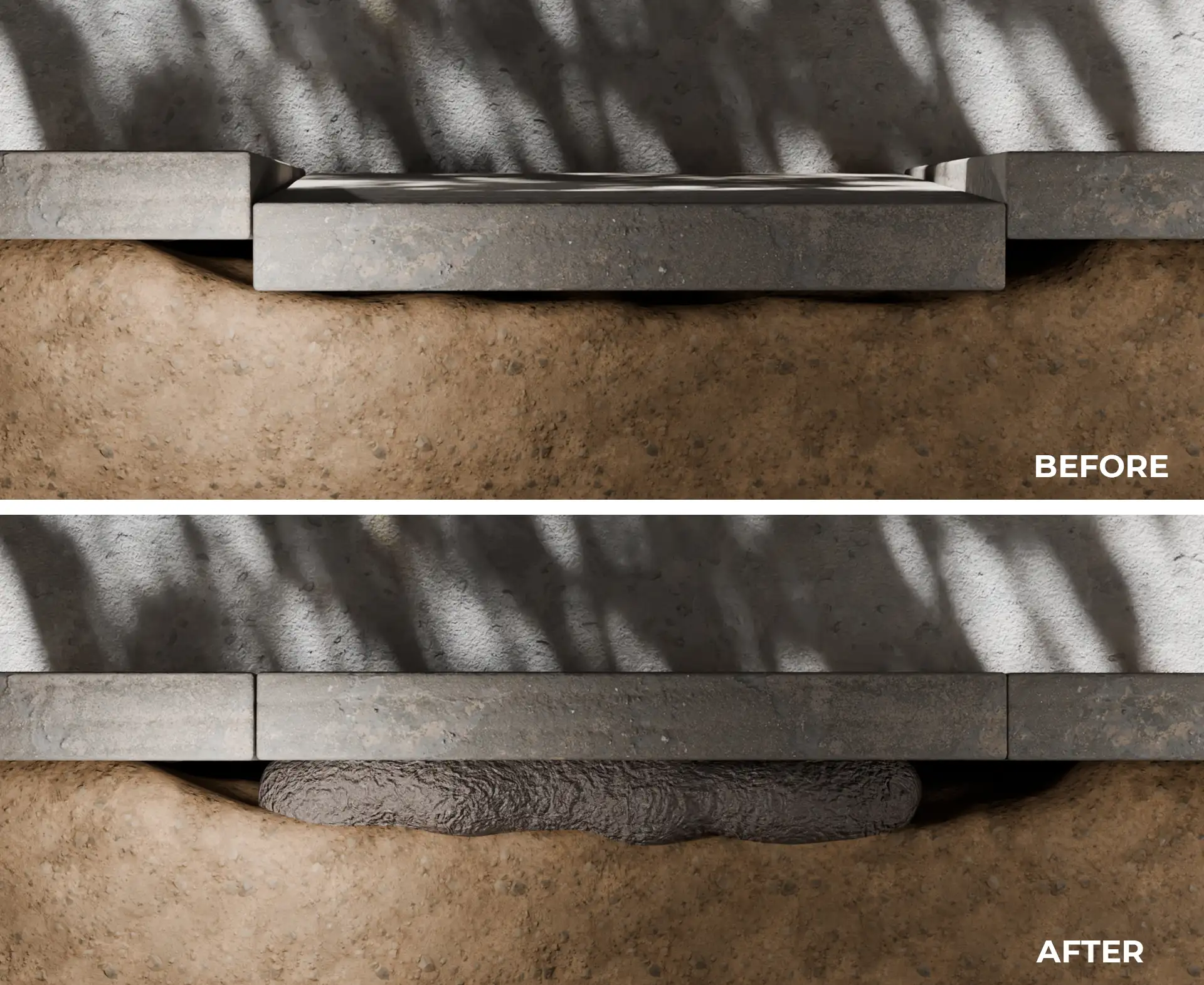
Concrete slabs, whether a driveway approach, a patio, a garage floor, or a slab-on-grade foundation, all rest on a prepared soil base. In Middle Tennessee, that base is the variable. Rutherford County's red clay compacts and swells with moisture changes, creating voids beneath slabs as the soil pulls away in dry summers. Davidson County's high water table washes fine soil particles from beneath slabs during heavy rain events. Tree roots lift slabs in one spot and create voids in another.
The result is the same: a concrete slab that tilts, settles at one edge, or develops a trip hazard. The fix used to be tear-out and replacement. Slab jacking, whether using a cementitious slurry or high-density polyurethane foam, lifts the slab back toward its original elevation by filling the void beneath it.
Mudjacking vs. Polyjacking
- Mudjacking uses a cement-sand slurry pumped under the slab through drilled holes. It is a proven method and less expensive than foam for large slabs.
- Polyjacking (polyurethane foam) expands to fill voids precisely, cures faster, weighs far less than slurry, and is the better choice where the underlying soil is weak or saturated.
We will recommend the right method during the inspection. Call (615) 624-1027 for a free assessment.
[ 02 ] How It Works
What to expect, start to finish
Free Inspection
We assess the slab, probe for voids, identify the cause of settlement, and determine the right lifting method.
Hole Drilling
Small holes, typically 1 to 2 inches in diameter, are drilled through the slab at strategic locations over the void.
Material Injection
Slurry or polyurethane foam is pumped under low pressure through each hole, filling voids and lifting the slab.
Level Check
We monitor elevation throughout injection and stop when the slab reaches the target level.
Hole Patching and Cleanup
Injection holes are patched with concrete mix and the work area is cleaned up. The slab can typically be used the same day.
Slab jacking is almost always less expensive than replacement and adds no additional weight to a soil that has already proven it cannot hold the original slab. For homeowners who want a clean, fast repair, it is often the right call.
[ 03 ] Why Ground Up
The difference is in the diagnosis
Get several quotes and you'll see a wide range of prices. The gap isn't luck. It's whether the contractor finds the actual cause and stands behind the work.
- In-house certified crews: we never subcontract your repair
- Optional independent third-party engineer review on larger jobs
- Honest three-tier triage: we tell you what can wait, in writing
- Family owned from the same Shelbyville Highway address since 2009
Slab Lifting and Leveling questions

Free guide
Get the free foundation settlement guide
- A room by room checklist of warning signs
- How Middle Tennessee red clay can move a house
- What happens at a free inspection
Your guide is on its way.
Check your inbox for an email from Ground Up Foundation Repair. If it is not there in a few minutes, check your spam or promotions folder.
Where we work
Headquartered in Murfreesboro,
serving Middle Tennessee
From red-clay Rutherford County soil to Nashville’s high water tables and Cookeville’s karst limestone, we know the ground beneath your home.
Also serving: La Vergne, Hendersonville, Gallatin, Lebanon, Clarksville, Tullahoma, Nolensville, Antioch + 100 more cities →
Found a problem? Get a straight answer
Free inspection, written estimate, honest triage. No pressure.