
Push Pier Installation, Foundation Stabilization That Uses Your Home's Own Weight
[ 01 ] The Honest Answer
What you should know about push pier installation
How Push Piers Stabilize Settling Middle Tennessee Foundations
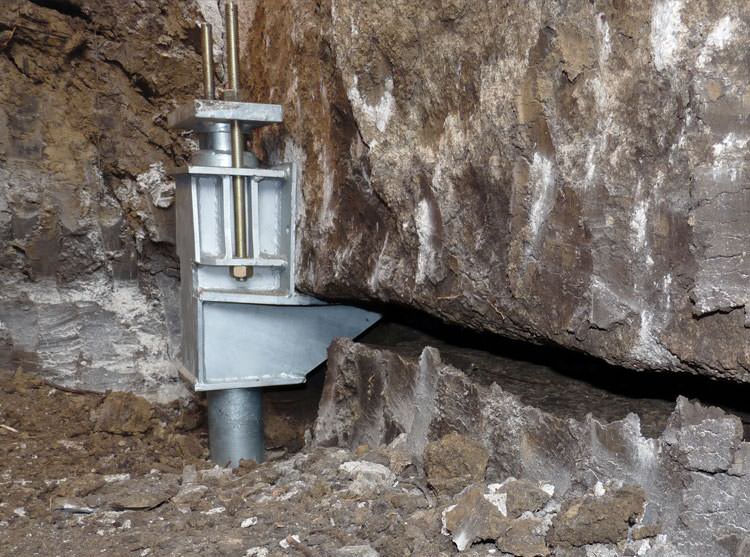
Push piers work on a different mechanical principle than helical piers, and that difference matters on certain Middle Tennessee sites. Where a helical pier is rotated into the ground like a large screw, a push pier is hydraulically driven straight down, using the dead load of your structure as the reaction force, the resistance the hydraulic ram pushes against to drive the pier downward. That means push piers perform especially well under heavy masonry construction and on sites where soil conditions make rotating a helical shaft difficult.
In Davidson County, where high seasonal water tables create soft near-surface soils, push piers can pass through those zones quickly and find competent bearing material below. If your home is a heavier brick or block structure, or if the footing bearing load is high, push piers may be the more appropriate system.
The Push Pier Process
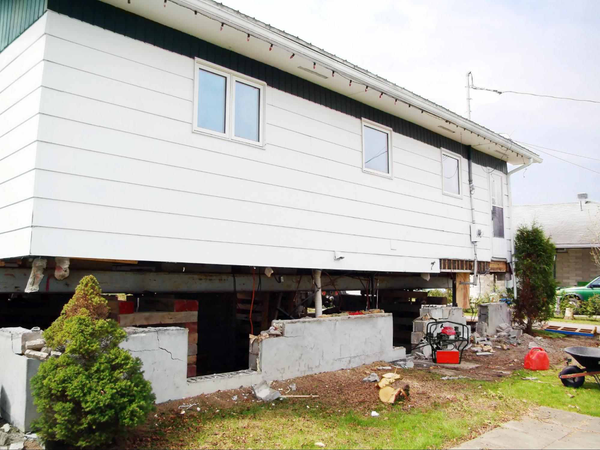
Our crew excavates to the foundation footing at each pier location. A steel bracket is attached directly to the footing, and then hollow steel pipe sections are driven through the bracket using a hydraulic ram, one section at a time, until the pier reaches the resistance that confirms bearing capacity. Once all piers are driven, synchronized hydraulic equipment lifts the structure at each bracket point simultaneously.
- No rotary torque equipment required, viable on more site conditions
- Pier sections are compact and can be moved through tight access points
- Most residential installations complete in one to three days
- Lifetime transferable warranty on every push pier system we install
- In-house certified crews on every job, no subcontractors
Call us at (615) 880-6449 to schedule your free inspection.
[ 02 ] How It Works
What to expect, start to finish
Free On-Site Inspection
We assess the foundation, document settlement patterns, and identify the load points most critical to address.
Footing Excavation
Small, targeted excavations are opened at each planned pier location to expose the footing.
Bracket Installation
An engineered steel bracket is secured to the footing to serve as the drive and lift point for the pier.
Hydraulic Drive
Steel pipe sections are driven through the bracket one segment at a time using hydraulic pressure until resistance confirms load-bearing capacity.
Synchronized Lift
All piers are pressurized simultaneously to raise the structure evenly toward its original elevation.
Lock and Restore
Brackets are locked at the lift elevation, excavations are backfilled and compacted, and the site is restored.
On heavier masonry homes or sites with difficult rotational soil conditions, push piers let us get to competent bearing material reliably. The synchronized lift is one of the cleanest parts of the process to watch.
[ 03 ] Why Ground Up
The difference is in the diagnosis
Get several quotes and you'll see a wide range of prices. The gap isn't luck. It's whether the contractor finds the actual cause and stands behind the work.
- In-house certified crews: we never subcontract your repair
- Optional independent third-party engineer review on larger jobs
- Honest three-tier triage: we tell you what can wait, in writing
- Family owned from the same Shelbyville Highway address since 2009
Push Pier Installation questions
Where we work
Headquartered in Murfreesboro,
serving Middle Tennessee
From red-clay Rutherford County soil to Nashville’s high water tables and Cookeville’s karst limestone, we know the ground beneath your home.
Also serving: La Vergne, Hendersonville, Gallatin, Lebanon, Clarksville, Tullahoma, Nolensville, Antioch + 100 more cities →
Found a problem? Get a straight answer
Free inspection, written estimate, honest triage. No pressure.