
A Crawl Space Sump Pump Automatically Removes Water Before It Can Damage Your Home
When water enters your crawl space through the foundation walls or floor, a sump pump with battery backup is the only reliable way to remove it continuously and automatically.
On cost: $1,500 to $4,500 for sump pump installation including basin, pump, discharge line, and battery backup.
Overview
Crawl Space Sump Pumps
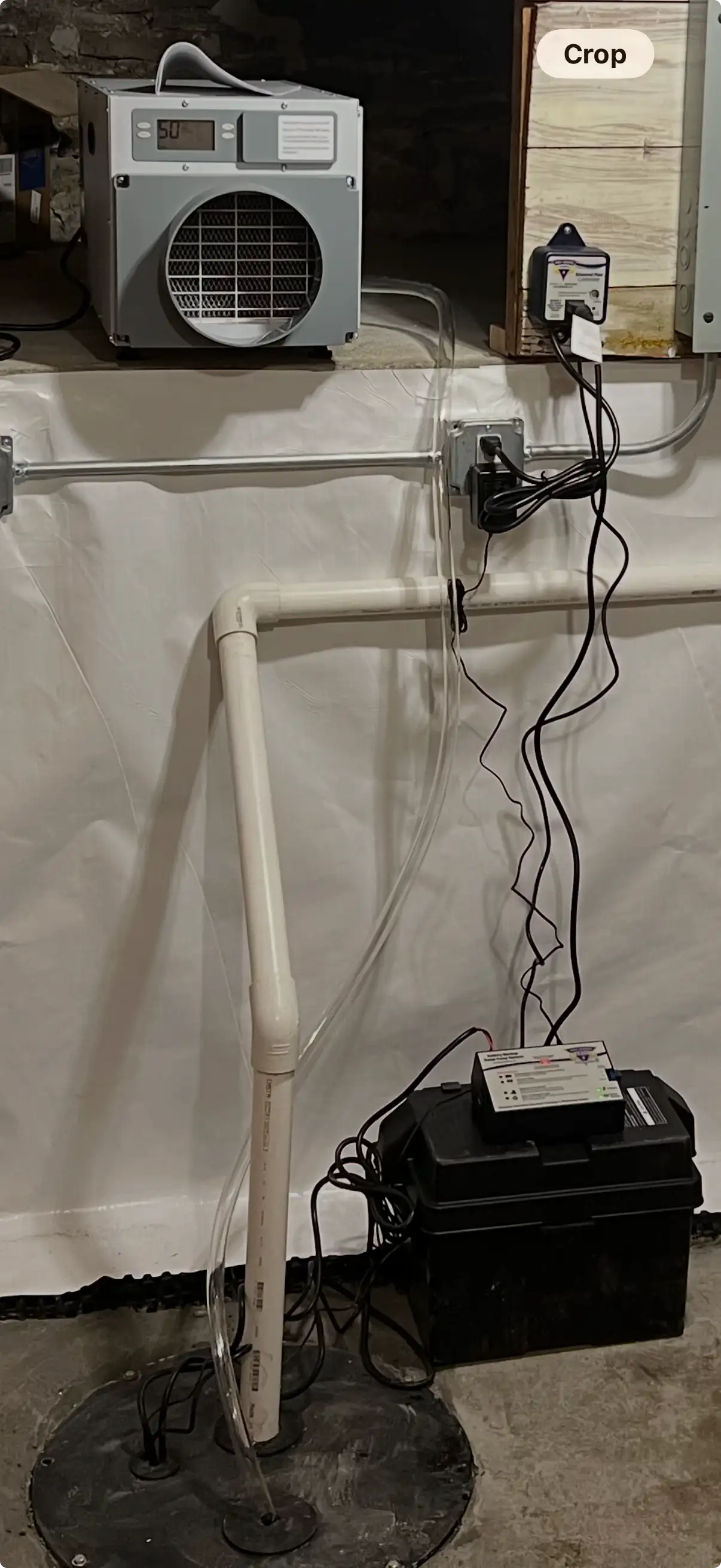
A crawl space sump pump is a submersible pump installed in a basin at the lowest point of the crawl space floor. When water accumulates in the basin, routed there by a perimeter drainage channel or from direct accumulation in the low area, the pump activates automatically and discharges water through a pipe to a safe discharge point outside the foundation. In Middle Tennessee, where heavy rain events and seasonal water table elevation regularly affect crawl spaces, a properly sized sump pump with battery backup is a fundamental component of any crawl space with active water entry. Before encapsulation can be installed in a crawl space with water intrusion, a sump pump and drainage system must be in place and the space must be confirmed dry.
The sump basin is installed at the lowest point of the crawl space, sized to provide buffer volume and accommodate the pump and float switch. A perimeter drainage channel routes water from around the crawl space perimeter to the basin. The submersible pump sits inside the basin and is connected to a discharge pipe that runs through the stem wall to daylight outside. A float switch activates the pump when water in the basin reaches a set height. Battery backup systems ensure the pump continues operating during power outages.
Wondering if this is the right fix for what you are seeing? Learn more about the warning signs: Standing Water in the Crawl Space and High Humidity in the Crawl Space . Or browse the full Problem Signs library for crawl space encapsulation.
Installation Process
How we install crawl space sump pumps
Basin Location Selection
The lowest point of the crawl space floor is identified for the sump basin. Access for maintenance and proximity to a wall for discharge pipe routing are also considered.
Basin Excavation and Installation
A hole is excavated to receive the basin. The basin is set level and backfilled around the perimeter. Gravel surrounds the perforated basin sides to allow water entry from the surrounding soil.
Pump Selection and Installation
A submersible pump rated for the expected water volume is installed in the basin with a float switch set at the appropriate activation height.
Discharge Line Installation
A discharge pipe runs from the pump through or under the stem wall to a point at least 6 feet from the foundation, sloped to drain freely. A check valve prevents backflow when the pump cycles off.
Battery Backup Installation and Test
A battery backup pump or controller is installed to maintain pump operation during power outages. The complete system is tested, pump activation, discharge flow, and backup activation.
The drainage channel collects the water. The sump pump gets rid of it. One without the other leaves gaps. Together they mean the crawl space drains automatically no matter how hard it rains.
Why Ground Up
The difference is in the diagnosis
Get several quotes and you'll see a wide range of prices. The gap isn't luck. It's whether the contractor finds the actual cause and stands behind the work.
- In-house certified crews: we never subcontract your repair
- Optional independent third-party engineer review on larger jobs
- Honest three-tier triage: we tell you what can wait, in writing
- Family owned from the same Shelbyville Highway address since 2009
FAQ
Crawl Space Sump Pumps questions
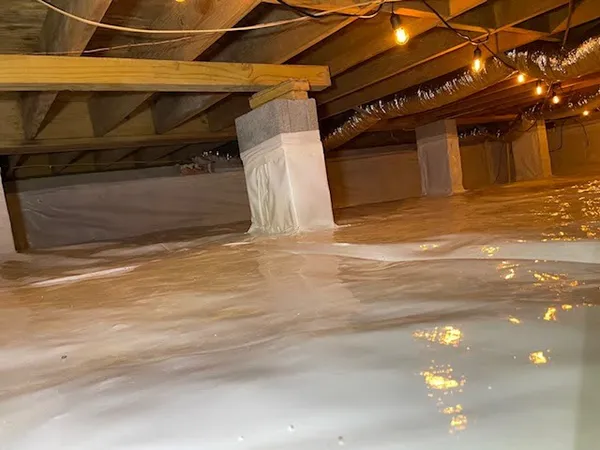
If your crawl space has active water intrusion, water entering through walls or the floor during rain events, yes. A vapor barrier installed over a wet crawl space traps water against the liner and the system will not function as intended. The sump pump and drainage system go in first, the space dries, and then encapsulation is installed.
A sump pump failure during a heavy rain allows water to back up in the basin and potentially flood the crawl space. We install battery backup pumps alongside the primary unit so that if power is lost or the primary pump fails, the backup takes over automatically.
A quality submersible sump pump in crawl space applications typically lasts 7 to 12 years, depending on how frequently it cycles. Annual inspection and periodic testing are recommended. We include sump pump maintenance guidance with every installation.
No. A sump pump removes liquid water. A dehumidifier removes airborne moisture vapor. They address different moisture sources and are both part of a complete encapsulation system for crawl spaces where both water entry and high humidity occur.
In most cases, yes. The sump pump is the discharge mechanism; the drainage channel is the collection system that routes perimeter water to the pump basin. Together they form a complete interior drainage system. A pump without a channel leaves areas along the crawl space perimeter without drainage coverage.

Free guide
Get the free crawl space guide
- Why Middle Tennessee crawl spaces get damp
- A checklist for your crawl space
- What encapsulation includes
Your guide is on its way.
Check your inbox for an email from Ground Up Foundation Repair. If it is not there in a few minutes, check your spam or promotions folder.
More Solutions
Other solutions we offer
Downspout Extensions for Crawl Space Protection
Downspout extensions are one of the simplest steps in crawl space moisture management. When gutters discharge at the foundation through a short downspout, they concentrate the entire roof's drainage directly against the stem wall. Over the course of a Tennessee rainy season, this can mean hundreds of thousands of gallons discharged within feet of the crawl space foundation. This sustained water concentration saturates the soil adjacent to the foundation, raises the local water table, and creates sustained hydrostatic pressure, the steady force that saturated soil places against the stem wall. Extending the downspout discharge to 6 to 10 feet from the foundation significantly reduces this load. For crawl spaces with existing moisture problems, downspout extensions are almost always part of the full moisture management solution alongside drainage systems and encapsulation.
Crawl Space Drainage Systems
A vapor barrier and dehumidifier address moisture vapor rising from the soil and airborne humidity. But when a crawl space has active water intrusion, water physically entering through cracks in foundation walls, through the wall-floor joint, or through low points in the floor, drainage must be added to the encapsulation system. A crawl space drainage system intercepts that intruding water at the perimeter, channels it to a sump basin, and removes it automatically before it can pool on the vapor barrier or create a high-humidity environment that challenges the dehumidifier.
Surface Drains for Crawl Space Protection
Surface drains are an exterior drainage solution that captures rainwater and surface runoff at specific collection points on the property and directs it away from the home through underground piping. Unlike interior crawl space drainage that manages water after it has entered the structure, surface drains address water before it reaches the foundation. In Middle Tennessee, where intense summer storms and clay soils that resist infiltration create rapid surface runoff, surface drains at strategic yard locations, along driveways, and at the foundation perimeter significantly reduce the water volume that migrates toward the crawl space. When paired with a complete encapsulation system, surface drains reduce the load on interior drainage and help maintain the dry environment that encapsulation requires.
Crawl Space Vapor Barrier Installation
A crawl space vapor barrier is a heavy, reinforced plastic liner that covers the ground under your home. It is the central part of a full crawl space encapsulation system. The soil in an open crawl space gives off moisture vapor all the time, whatever the weather is doing above ground. In Middle Tennessee, vented crawl spaces often reach 80 to 90 percent relative humidity in summer. At those levels, wood framing can absorb enough moisture to support mold, which can grow once wood reaches about 20 percent moisture content. A vapor barrier covers the whole crawl space floor, runs up the foundation walls, and wraps around piers. Seams are overlapped and taped, openings around pipes and supports are sealed, and the top edge is fastened and sealed to the wall. With the foundation vents sealed and a dehumidifier running, the crawl space becomes a closed space where humidity can be controlled through the year.
Crawl Space Dehumidifiers
A crawl space dehumidifier is a commercial-grade humidity control unit installed inside the crawl space to actively remove moisture from the enclosed air. In a sealed or encapsulated crawl space, residual moisture from soil not fully covered by the vapor barrier, from HVAC condensation, or from air that enters during maintenance access can still accumulate and cause problems if not actively managed. A dehumidifier sized for the crawl space volume removes this residual moisture continuously and maintains relative humidity below 55 to 60 percent, the threshold below which mold cannot establish on wood surfaces.
Crawl Space Insulation Removal
Floor insulation in an unencapsulated Middle Tennessee crawl space absorbs ground moisture over time. Once fiberglass is damp it stops insulating, sags out of the joist bays, and becomes a reservoir that holds water against the subfloor and framing. Pest activity accelerates the process, and in many older homes the batts are also contaminated with rodent waste. Removing that material is a necessary step before any moisture control work, and on its own it eliminates a significant source of mold growth and odor beneath the home. Ground Up performs insulation removal only. We do not install new insulation and we do not offer insulation replacement.
Found a problem? Get a straight answer
Free inspection, written estimate, honest triage. No pressure.