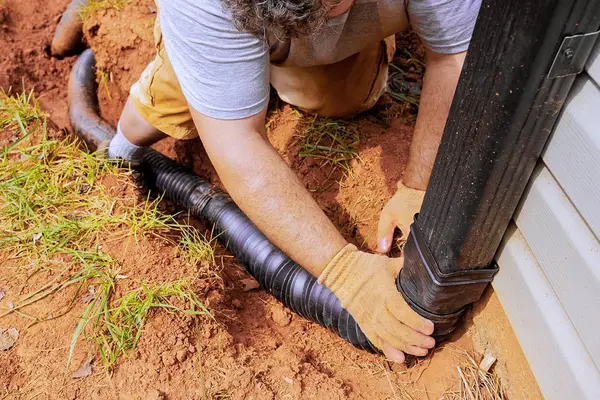
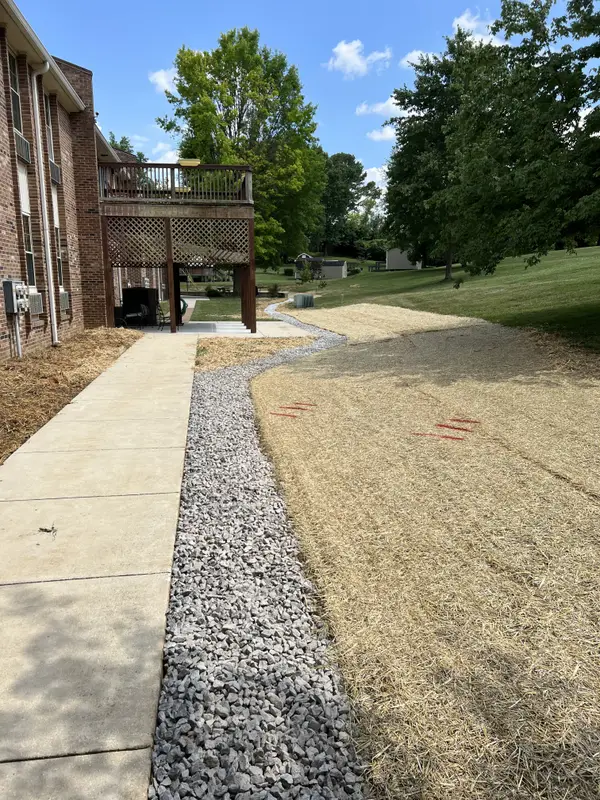
Downspout extensions are one of the simplest steps in crawl space moisture management. When gutters discharge at the foundation through a short downspout, they concentrate the entire roof's drainage directly against the stem wall. Over the course of a Tennessee rainy season, this can mean hundreds of thousands of gallons discharged within feet of the crawl space foundation. This sustained water concentration saturates the soil adjacent to the foundation, raises the local water table, and creates sustained hydrostatic pressure, the steady force that saturated soil places against the stem wall. Extending the downspout discharge to 6 to 10 feet from the foundation significantly reduces this load. For crawl spaces with existing moisture problems, downspout extensions are almost always part of the full moisture management solution alongside drainage systems and encapsulation.
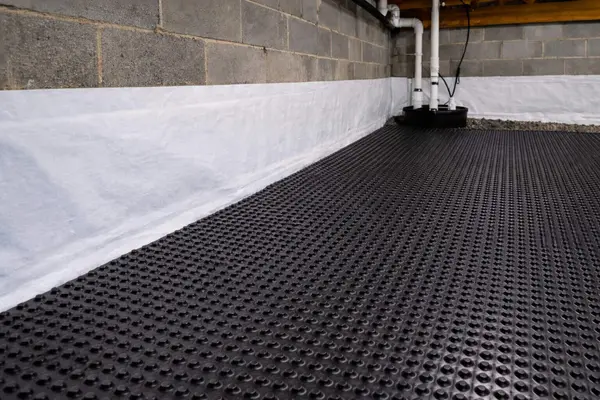
A vapor barrier and dehumidifier address moisture vapor rising from the soil and airborne humidity. But when a crawl space has active water intrusion, water physically entering through cracks in foundation walls, through the wall-floor joint, or through low points in the floor, drainage must be added to the encapsulation system. A crawl space drainage system intercepts that intruding water at the perimeter, channels it to a sump basin, and removes it automatically before it can pool on the vapor barrier or create a high-humidity environment that challenges the dehumidifier.
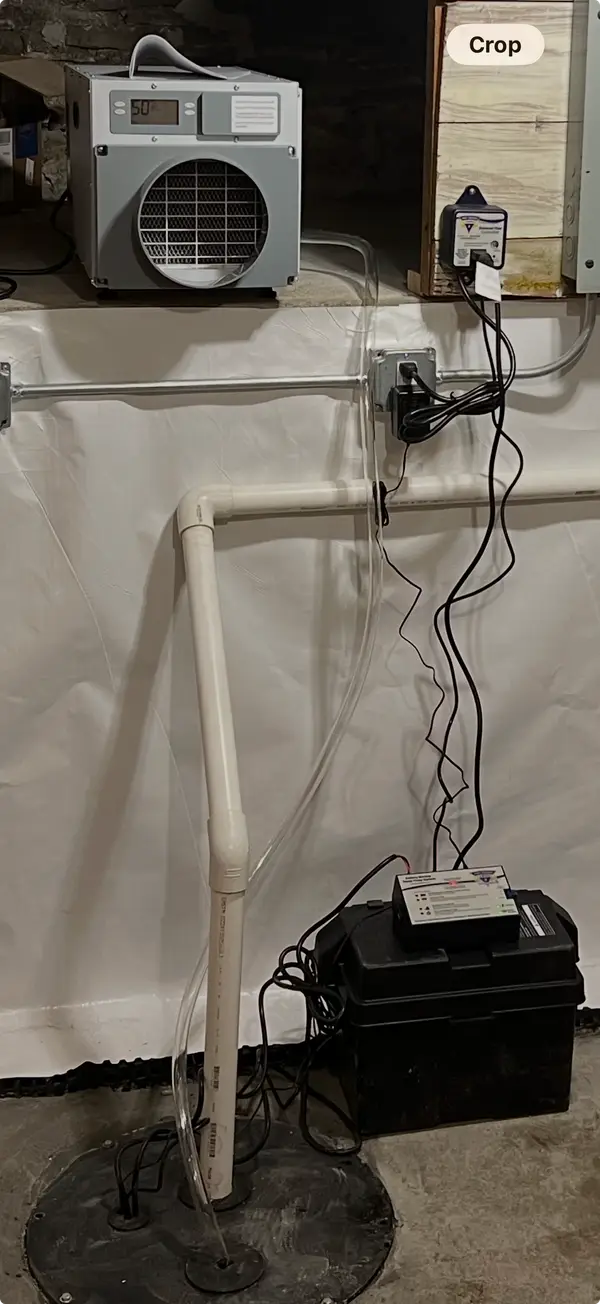
A crawl space sump pump is a submersible pump installed in a basin at the lowest point of the crawl space floor. When water accumulates in the basin, routed there by a perimeter drainage channel or from direct accumulation in the low area, the pump activates automatically and discharges water through a pipe to a safe discharge point outside the foundation. In Middle Tennessee, where heavy rain events and seasonal water table elevation regularly affect crawl spaces, a properly sized sump pump with battery backup is a fundamental component of any crawl space with active water entry. Before encapsulation can be installed in a crawl space with water intrusion, a sump pump and drainage system must be in place and the space must be confirmed dry.
Surface drains are an exterior drainage solution that captures rainwater and surface runoff at specific collection points on the property and directs it away from the home through underground piping. Unlike interior crawl space drainage that manages water after it has entered the structure, surface drains address water before it reaches the foundation. In Middle Tennessee, where intense summer storms and clay soils that resist infiltration create rapid surface runoff, surface drains at strategic yard locations, along driveways, and at the foundation perimeter significantly reduce the water volume that migrates toward the crawl space. When paired with a complete encapsulation system, surface drains reduce the load on interior drainage and help maintain the dry environment that encapsulation requires.
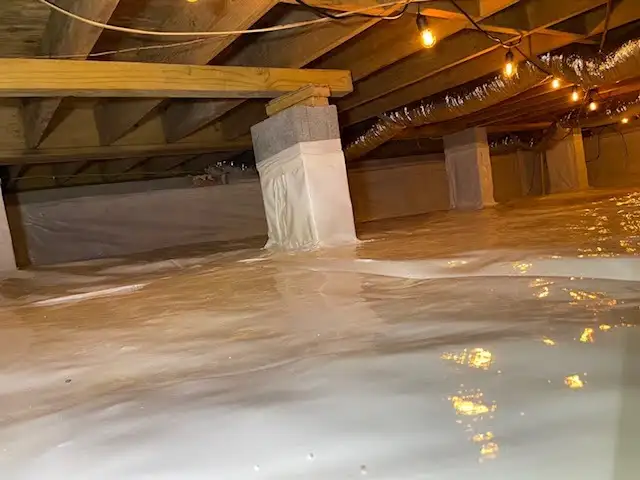
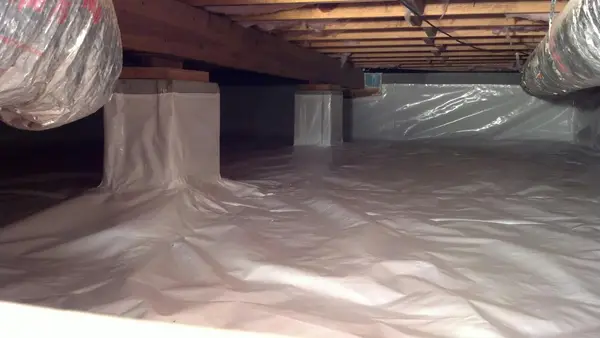
A crawl space vapor barrier is a heavy, reinforced plastic liner that covers the ground under your home. It is the central part of a full crawl space encapsulation system. The soil in an open crawl space gives off moisture vapor all the time, whatever the weather is doing above ground. In Middle Tennessee, vented crawl spaces often reach 80 to 90 percent relative humidity in summer. At those levels, wood framing can absorb enough moisture to support mold, which can grow once wood reaches about 20 percent moisture content. A vapor barrier covers the whole crawl space floor, runs up the foundation walls, and wraps around piers. Seams are overlapped and taped, openings around pipes and supports are sealed, and the top edge is fastened and sealed to the wall. With the foundation vents sealed and a dehumidifier running, the crawl space becomes a closed space where humidity can be controlled through the year.
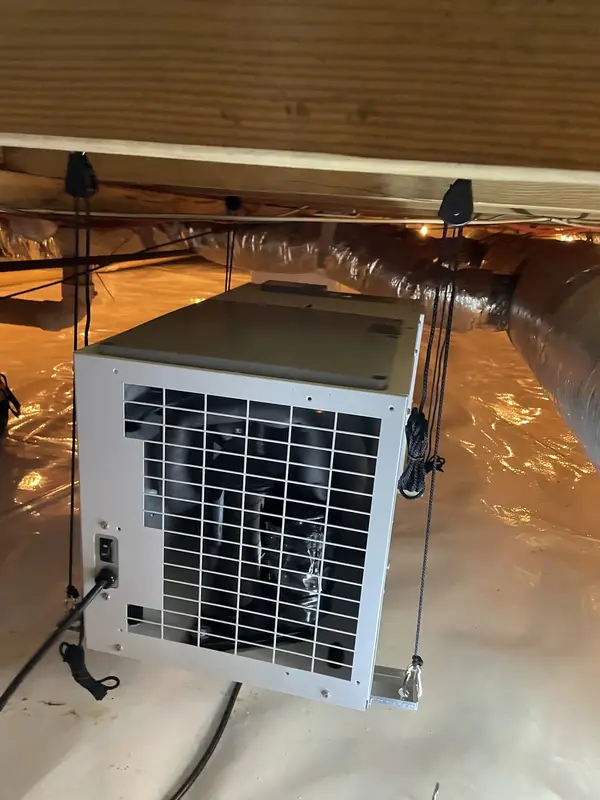
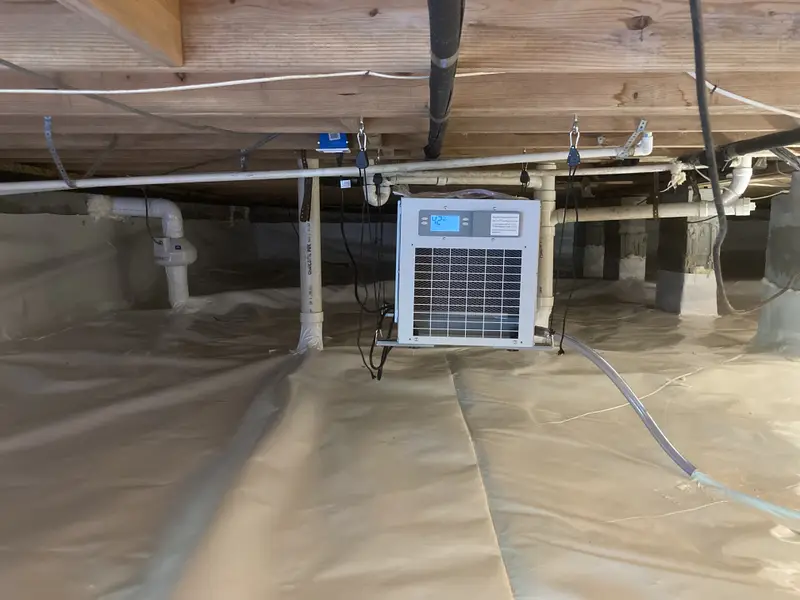
A crawl space dehumidifier is a commercial-grade humidity control unit installed inside the crawl space to actively remove moisture from the enclosed air. In a sealed or encapsulated crawl space, residual moisture from soil not fully covered by the vapor barrier, from HVAC condensation, or from air that enters during maintenance access can still accumulate and cause problems if not actively managed. A dehumidifier sized for the crawl space volume removes this residual moisture continuously and maintains relative humidity below 55 to 60 percent, the threshold below which mold cannot establish on wood surfaces.
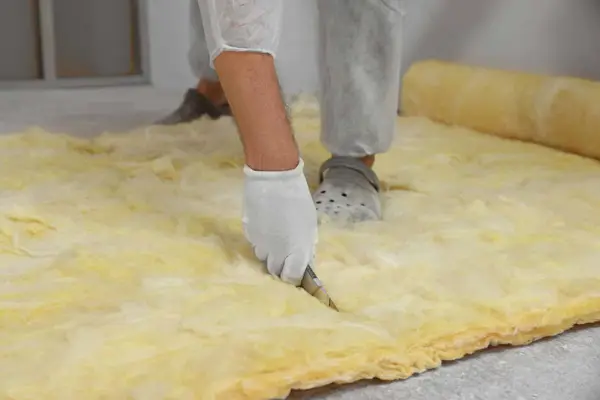
Floor insulation in an unencapsulated Middle Tennessee crawl space absorbs ground moisture over time. Once fiberglass is damp it stops insulating, sags out of the joist bays, and becomes a reservoir that holds water against the subfloor and framing. Pest activity accelerates the process, and in many older homes the batts are also contaminated with rodent waste. Removing that material is a necessary step before any moisture control work, and on its own it eliminates a significant source of mold growth and odor beneath the home. Ground Up performs insulation removal only. We do not install new insulation and we do not offer insulation replacement.
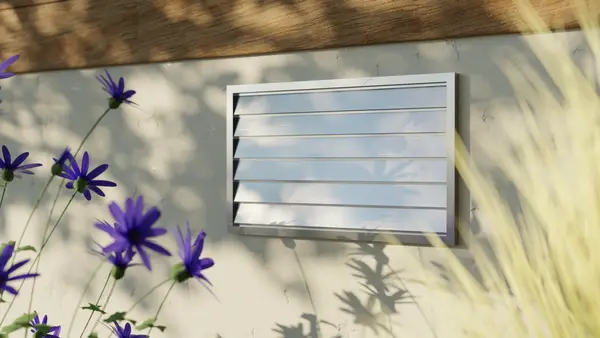
Conventional wisdom once held that foundation vents were necessary to dilute crawl space moisture. Research showed the opposite in humid climates: vents introduce warm humid summer air that condenses in the cooler crawl space, adding moisture rather than removing it. Sealing foundation vents, combined with a vapor barrier and dehumidification, creates a drier, healthier crawl space and is permitted by modern building codes.