
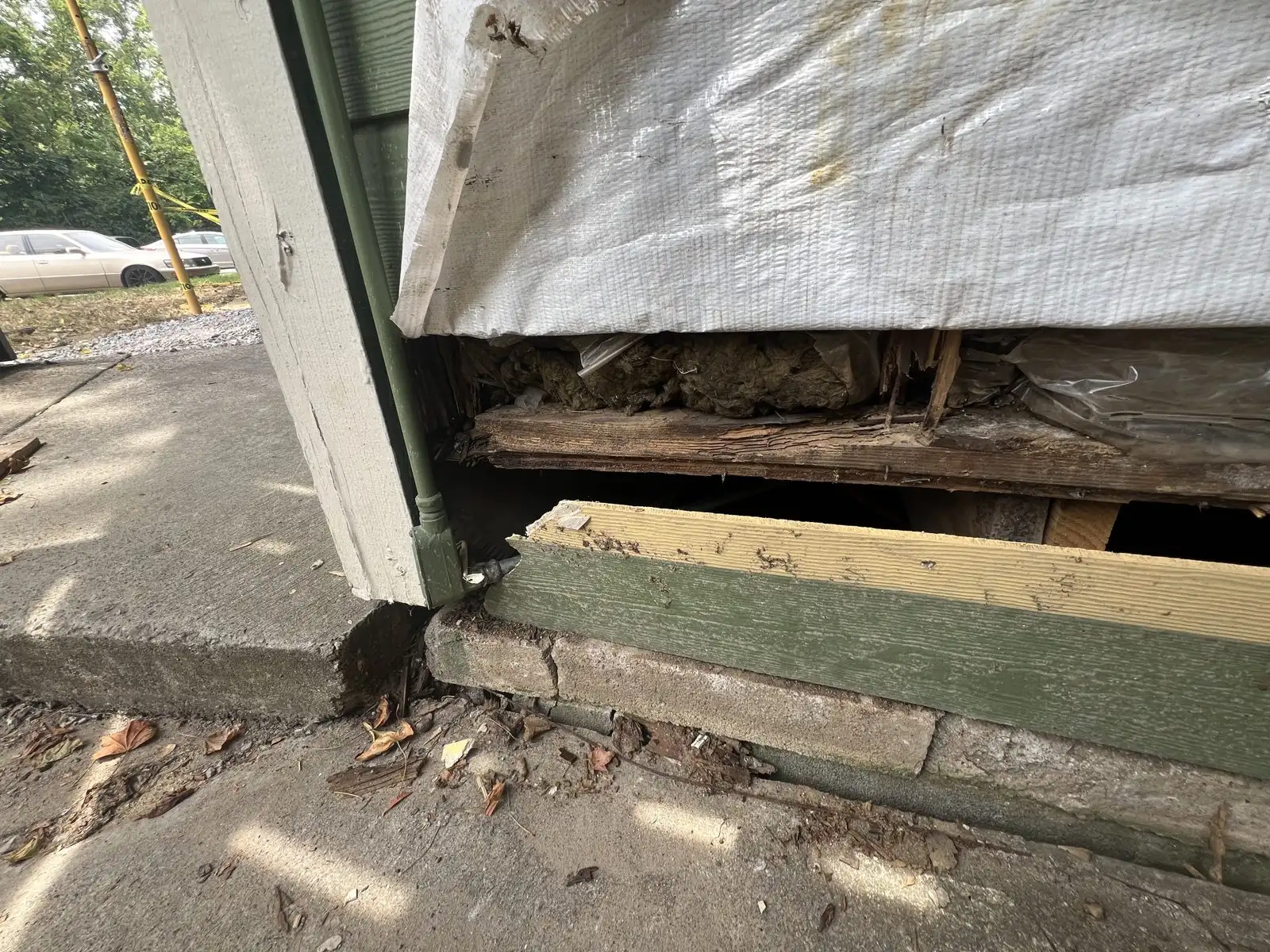
Sill Plate Replacement Restores the Foundation-to-Floor Connection
[ 01 ] The Honest Answer
What you should know about sill plate replacement
What Is a Sill Plate and Why Does It Fail?
The sill plate, also called a mudsill or foundation sill, is the horizontal lumber member that sits directly on top of the foundation wall. Floor joists bear on the sill plate at their ends, making it one of the most critical framing connections in the home. When the sill plate deteriorates, every joist that bears on it loses its end support, and the floor above begins to show the effects.
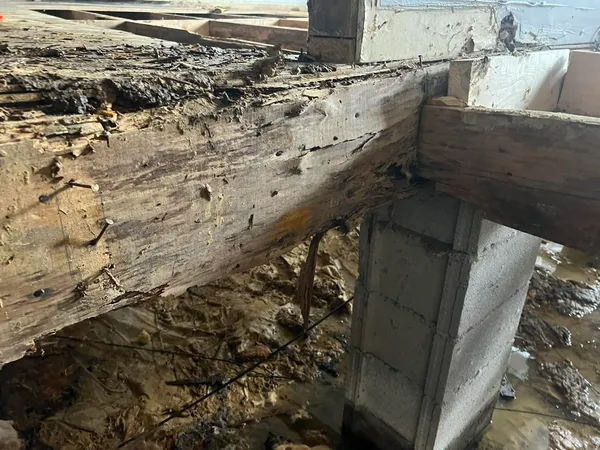
Sill plates fail primarily because of their location. Sitting directly on concrete or masonry, they are exposed to moisture migration from the foundation material below, condensation on the crawl space floor, and splashback from rain-saturated soil outside. In Middle Tennessee's high-humidity climate, untreated or under-treated sill plates routinely develop fungal decay over decades. The decay is often hidden, the top of the sill plate and the joists above it may look fine while the bottom half is hollow.
Signs of Sill Plate Deterioration
- Soft or spongy wood at the perimeter of the crawl space near the foundation wall
- Floor joists that have begun to separate or pull away from the foundation end
- Floors that feel soft or unstable along exterior walls
- Visible mold or dark discoloration on the sill plate when viewed from inside the crawl space
Our Sill Plate Replacement Process
Sill plate replacement requires temporary support shoring beneath the affected joist ends before the sill plate section is removed. We install new pressure-treated sill plate material on the cleaned foundation surface, ensuring proper bearing for each joist end. Where anchor bolts have corroded or are inadequate, we upgrade the sill plate anchor system as part of the same engagement.
Moisture control is always part of sill plate replacement, because the condition that rotted the original will rot the new material if left unaddressed. We recommend vapor barrier, improved drainage, or encapsulation based on what the crawl space inspection reveals. Call (615) 624-1027 for a free crawl space inspection.
[ 02 ] How It Works
What to expect, start to finish
Crawl Space Perimeter Inspection
We probe and moisture-meter the sill plate along all accessible foundation walls, identifying every section that has deteriorated beyond safe load-carrying capacity.
Temporary Joist Support
Before any sill plate material is removed, temporary shoring is installed beneath the affected joist ends so the floor system above remains stable during the repair.
Sill Plate Removal and Surface Preparation
The deteriorated sill plate section is removed and the top of the foundation wall is cleaned and dried in preparation for the new plate installation.
Treated Sill Plate Installation
New pressure-treated sill plate material is installed on the foundation wall, with joist bearing restored and anchor bolt connection verified or upgraded as needed.
Moisture Control Recommendations
We discuss and implement any moisture control measures, vapor barrier, drainage, or encapsulation, needed to protect the new sill plate from the same conditions that caused the original failure.
The sill plate is where the house meets the foundation. When it rots, you lose the bearing point for every joist end that sits on it. It is one of the most critical repairs in a crawl space, and one that often goes unnoticed until the symptoms above the floor get serious.
[ 03 ] Why Ground Up
The difference is in the diagnosis
Get several quotes and you'll see a wide range of prices. The gap isn't luck. It's whether the contractor finds the actual cause and stands behind the work.
- In-house certified crews: we never subcontract your repair
- Optional independent third-party engineer review on larger jobs
- Honest three-tier triage: we tell you what can wait, in writing
- Family owned from the same Shelbyville Highway address since 2009
Sill Plate Replacement questions
Where we work
Headquartered in Murfreesboro,
serving Middle Tennessee
From red-clay Rutherford County soil to Nashville’s high water tables and Cookeville’s karst limestone, we know the ground beneath your home.
Also serving: La Vergne, Hendersonville, Gallatin, Lebanon, Clarksville, Tullahoma, Nolensville, Antioch + 100 more cities →
Found a problem? Get a straight answer
Free inspection, written estimate, honest triage. No pressure.