
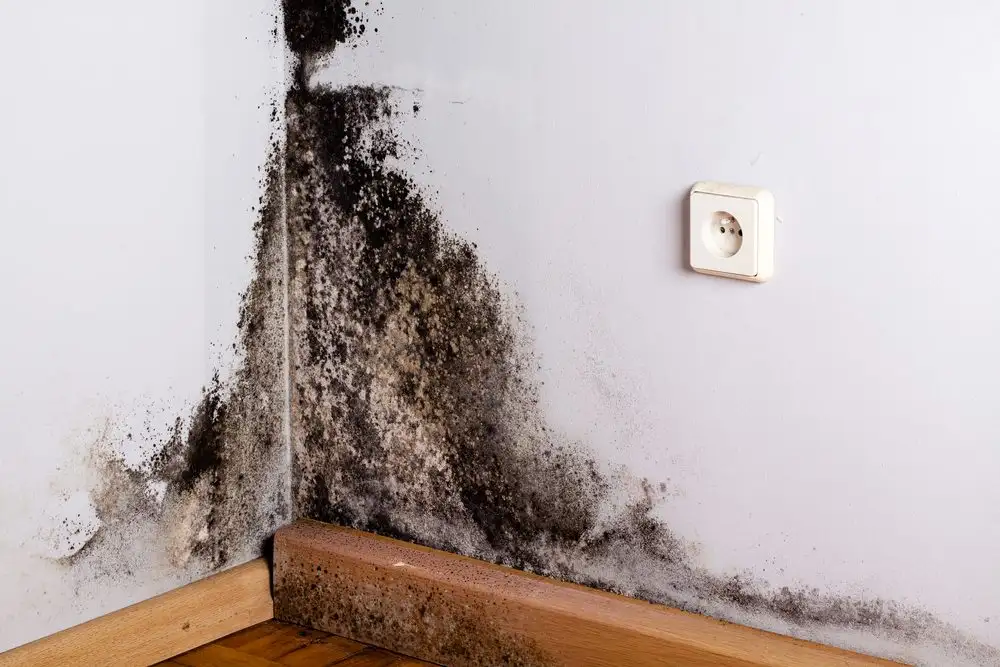
Mold Growth in the Basement: The Moisture Problem You Cannot Ignore
Basement mold is not a housekeeping problem, it is a waterproofing failure made visible. Killing surface mold without fixing the moisture that feeds it guarantees it comes back.
Not sure which fix applies to your situation? Browse our full range of solutions for basement waterproofing.
[ 01 ] Watch For These Signs
Signs Mold Growth Is Spreading or Affecting Air Quality
Musty Odor Migrating Into Main Living Areas
When the earthy, musty smell associated with basement mold is consistently noticeable on the main floor, mold spore and microbial volatile organic compound concentrations are elevated enough to travel through HVAC returns, floor penetrations, and staircase openings. This migration indicates a mold problem of sufficient scale to affect whole-house air quality.
Discoloration Spreading on Floor Joists or Framing
Gray, black, or greenish discoloration that has expanded across multiple floor joists or spread along framing members indicates active mold growth consuming wood. Once framing is affected, remediation becomes more complex and may require removal and replacement of compromised structural members.
Respiratory Symptoms Correlated With Home Occupancy
Household members experiencing persistent cough, nasal congestion, skin or eye irritation, or worsening asthma that improves when away from home and returns upon return may be responding to elevated mold spore concentrations. Symptoms correlated with home occupancy warrant professional mold assessment.
Mold Visible on Multiple Materials or Locations
Mold appearing simultaneously on concrete, drywall, wood, and stored items in different areas of the basement indicates that spore dispersal is active throughout the space and that the moisture conditions supporting growth are present throughout the basement rather than in an isolated area.
Moisture vapor migrates continuously from the saturated soil surrounding Middle Tennessee basements through concrete walls and floor slabs. Without a vapor barrier, this steady vapor input raises basement relative humidity to 70 percent or above throughout most of the year. Mold growth begins at relative humidity sustained above 60 percent, making vapor-sourced humidity a primary driver of basement mold in the region.
Cracks, the cove joint, and porous block or concrete allow liquid water to enter the basement during and after rain events. Even small-volume, intermittent seepage keeps wall and floor surfaces in the wet range required for mold colonization. Water that enters through the wall soaks insulation, wets the paper facing of drywall, and keeps wood framing in contact with adequate moisture for mold growth to proceed.
Outdoor air during Middle Tennessee's summer months carries enormous amounts of water vapor. When it enters the basement through foundation vents, window gaps, and door openings and contacts the cooler basement surfaces, it deposits moisture through condensation. This condensed moisture on wood, concrete, and stored materials creates the wet microenvironments mold requires.
Areas behind stored items, inside wall cavities, under stairways, and in corners where air does not circulate allow localized humidity to remain elevated even when the general basement air is less humid. These stagnant pockets can sustain mold growth that is invisible until it has spread to adjacent framing or surfaces.
A basement that flooded even once and was not professionally dried within 24 to 48 hours almost certainly has mold growth inside wall cavities and beneath flooring, even if surfaces appear visually dry. Mold established after a flooding event continues to produce spores and spread through the space as long as any residual moisture in materials keeps them above the moisture threshold.
[ 03 ] Recommended Solutions
How Ground Up fixes this
[ 04 ] Regional Context
Why Middle Tennessee foundations fail
Middle Tennessee's expansive clay soils shrink in dry summers and swell after rain, cycling significantly in volume. Davidson, Williamson, and Rutherford County homes built on this clay face ongoing movement pressure. Ground Up diagnoses and permanently stabilizes foundations across the region.
Every mold call we go on tells the same story, someone treated the mold and not the moisture. You cannot win that battle with cleaning products. Fix the water problem first and the mold problem goes away on its own.
[ 05 ] Why Ground Up
The difference is in the diagnosis
Get several quotes and you'll see a wide range of prices. The gap isn't luck. It's whether the contractor finds the actual cause and stands behind the work.
- In-house certified crews: we never subcontract your repair
- Optional independent third-party engineer review on larger jobs
- Honest three-tier triage: we tell you what can wait, in writing
- Family owned from the same Shelbyville Highway address since 2009
[ 06 ] FAQ
Mold Growth in the Basement questions
Small surface mold patches on non-porous surfaces such as concrete or block under 10 square feet can be cleaned with commercial mold-killing solutions while wearing appropriate PPE including an N95 respirator, gloves, and eye protection. Mold on porous materials, drywall, insulation, wood, typically cannot be cleaned and must be removed. Any mold growth beyond a small isolated patch warrants professional assessment and remediation. Most importantly, surface cleaning without addressing the moisture source guarantees regrowth.
No. Mold appears in many colors, black, green, gray, white, and orange, and species. The term black mold is commonly used to refer specifically to Stachybotrys chartarum, a particular toxin-producing species. Any mold growth warrants attention and remediation regardless of color. Professional testing can identify specific species if that information is relevant to health decisions.
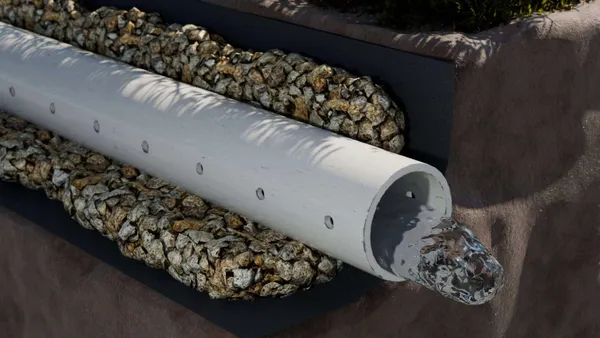
Mold remediation without waterproofing is temporary. Mold will return as long as the moisture conditions that supported it are present. After professional remediation, addressing the moisture source, whether that is installing an interior drainage system, vapor barrier, exterior waterproofing, or improving exterior drainage, is the only way to create conditions in which mold cannot re-establish. A properly waterproofed and dehumidified basement will not develop structural mold.
Mold remediation coverage varies significantly by policy. Many standard policies exclude mold or cap mold remediation at a low dollar limit. Coverage may exist if mold resulted from a covered peril such as a sudden pipe burst. Mold resulting from long-term water intrusion or humidity, the most common basement scenario, is typically excluded. Consult your insurer and document the timeline and source carefully.
Mold can begin colonizing wet organic materials within 24 to 48 hours under warm conditions. A basement flooded in summer with temperatures above 70°F and materials not dried within that window will almost certainly develop mold. A basement flooded in winter may have a slightly longer window due to lower temperatures, but materials that remain wet for more than 72 hours present significant mold risk in any season.

Free guide
Get the free dry basement guide
- Where basement water comes from in Middle Tennessee
- A checklist of signs to look for
- How a drain and sump pump system works
Your guide is on its way.
Check your inbox for an email from Ground Up Foundation Repair. If it is not there in a few minutes, check your spam or promotions folder.
More Problem Signs
Other signs to watch for
Basement Flooding
Basement flooding is one of the most alarming and costly water damage events a Middle Tennessee homeowner can face. Whether water is pooling across the entire floor or entering in a concentrated area near a wall or floor joint, flooding indicates that more water is entering the space than any existing drainage can handle. Nashville and surrounding Middle Tennessee communities average over 50 inches of rain annually, with heavy storm events common from March through November. Clay-dense soils in Rutherford, Williamson, and Davidson counties become saturated quickly during intense rain, driving hydrostatic pressure, the force that saturated soil exerts against a foundation wall, and forcing water through every available entry point. Without an interior drainage system and sump pump sized for the water volume your basement receives, flooding is the result.
Basement Water Intrusion
Basement water intrusion occurs when groundwater, surface runoff, or hydrostatic pressure, the force saturated soil exerts against a foundation, forces moisture through foundation walls, floor joints, or cracks. Middle Tennessee homeowners face this problem at higher-than-average rates because of the region's heavy annual rainfall (averaging 47 inches per year), its dense red clay soil that holds moisture rather than draining it, and the natural topography that funnels water toward residential foundations. Water intrusion can appear as a slow seep along a wall joint, puddles on the floor after heavy rain, or a chronic dampness that never fully dries between storms. Left unaddressed, it accelerates concrete deterioration, supports mold colonies, and undermines the structural integrity of the foundation itself.
Condensation on Basement Windows
Condensation on basement windows appears as water droplets or streaks on the glass surface, most commonly during summer months when outdoor air is warm and humid. The window glass stays cooler than the surrounding air because the basement itself is cooler than grade-level spaces. When warm, moisture-laden air contacts that cool glass surface, water vapor drops below its dew point and condenses into liquid. In Middle Tennessee, where summer relative humidity routinely exceeds 80 percent and outdoor temperatures climb above 90°F from June through September, basement window condensation is a reliable seasonal indicator that basement humidity is elevated. While condensation on the glass itself is a surface phenomenon, it reflects a broader moisture environment that also saturates wall materials, wood framing, stored items, and insulation. Persistent condensation indicates that the basement is not adequately sealed or dehumidified and that conditions favorable to mold growth exist throughout the space.
Efflorescence on Basement Walls
Efflorescence is the white or grayish chalky crust that forms on masonry surfaces when water carries dissolved minerals through concrete, block, or brick and deposits them on the surface as it evaporates. It looks like salt, chalk, or a powdery coating and often appears on basement walls, foundation blocks, and concrete floors near walls. While efflorescence itself is not structurally damaging, it is an unmistakable indicator of water movement through the masonry, which is the real concern.
Musty Odors in the Basement
A musty or earthy smell in the basement is one of the clearest indicators that moisture levels are elevated and mold has established. Unlike odors from products or furnishings, musty basement smells are persistent, worsen after rain or in humid weather, and do not respond to ventilation or air fresheners because the source, damp surfaces and mold growth, is continuously generating the odor compounds. In finished or semi-finished basements, the odor often penetrates walls and flooring and affects upper living areas.
Peeling Paint and Cracks on Basement Walls
When water under hydrostatic pressure, the force saturated soil exerts against a foundation wall, migrates through foundation walls, it pushes outward against any surface coating, paint, waterproof sealers, or plaster. Paint loses adhesion from behind and begins to bubble, crack, and peel. Simultaneously, water movement through masonry can widen hairline cracks in concrete block or poured concrete walls, creating a visible record of where water is entering and the wall is under stress. Both symptoms together are a reliable indicator of ongoing water movement that waterproofing needs to address.
Seeing these signs in your home?
We'll find the cause and tell you honestly what it needs, free.