
Mudjacking: The Traditional Concrete Lifting Method, and Its Limitations
Ground Up primarily uses polyurethane foam, but we'll always explain your full range of options.
On cost: Generally lower upfront cost than polyurethane foam lifting; total cost of ownership may be higher due to re-settlement risk
Overview
Mudjacking (Cement Slurry Lifting)
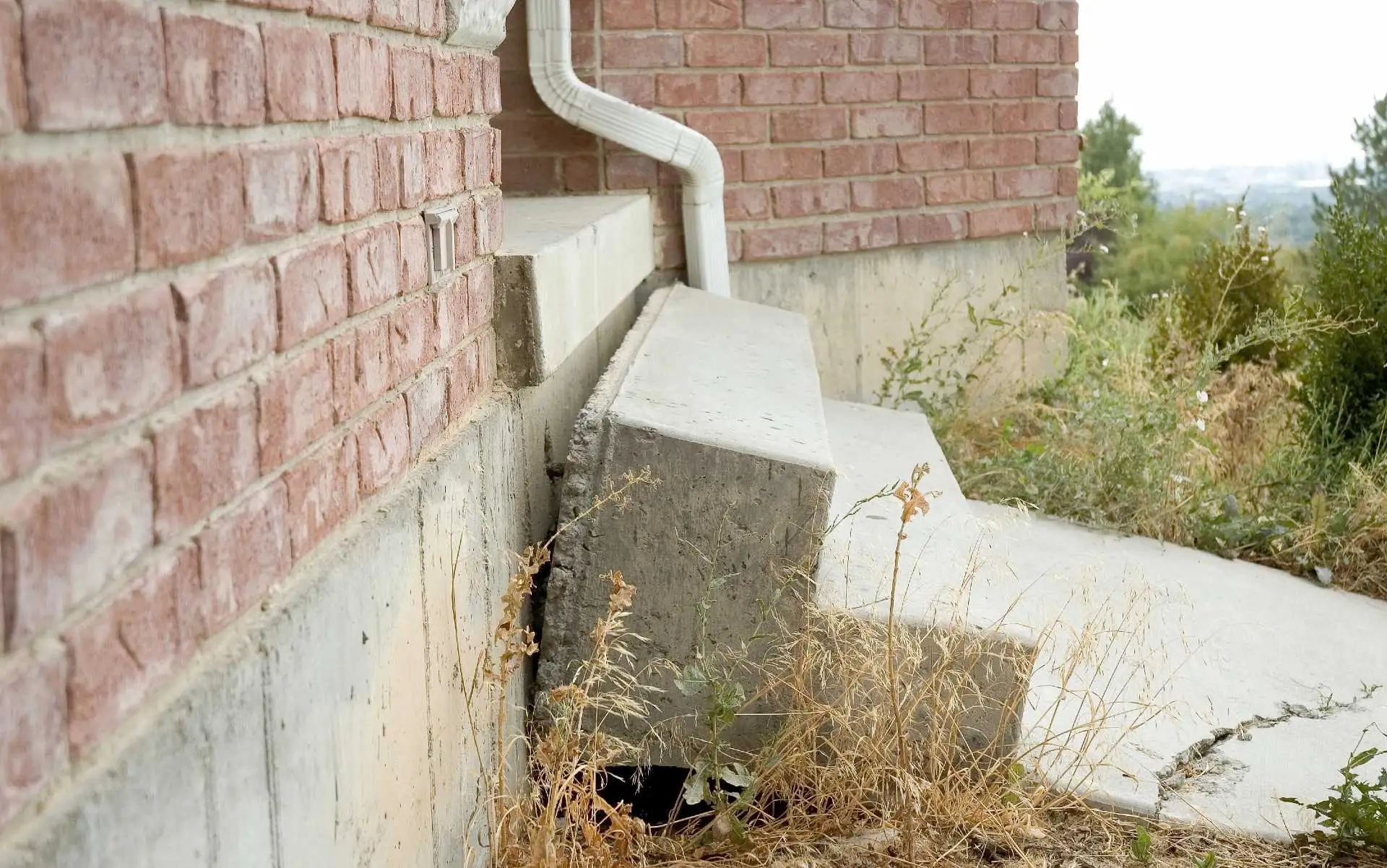
Mudjacking, also called slabjacking or pressure grouting, is the traditional method of lifting settled concrete slabs. It works by pumping a slurry mixture of water, soil, and cement beneath the slab through holes drilled in the concrete. As the slurry fills voids and builds pressure, it lifts the slab. Mudjacking has been used for concrete lifting since the 1930s and is widely available across the country. However, it has significant limitations compared to modern polyurethane foam lifting methods. Ground Up Foundation Repair primarily uses polyurethane foam lifting for concrete lifting in Middle Tennessee because of its superior weight-to-strength ratio, faster cure time, and longer-term stability. We explain mudjacking honestly so homeowners can make informed decisions about their concrete repair options.
Mudjacking is performed by drilling holes approximately 1.5 to 2 inches in diameter through the settled slab at intervals across the settlement area. A pump truck mixes a slurry of water, soil, sand, and sometimes Portland cement, then pumps that slurry through a hose into the holes under pressure. The slurry flows beneath the slab, filling voids and building pressure that gradually lifts the concrete. Once the slab reaches the target elevation, the pumping stops and the holes are patched. The slurry must then cure, typically 24 to 48 hours, before the surface can carry vehicle traffic.
Wondering if this is the right fix for what you are seeing? Learn more about the warning signs: Concrete Trip Hazards . Or browse the full Problem Signs library for concrete repair.
Installation Process
How we install mudjacking (cement slurry lifting)
Site Assessment and Hole Layout
The technician evaluates the settled area and marks hole locations in a pattern designed to distribute slurry evenly beneath the slab. Mudjacking holes are significantly larger than polyurethane foam injection ports, typically 1.5 to 2 inches in diameter.
Drilling
Holes are drilled through the concrete slab at each marked location. The larger hole size required for mudjacking is more visible after patching than the smaller holes used in polyurethane foam lifting.
Slurry Preparation and Pumping
A slurry mixture is prepared in the pump truck, typically a blend of water, excavated soil, sand, and cement. The mixture is pumped through hoses into each hole at controlled pressure, filling voids beneath the slab.
Lift Monitoring
As slurry is pumped, the technician monitors slab elevation and moves from hole to hole to distribute the lift evenly. Because slurry flows unpredictably, achieving precise, uniform lift is more challenging with mudjacking than with controlled polyurethane foam injection.
Hole Patching and Cure Wait
Once lifting is complete, holes are patched with concrete or mortar. The slurry beneath the slab must then cure for 24–48 hours before vehicle traffic can resume. This waiting period is a significant practical disadvantage compared to polyurethane foam's 15-minute cure.
I'll always be straight with homeowners about mudjacking. It works, and it's been around for 90 years. But for residential concrete in Middle Tennessee, polyurethane foam lifting is almost always the better long-term investment, lighter on the soil, faster to cure, and more durable.
Why Ground Up
The difference is in the diagnosis
Get several quotes and you'll see a wide range of prices. The gap isn't luck. It's whether the contractor finds the actual cause and stands behind the work.
- In-house certified crews: we never subcontract your repair
- Optional independent third-party engineer review on larger jobs
- Honest three-tier triage: we tell you what can wait, in writing
- Family owned from the same Shelbyville Highway address since 2009
FAQ
Mudjacking (Cement Slurry Lifting) questions
Mudjacking slurry is extremely heavy, often over 100 lbs per cubic foot, which adds significant load to the same soil that caused the settlement in the first place. This added weight increases the likelihood of re-settlement over time. Mudjacking slurry can also crack, wash away, or shrink as it cures. Polyurethane foam is approximately 50 times lighter, cures in 15 minutes, does not wash away, and provides a more stable, long-term result. For most residential concrete in Middle Tennessee, polyurethane foam lifting is the better solution.
Mudjacking may be considered in specific situations, for example, on very large commercial flatwork where the volume of material required makes foam lifting prohibitively expensive, or in cases where the property owner specifically requests it. In residential applications, however, polyurethane foam's advantages in weight, cure time, and longevity typically make it the preferred recommendation.
Mudjacking typically has a lower upfront material cost per cubic yard of void filled. However, when you factor in the longer cure time (lost use of driveway or patio for 1–2 days), the higher likelihood of re-settlement requiring future repair, and the need for larger and more visible hole patches, the total cost of ownership often favors polyurethane foam lifting despite its higher initial price.
Over-pressurizing the slurry during pumping can crack an already-stressed slab. The larger drill holes (1.5–2 inches vs. 5/8 inch for polyurethane foam) also create more significant patch points that are visible after repair. These risks are manageable with experienced technicians but are inherent limitations of the mudjacking process.
Ground Up Foundation Repair evaluates each project individually. We'll assess the size and degree of settlement, the condition of the slab, the nature of the sub-base problem, and the homeowner's priorities, then give an honest recommendation. In the vast majority of Middle Tennessee residential cases, polyurethane foam lifting is what we recommend.

Free guide
Get the free sinking concrete guide
- Why driveways and patios sink
- A checklist for your slabs
- How foam leveling lifts concrete in hours
Your guide is on its way.
Check your inbox for an email from Ground Up Foundation Repair. If it is not there in a few minutes, check your spam or promotions folder.
More Solutions
Other solutions we offer
Polyurethane Foam Concrete Lifting (Polyjacking)
Polyurethane foam concrete lifting (also called polyjacking or foam jacking) is the modern replacement for traditional mudjacking. Where mudjacking injects a heavy cement-sand slurry that adds weight and can wash out over time, this method uses a two-component polyurethane foam that is injected as a liquid, expands to fill the void completely, and cures into a rigid, waterproof cellular structure that permanently supports the slab from beneath. At Ground Up Foundation Repair, we use polyurethane foam lifting for driveways, sidewalks, pool decks, patios, garage floors, and interior concrete slabs that have settled due to soil voids, erosion, or inadequate compaction. The foam is injected through 5/8-inch holes drilled through the slab at strategic locations. Once injected, the foam reaches working expansion within seconds and lifts the slab to the target level within minutes. Injection ports are patched with concrete caulk and the surface is ready for use immediately, no cure time required. Polyurethane foam is waterproof, does not wash out, does not add meaningful structural load, and does not compress further under normal loading conditions.
Concrete Crack Sealing
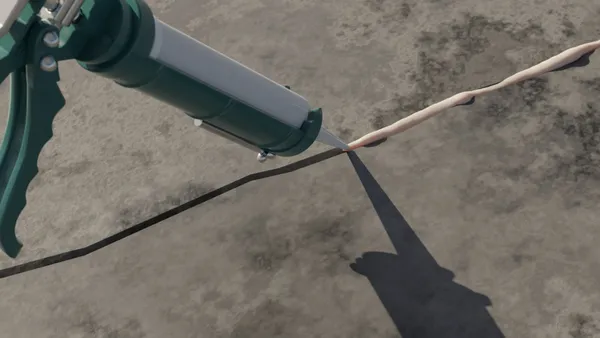
Ground Up uses a professional-grade, flexible polyurethane joint and crack sealant engineered for concrete flatwork. Unlike rigid fillers and hardware-store caulks that crack and debond with the first seasonal freeze-thaw or thermal expansion cycle, this sealant remains elastic after curing, it flexes with the concrete rather than fighting it. This flexibility is especially valuable in Middle Tennessee's climate, where concrete surfaces experience wide temperature swings between winter freezes and summer heat, and where red clay soil movement causes slabs to shift slightly across every wet and dry season. The sealant is also UV-resistant, meaning it does not degrade, yellow, or become brittle from sun exposure, a critical property for outdoor applications in Tennessee's sunny summers. Ground Up seals control joints, expansion joints, random cracks, and the joints between adjacent slabs on driveways, patios, pool decks, sidewalks, and garage floors.
Foam Injection for Concrete Voids
Foam injection for concrete void filling is a targeted, preventive application of polyurethane foam used to fill sub-slab voids before they cause visible settlement or slab failure. While polyjacking uses foam to actively lift an already-settled slab, void-filling foam injection is used where ground-penetrating radar or hollow-tap surveys have located a void beneath a slab that is still at grade. By filling the void while the slab is still level, we prevent the sudden drop that occurs when remaining support fails. This application is common beneath garage floors, interior concrete slabs, warehouse floors, and any flatwork area where a hollow sound is detected during inspection. The injection process is nearly identical to polyjacking: small holes are drilled through the slab, foam is injected to fill the void, and holes are patched. Because the slab is not being raised, the process requires precise foam volume control to fill the void without over-lifting.
Concrete Joint Sealing
Concrete joint sealing is the process of filling and sealing the planned control joints, expansion joints, and construction joints in concrete flatwork to prevent water, debris, and vegetation from entering beneath the slab. Every concrete driveway, patio, and sidewalk has joints, either cut into the slab at installation to control cracking, or formed between pours on different days. These joints are intentional features of the slab, but they must be maintained. When joint sealant deteriorates, cracks, or was never installed in the first place, the open joint becomes a direct pathway for water to enter and erode the soil beneath the concrete. In Middle Tennessee, with roughly 47 inches of annual rainfall and expansive red clay soils that are easily destabilized by water, open concrete joints are one of the primary drivers of the slab settlement and cracking that Ground Up is called to repair. Sealing joints proactively, or resealing them when deteriorated, is the simplest maintenance a homeowner can perform to extend the life of their concrete.
Polyurethane Foam Concrete Lifting
This polyurethane foam is a two-component, high-density system used to lift and stabilize sunken concrete slabs. Developed specifically for slab lifting applications, it expands when its two components mix beneath the concrete, filling voids and gently raising the slab back to its original position. Because the cured foam weighs only about 2 lbs per cubic foot, compared to the 100+ lbs per cubic foot of traditional mudjacking slurry, it adds virtually no load to the soil beneath the slab. This lightweight property is one of the key reasons foam-lifted slabs are far less likely to re-settle than slabs lifted by mudjacking. Ground Up Foundation Repair uses polyurethane foam lifting across Middle Tennessee for driveways, patios, garage floors, sidewalks, pool decks, and other residential concrete flatwork.
Slab Jacking (Mudjacking)
Sunken concrete slabs, driveways, sidewalks, patios, garage floors, and steps, are one of the most common concrete problems in Middle Tennessee. When the soil beneath a slab erodes, settles, or washes away, the unsupported concrete sinks. Slab jacking, also called mudjacking or concrete lifting, addresses this by pumping a fill material, either a cement-soil slurry (traditional mudjacking) or expanding polyurethane foam, through holes drilled in the slab. The material fills the void beneath the slab and generates enough pressure to lift it back toward its original elevation.
Found a problem? Get a straight answer
Free inspection, written estimate, honest triage. No pressure.