
Crawl Space Mold Remediation
[ 01 ] The Honest Answer
What you should know about crawl space mold remediation
Professional Crawl Space Mold Remediation
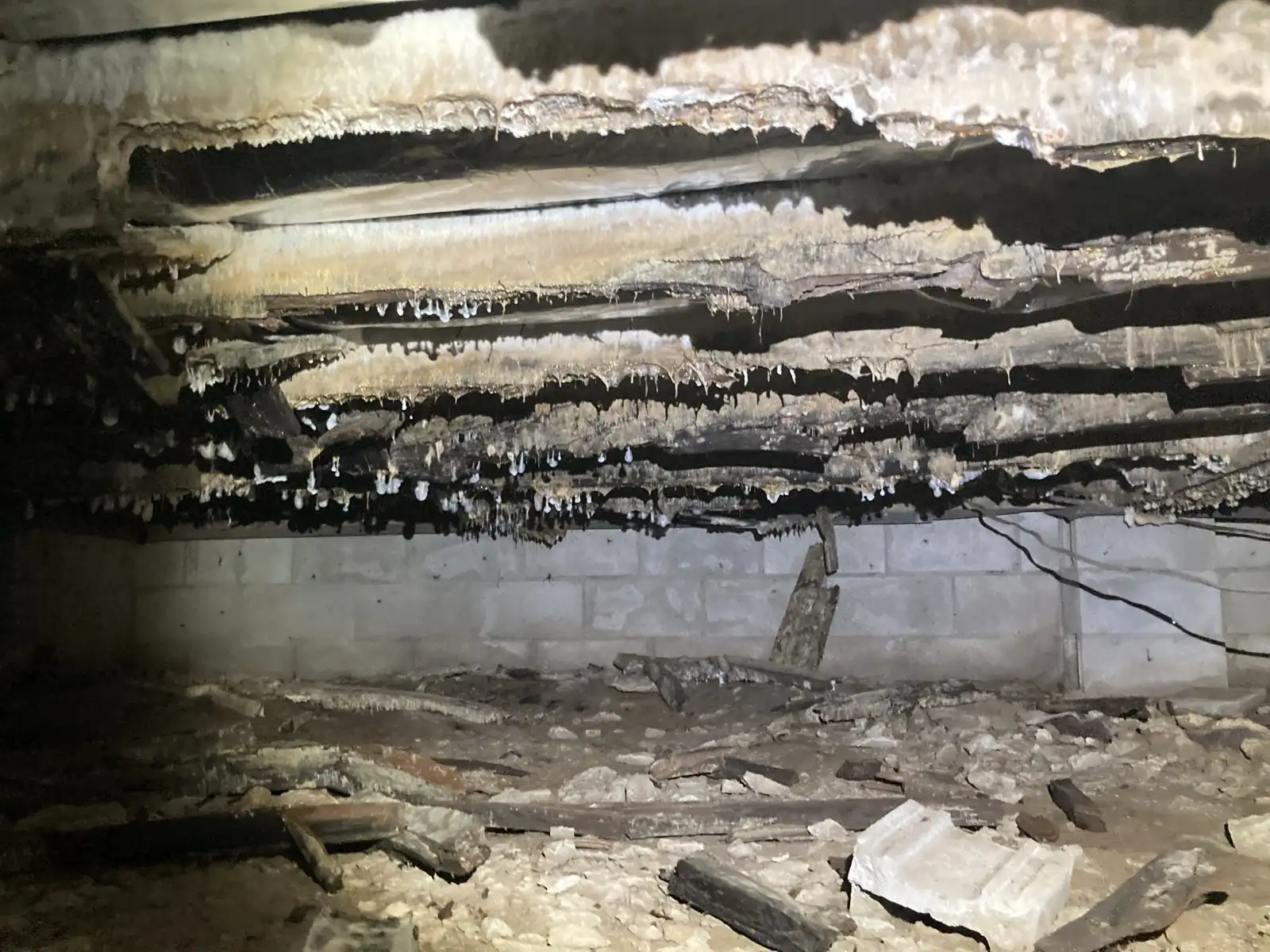
Mold in a crawl space is almost always a moisture problem that has been present for an extended period. Most mold species require sustained relative humidity above 70 percent to colonize and grow on wood surfaces, conditions that are common in Middle Tennessee crawl spaces that are unsealed or poorly managed. Once established, mold actively degrades organic materials including wood framing, and releases spores into the air that rises through the subfloor into the living space above.
Remediation requires more than surface treatment. Bleach applied to visible mold kills the surface growth but leaves the root structure (mycelium) in the wood, allowing the colony to re-establish quickly. Professional remediation involves physical removal or HEPA vacuuming of affected material, treatment with EPA-registered fungicides, and, critically, correction of the moisture source that enabled the growth in the first place. Mold removed without fixing the moisture returns within one season.
Signs of Crawl Space Mold
- Dark patches or white fuzzy growth on floor joists, beams, or insulation
- Musty odor in the home, especially in the morning or after the house has been closed
- Allergy symptoms or respiratory irritation that improve when occupants leave the home
- Staining on wood surfaces that does not wipe clean
Mold Remediation Paired with Moisture Control
We remediate existing mold and address the moisture conditions in the same engagement. After remediation, vapor barrier installation, drainage, and dehumidification ensure the crawl space stays below the humidity threshold where mold can re-establish. This combined approach is the only one that produces lasting results.
Call us at (615) 624-1027 for a free crawl space inspection. We will assess the extent of mold growth and the moisture conditions driving it, and provide a complete remediation and prevention plan.
[ 02 ] How It Works
What to expect, start to finish
Mold and Moisture Assessment
We assess the extent of mold growth, identify the moisture sources sustaining it, and determine whether material removal or surface treatment is the appropriate remediation approach.
Containment and Material Removal
Severely affected materials including deteriorated insulation and heavily colonized wood surfaces are removed. HEPA vacuuming removes loose mold particles from the work area.
Fungicide Treatment
EPA-registered fungicide is applied to all affected surfaces, penetrating wood fibers to address the mold colony at the root level rather than only at the surface.
Moisture Control Installation
Vapor barrier, drainage, and dehumidification are installed to eliminate the moisture conditions that caused the mold, preventing recurrence after remediation is complete.
Mold remediation without moisture control is a temporary fix. You can clean it as thoroughly as you want, but if the crawl space is still humid, the mold comes back within a season. We address both in the same visit.
[ 03 ] Why Ground Up
The difference is in the diagnosis
Get several quotes and you'll see a wide range of prices. The gap isn't luck. It's whether the contractor finds the actual cause and stands behind the work.
- In-house certified crews: we never subcontract your repair
- Optional independent third-party engineer review on larger jobs
- Honest three-tier triage: we tell you what can wait, in writing
- Family owned from the same Shelbyville Highway address since 2009
Crawl Space Mold Remediation questions

Free guide
Get the free crawl space guide
- Why Middle Tennessee crawl spaces get damp
- A checklist for your crawl space
- What encapsulation includes
Your guide is on its way.
Check your inbox for an email from Ground Up Foundation Repair. If it is not there in a few minutes, check your spam or promotions folder.
Where we work
Headquartered in Murfreesboro,
serving Middle Tennessee
From red-clay Rutherford County soil to Nashville’s high water tables and Cookeville’s karst limestone, we know the ground beneath your home.
Also serving: La Vergne, Hendersonville, Gallatin, Lebanon, Clarksville, Tullahoma, Nolensville, Antioch + 100 more cities →
Found a problem? Get a straight answer
Free inspection, written estimate, honest triage. No pressure.