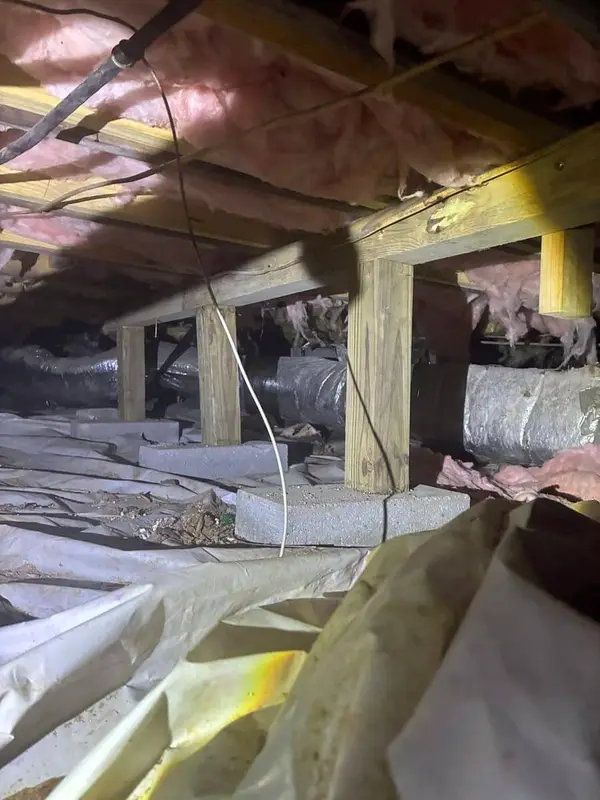
Structural beams throughout a crawl space home serve distinct load-carrying roles, the sill plate transfers floor loads to the foundation wall, rim joists close off the floor system at the perimeter, and secondary beams support floor joists between the main carrier and the foundation. When any of these members is damaged by rot, insect activity, or physical stress, the floor system above loses support. Ground Up Foundation Repair identifies the affected beam, determines the appropriate repair method, and restores full structural capacity without disrupting the living space above.
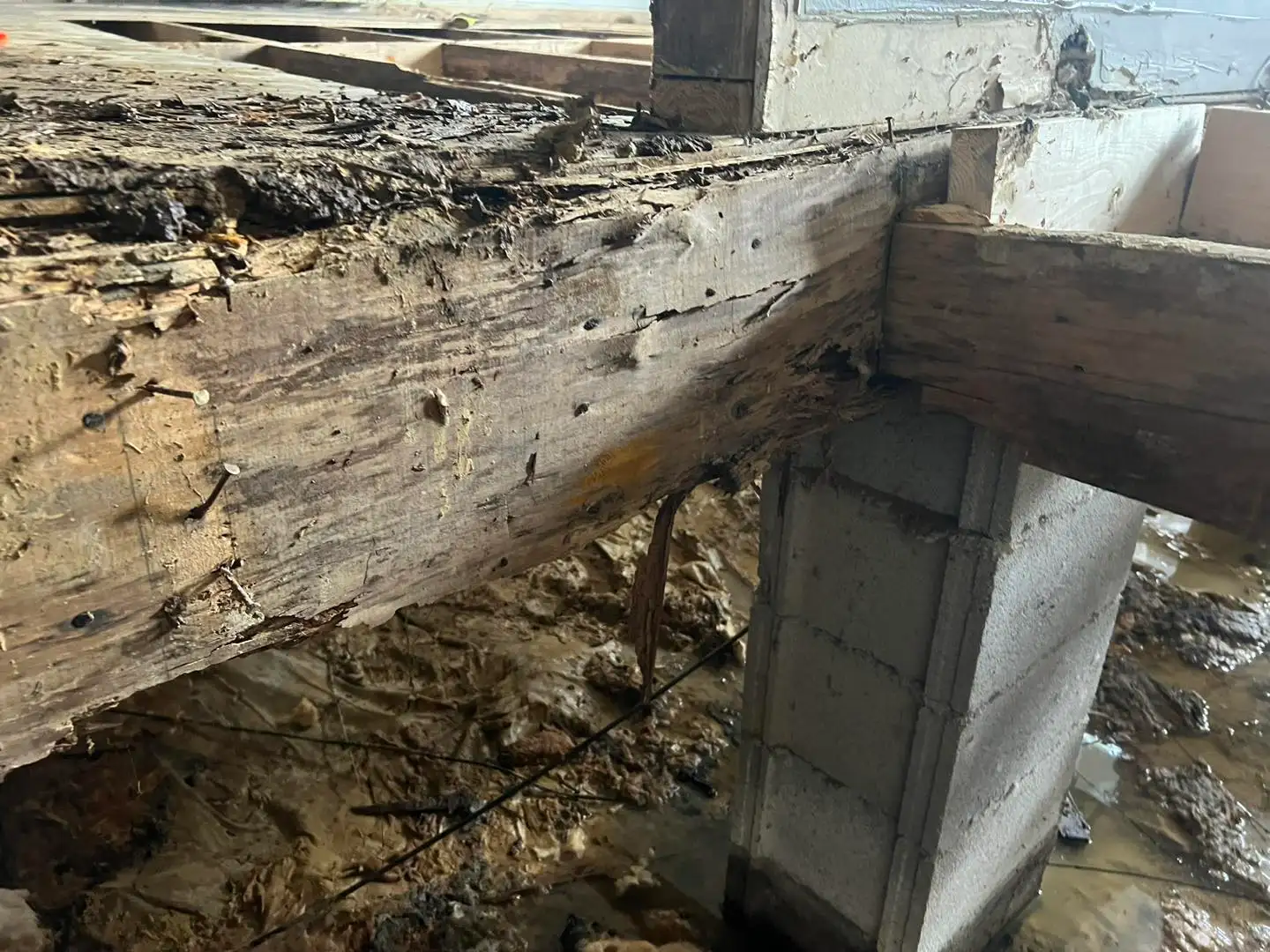
The main girder beams and support beams in a crawl space are the primary load-bearing members of the floor system. They span between foundation walls and piers, carrying the floor joists that in turn support the subfloor and everything above. When these beams are compromised by moisture-driven rot, pest infestation, or overloading, the consequences extend throughout the floor system above. Structural beam replacement is the appropriate solution when beams have degraded beyond the point where repair or reinforcement is sufficient. Ground Up Foundation Repair provides beam replacement in crawl spaces throughout Middle Tennessee, using properly sized dimensional lumber or engineered lumber products to restore full structural capacity.
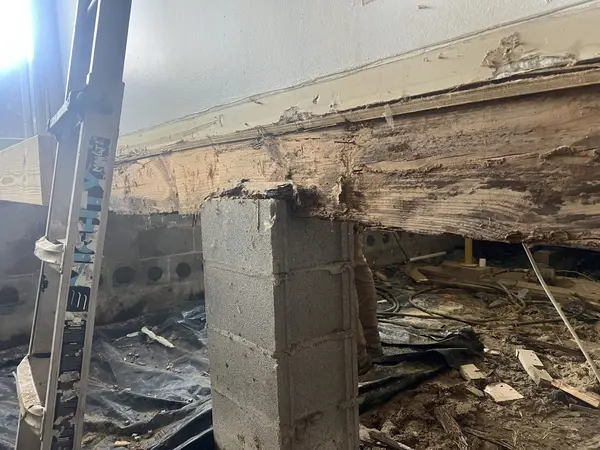
The carrier beam, also called the main girder, is the primary horizontal member that supports your floor joists and transfers their load to posts and the foundation. When a carrier beam cracks, sags, or rots, every joist it carries becomes compromised, causing widespread floor movement across an entire section of your home. Ground Up Foundation Repair assesses carrier beam damage, determines whether repair or replacement is appropriate, and restores full load capacity with minimal disruption to the living space above.
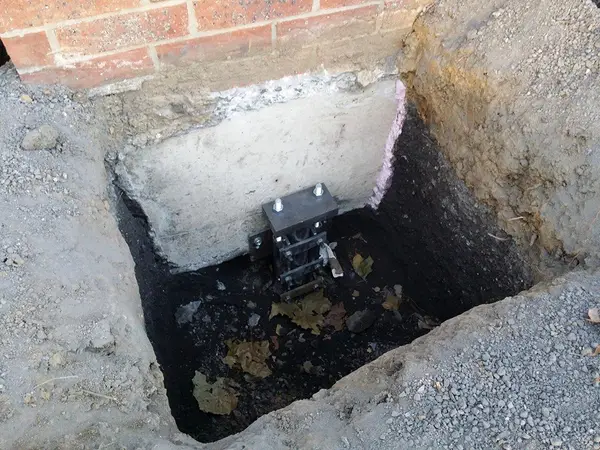
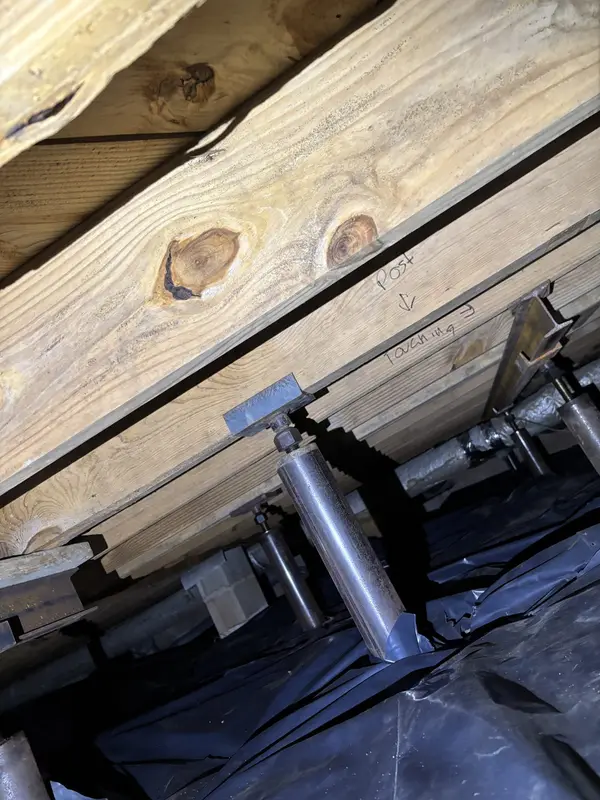
Crawl space support jacks are adjustable steel columns installed on concrete footings beneath the floor framing of a crawl space home. They provide permanent supplemental support for floor joists and carrier beams that have deflected beyond what sistering alone can address, for spans that are too long for the existing framing depth, or for homes where the original post spacing was inadequate. Because they are adjustable after installation, crawl space jacks also allow incremental floor leveling without additional structural work. Ground Up Foundation Repair sizes, spaces, and installs support jacks to match the load conditions of each specific home.
Floor joist repair plates, also called mending plates, joist plates, or structural connector plates, are heavy-gauge galvanized steel plates fastened across a crack, split, or notched section of a floor joist to restore local bending and shear capacity. They are most effective when damage is localized to a specific point along an otherwise sound joist, rather than distributed along its length. Repair plates are a faster and lower-cost solution than sistering in specific circumstances, and they are frequently used in combination with sistering when a joist has both a discrete crack point and overall reduced stiffness. Ground Up evaluates each joist individually and recommends the repair method, plates, sistering, or full replacement, that matches the actual damage pattern.
Floor joists are the horizontal structural members that span from beam to beam beneath your subfloor, carrying the weight of everything in your home. When they are damaged by moisture, rot, or pests, they lose load-bearing capacity and the floors above begin to flex, bounce, or sag. Floor joist repair restores the structural capacity of compromised framing through sistering, partial replacement, or full joist replacement, depending on the extent and nature of the damage. Ground Up Foundation Repair specializes in crawl space framing repair across Middle Tennessee, where humid conditions make joist damage an especially common problem.
Uneven floors are more than a cosmetic problem, they signal that the framing or foundation beneath them has shifted, weakened, or settled unevenly. Ground Up Foundation Repair diagnoses the root cause of sloping, bouncy, or sagging floors and develops a targeted leveling plan. Depending on the cause, floor leveling may involve jacking sagging joists, sistering damaged members, installing or adjusting steel support posts, or addressing the foundation settlement that started the movement. We restore floors to level without disturbing finished flooring wherever possible.
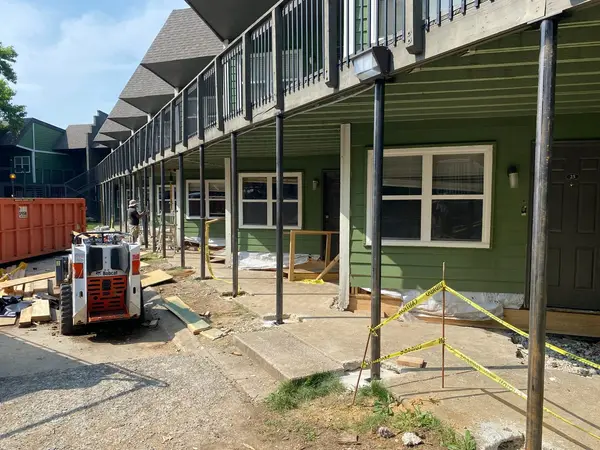
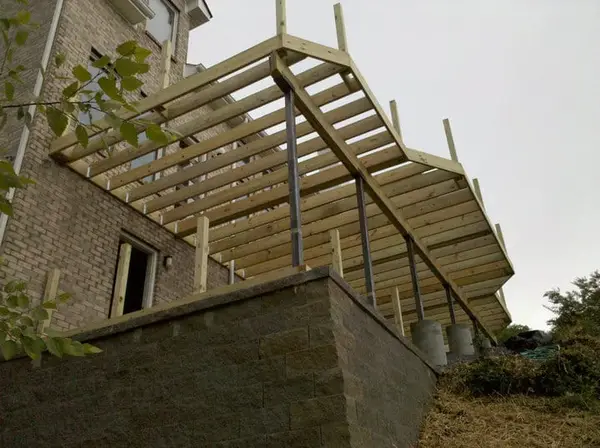
The wood posts and columns that support the main carrying beam in your crawl space are just as critical as the beam itself. When those posts rot, shift, or sink into their footings, the entire floor system above loses support. Ground Up Foundation Repair installs permanent steel foundation jacks, adjustable, load-rated columns, to replace deteriorated wood posts and restore solid, code-compliant support to your home's framing system.
Joist hangers are galvanized steel connectors that bear the end of a floor joist and fasten it to a carrier beam or ledger board, preventing the joist from shifting, twisting, rotating, or pulling away from its bearing point. In older Middle Tennessee homes, many floor joists simply rest on top of a beam or wall plate with no mechanical connection, relying on gravity and friction alone to stay in position. Over time, wood shrinkage, settlement, and moisture cycling can cause these joists to shift laterally or pull off their bearing point entirely. Installing joist hangers at each bearing point creates a positive mechanical connection that eliminates joist movement and significantly increases the load path reliability of the floor system.
Joist sistering is the process of installing a new, full-length structural member directly alongside a damaged, weakened, or undersized floor joist and fastening the two together so they act as a single composite beam. The sister joist takes over the load that the compromised member can no longer safely carry, restoring or exceeding the original structural capacity without requiring demolition of the floor above. Sistering is appropriate for joists that are cracked, split, partially rotted, sagging, notched improperly, or simply undersized for the span. It is the most frequently used framing repair method in Middle Tennessee crawl space homes.
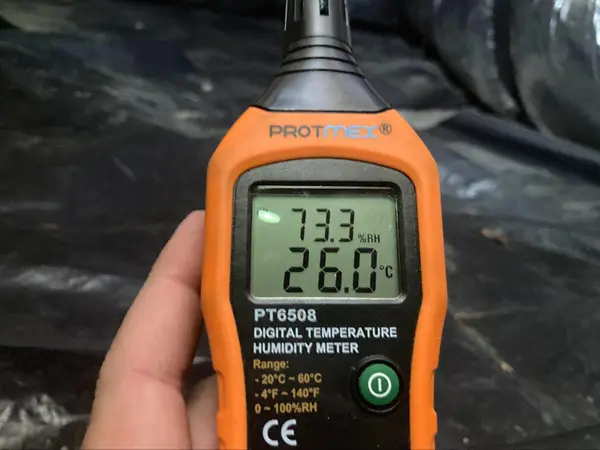
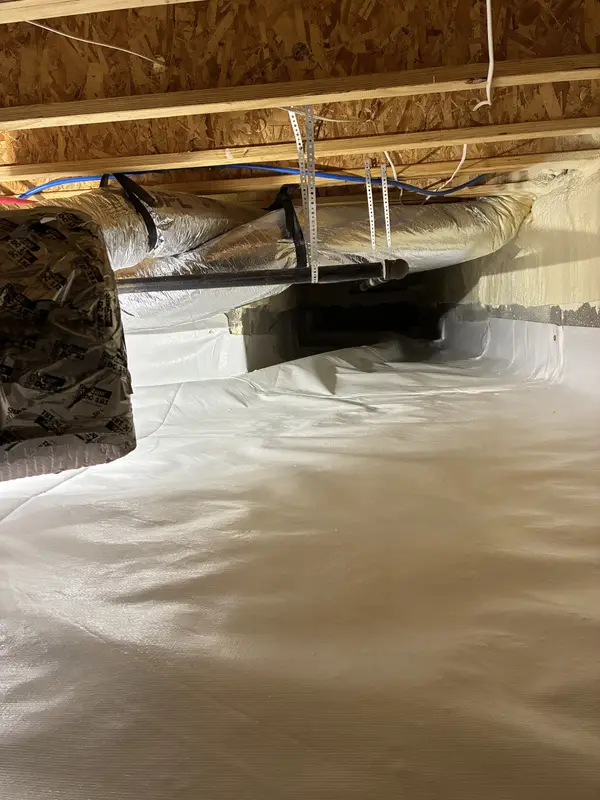
Crawl space moisture control is a comprehensive approach to managing the multiple pathways through which moisture enters the crawl space environment and damages structural framing. In Middle Tennessee, where annual rainfall exceeds 47 inches, summer humidity is consistently high, and clay soils hold moisture against and beneath foundations, a single-point solution is rarely sufficient. Effective moisture control addresses ground moisture through vapor barriers, airborne humidity through active dehumidification, and water intrusion through interior drainage and sump systems where needed. When combined, these measures create a crawl space environment that is inhospitable to wood rot, mold, and wood-destroying insects, dramatically extending the service life of your home's structural framing.
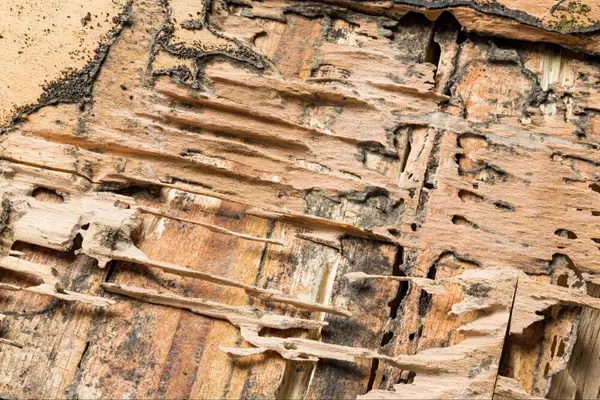
Pest treatment in the context of crawl space framing repair refers to the coordinated process of working with licensed pest control professionals to eliminate active wood-destroying insect infestations before structural framing repairs are performed. Ground Up Foundation Repair does not apply pesticides, which requires a separate Tennessee pest control license. Instead, we work directly with trusted pest control partners to ensure that active termite colonies, carpenter ant infestations, or wood-boring beetle populations are addressed before we install new or sistered framing members. This sequencing protects the investment in structural repair and ensures that replacement lumber is not immediately exposed to the same pest pressure that damaged the original framing.
In the context of structural framing protection, a crawl space vapor barrier is a heavy-duty polyethylene sheet installed across the soil surface of the crawl space floor to block the upward migration of ground moisture into the air space where your floor joists and beams live. Unlike the vapor barriers and full encapsulation systems associated with crawl space waterproofing, this installation is specifically focused on protecting structural framing from the moisture conditions that enable wood rot fungi and mold colonization. Middle Tennessee's clay soils retain substantial moisture year-round, making continuous ground evaporation a persistent threat to unprotected framing.
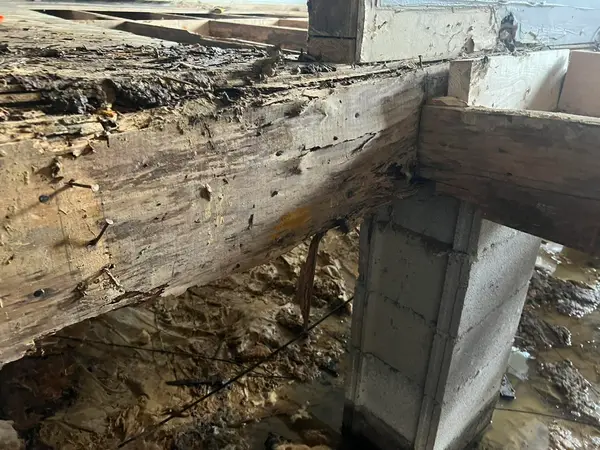
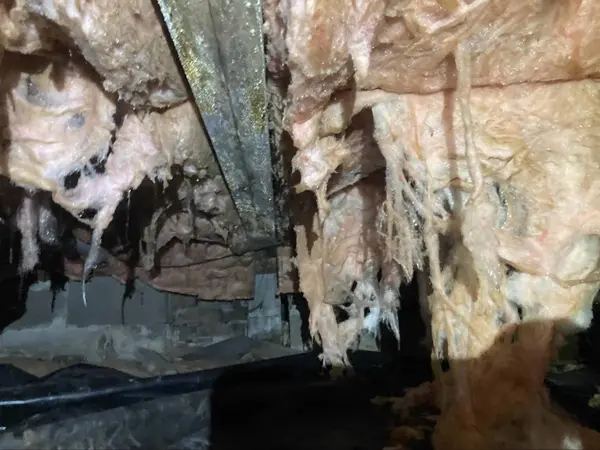
Wood rot is one of the most common and most destructive problems in Middle Tennessee crawl spaces. High humidity, ground moisture, and inadequate ventilation create ideal conditions for fungal decay that silently eats away at floor joists, sill plates, rim joists, and subfloor sheathing. Ground Up Foundation Repair identifies the full extent of the rot, removes all compromised material, installs sound replacement framing, and addresses the moisture source so the problem does not return.