
Crawl Space Dehumidifier Installation in Middle Tennessee
[ 01 ] The Honest Answer
What you should know about crawl space dehumidifier installation
What Does a Crawl Space Dehumidifier Do?
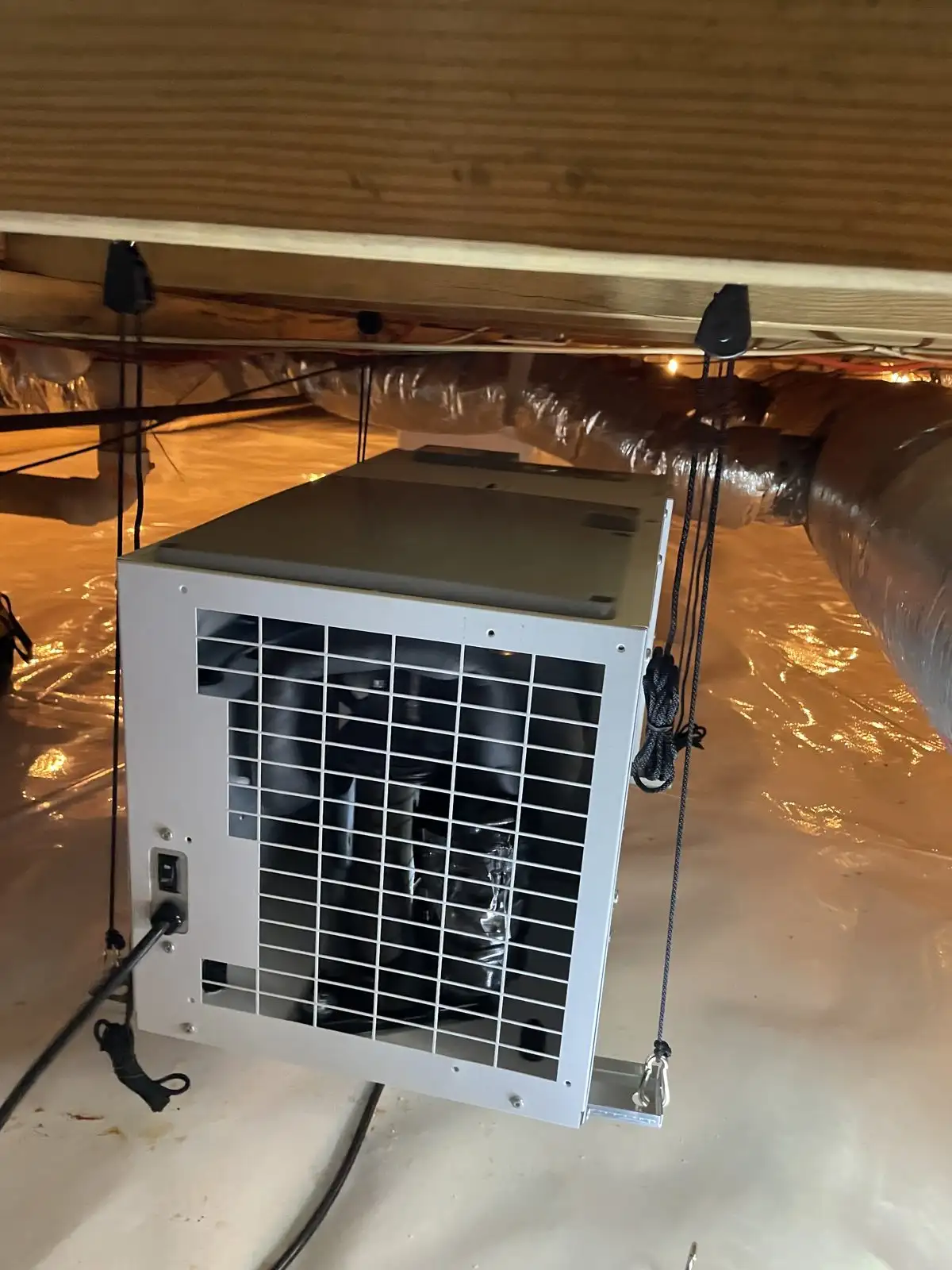
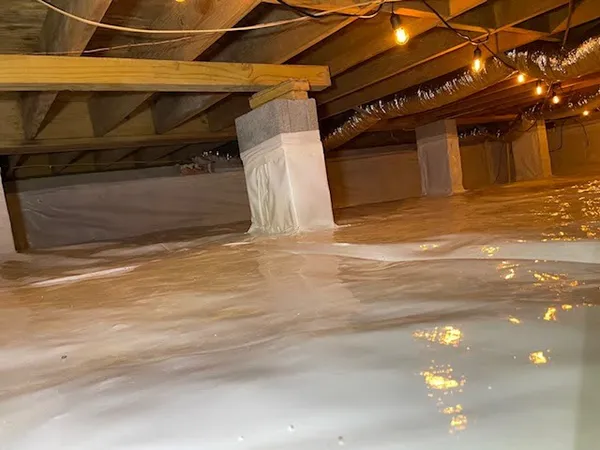
A crawl space dehumidifier pulls moisture out of the air under your home and drains the water away on its own. It is the part of an encapsulation system that controls the humidity in the air, while the vapor barrier covers the soil.
Even after the soil is covered and the vents are sealed, some moisture can still get in through air leaks, plumbing and duct openings, and service visits. In Middle Tennessee, vented crawl spaces often reach 80 to 90 percent relative humidity in summer. Wood framing that stays in damp air can absorb moisture, and mold can grow once wood reaches about 20 percent moisture content. A musty smell in the house and worse indoor allergies can be signs of a crawl space moisture problem.
Why Does the Size of a Crawl Space Dehumidifier Matter?
Not every dehumidifier is right for a Middle Tennessee crawl space. The unit has to be sized for the summer humidity load, which peaks in July and August. A unit that is too small can run without stopping and burn out. A unit that is too large can turn on and off too often and run inefficiently. We choose the unit for your crawl space based on its size, its humidity load, and how it can be reached for service.
Can I Use a Regular Dehumidifier in My Crawl Space?
A portable household dehumidifier is usually not a good fit for a crawl space. Most collect water in a bucket that has to be emptied by hand, which is hard to do in a crawl space, and they are not sized for the moisture load under a home. The units we install drain through a line to a sump basin, a floor drain, or outside, so nobody has to crawl in to empty them.
- Drains on its own through a dedicated line
- Sized for your crawl space and for Middle Tennessee summer humidity
- Installed with the drain line routed and the electrical connection checked
- Installed by our own certified crews
If you notice a musty smell, condensation on pipes or ducts, or mold on crawl space framing after a vapor barrier was installed, a dehumidifier may be the missing piece. Call us at (615) 624-1027 for a free evaluation.
Learn how the crawl space vapor barrier works with the dehumidifier, or, for homes in Nashville, see our page on crawl space encapsulation in Nashville.
Near our office? See how we seal and dry crawl spaces in Murfreesboro.
[ 02 ] How It Works
What to expect, start to finish
Free Crawl Space Evaluation
A trained expert checks humidity, inspects ductwork, and assesses airflow to find the cause of crawl space moisture buildup and condensation issues.
Custom Humidity Control Plan
We recommend a unit sized for your crawl space and for summer humidity, the best place to put it, and how it will drain, so it works well without wasting energy.
Professional Dehumidifier Installation
Our team installs the dehumidifier safely, connects drain lines, checks outlet requirements, and verifies that the system is functioning correctly.
Final Walkthrough and Humidity Check
We confirm setup is correct, walk you through the settings, and test the humidity levels to ensure your space stays dry and controlled.
A vapor barrier stops ground moisture. A dehumidifier stops airborne moisture. In Middle Tennessee's climate, you often need both working together for complete crawl space moisture control. One without the other leaves a gap.
[ 03 ] Why Ground Up
The difference is in the diagnosis
Get several quotes and you'll see a wide range of prices. The gap isn't luck. It's whether the contractor finds the actual cause and stands behind the work.
- In-house certified crews: we never subcontract your repair
- Optional independent third-party engineer review on larger jobs
- Honest three-tier triage: we tell you what can wait, in writing
- Family owned from the same Shelbyville Highway address since 2009
Crawl Space Dehumidifier Installation questions

Free guide
Get the free crawl space guide
- Why Middle Tennessee crawl spaces get damp
- A checklist for your crawl space
- What encapsulation includes
Your guide is on its way.
Check your inbox for an email from Ground Up Foundation Repair. If it is not there in a few minutes, check your spam or promotions folder.
Where we work
Headquartered in Murfreesboro,
serving Middle Tennessee
From red-clay Rutherford County soil to Nashville’s high water tables and Cookeville’s karst limestone, we know the ground beneath your home.
Also serving: La Vergne, Hendersonville, Gallatin, Lebanon, Clarksville, Tullahoma, Nolensville, Antioch + 100 more cities →
Found a problem? Get a straight answer
Free inspection, written estimate, honest triage. No pressure.