
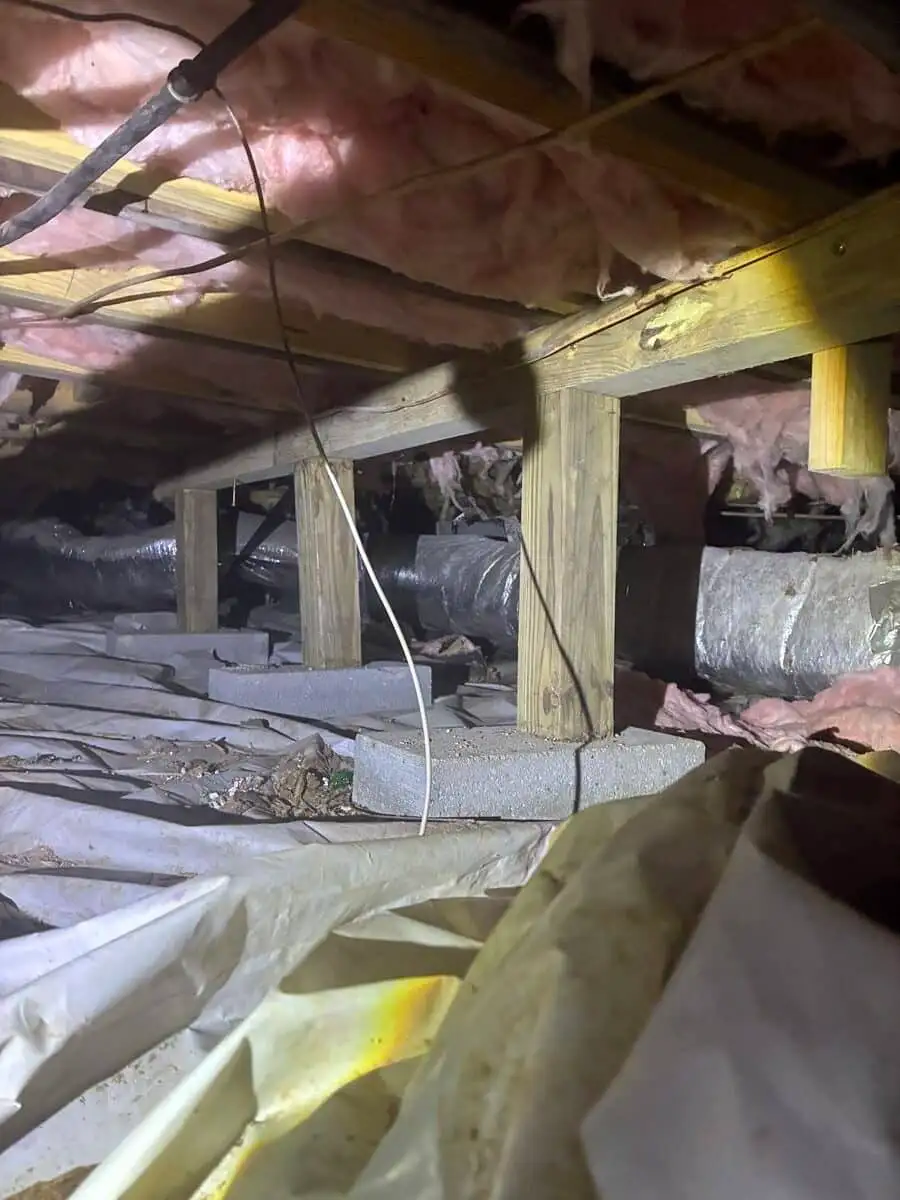
Sticking or Binding Doors in Your Crawl Space Home
When doors stop fitting their frames, the frame, not the door, has usually moved. That movement starts in the crawl space.
Not sure which fix applies to your situation? Browse our full range of solutions for crawl space repair.
When a crawl space pier settles under one area of the home, that section of floor drops. The wall above drops with it, racking the door frame out of plumb, the frame tilts and the door no longer fits.
A center girder beam that has deflected downward pulls the floor above it down along the beam span. Interior walls that run parallel to or bear on the beam develop a lean, which translates directly to door frame racking.
When different areas of the crawl space have settled by different amounts, the floor is no longer level, and walls that connect the high and low areas are sheared out of plumb. Door frames at the transition point show binding.
The sill plate is the horizontal lumber that sits on the foundation wall and carries the load of the wall framing above. When it rots from crawl space moisture, the wall above it can shift outward or downward, racking door frames in that wall.
[ 03 ] Recommended Solutions
How Ground Up fixes this
[ 04 ] Regional Context
Middle Tennessee crawl space conditions.
High humidity, wood-eating insects, and clay-rich soils make Middle Tennessee crawl spaces particularly vulnerable. Ground Up encapsulates and repairs crawl spaces across Davidson, Williamson, and Rutherford Counties.
Sticking doors are one of the most common calls we get. The homeowner has been planing doors for years. When we get into the crawl space, we find a settled pier or a soft beam right below the problem area every time.
[ 05 ] Why Ground Up
The difference is in the diagnosis
Get several quotes and you'll see a wide range of prices. The gap isn't luck. It's whether the contractor finds the actual cause and stands behind the work.
- In-house certified crews: we never subcontract your repair
- Optional independent third-party engineer review on larger jobs
- Honest three-tier triage: we tell you what can wait, in writing
- Family owned from the same Shelbyville Highway address since 2009
[ 06 ] FAQ
Sticking or Binding Doors in Crawl Space Homes questions
Planing the door addresses the symptom but not the cause. If the frame is still moving, which it will be if the crawl space structure is still settling, the problem will return. We recommend addressing the structural cause first.
Seasonal wood movement from humidity changes typically reverses, a door that sticks in summer often opens freely in winter. A door that sticks year-round and is getting progressively worse is more likely to reflect structural movement that needs investigation.
Re-leveling is done incrementally to allow the frame above to adjust gradually. In most cases, correcting the structural cause allows door frames to return close to plumb. Severely racked frames may need minor trim adjustment after structural repair.

Free guide
Get the free crawl space guide
- Why Middle Tennessee crawl spaces get damp
- A checklist for your crawl space
- What encapsulation includes
Your guide is on its way.
Check your inbox for an email from Ground Up Foundation Repair. If it is not there in a few minutes, check your spam or promotions folder.
More Problem Signs
Other signs to watch for
Bouncy or Springy Floors
Floor systems are engineered to carry load with minimal deflection. When you walk across the floor and it moves noticeably, a springy bounce with each step, a flex you can feel through the soles of your feet, one or more structural members below has softened, cracked, or lost its bearing. In crawl space homes, the usual suspects are joists that have absorbed enough moisture to lose their stiffness, beams that have deflected from overload or decay, or spans built without adequate mid-span support. The problem is rarely in the subfloor itself; it is almost always in the framing below it.
Mold Growth in the Crawl Space
Mold in a crawl space is almost always a moisture problem that has been present for an extended period. Most mold species require sustained relative humidity above 70 percent to colonize and grow on wood surfaces. In Middle Tennessee's climate, an unsealed or poorly vented crawl space commonly reaches those humidity levels for weeks or months at a time. When mold is found in a crawl space, it is typically visible as dark patches or white fuzzy growth on the undersides of floor joists, the faces of beams, and on any insulation materials. The damage extends beyond appearance. Mold actively degrades organic materials including wood, and the spores it releases enter the living space. A crawl space with visible mold needs both remediation of the existing growth and correction of the moisture conditions that caused it.
Allergic Reactions and Indoor Air Quality Problems Linked to the Crawl Space
When household members experience worsening allergy or respiratory symptoms indoors, particularly sneezing, runny nose, itchy eyes, coughing, or asthma flare-ups that improve when they leave the home, the crawl space is a common but overlooked cause. Through natural air movement patterns, a damaged crawl space delivers mold spores, dust mite allergens, rodent dander, pest droppings, and decaying organic matter directly into the living areas above it. The stack effect, in which warm air rises and pulls replacement air upward from below, ensures that crawl space air quality affects the whole home.
Deteriorating Crawl Space Insulation
Fiberglass batt insulation installed between floor joists in an unencapsulated crawl space is constantly exposed to moisture, pest activity, and temperature cycling. Over time, it absorbs humidity and loses its loft and thermal resistance, sags, and eventually falls from between the joists onto the crawl space floor. Fallen or moisture-damaged insulation loses most of its R-value, contributes to cold floors and energy loss, and may host mold growth that introduces allergens into the home above. Removing deteriorated insulation, and addressing the moisture that caused the deterioration, stops the ongoing damage to the floor framing and improves air quality in the home above.
Uneven Floors in Crawl Space Homes
In Middle Tennessee homes built on crawl space foundations, unevenness in the floor is almost always a structural signal from below. When the wood beam system that holds up your floors loses support, because a pier has settled into clay soil, a beam has softened from moisture exposure, or a joist has cracked under load, the floor above follows. You may notice that furniture sits tilted, that a marble rolls toward one corner, or that you can feel a noticeable slope when walking from one room to another. These are not finish-floor problems. The cause is in the crawl space.
Groundwater Seepage into the Crawl Space
Groundwater seepage into a crawl space is distinct from surface water intrusion: it occurs when the water table is elevated near the home, when soil becomes saturated after extended rain, or when hydrostatic pressure, the force of saturated soil pushing water against the foundation, pushes water through cracks and voids in the stem wall or concrete block foundation. The result is water that appears in the crawl space not from a visible opening above grade but from below or through the wall itself. In Middle Tennessee, the clay-heavy soils in many areas retain water after rain events for days or weeks. Homes built in low areas, near seasonal streams, or on sites with a shallow seasonal water table are particularly vulnerable. Groundwater seepage is often first noticed after consecutive days of heavy rain when the homeowner sees water on the vapor barrier or standing at the low spots of the crawl space floor.
Seeing these signs in your home?
We'll find the cause and tell you honestly what it needs, free.