
High Basement Humidity: The Silent Problem That Affects Your Whole Home
You may not see standing water, but if your basement air feels damp and heavy, moisture is already working against your structure and your family's health.
Not sure which fix applies to your situation? Browse our full range of solutions for basement waterproofing.
[ 01 ] Watch For These Signs
Signs Your Basement Humidity Is Causing Real Damage
Condensation Forming on Pipes and Ductwork
Visible water droplets forming on cold water supply pipes or the exterior of HVAC ducts are a reliable indicator that basement relative humidity has exceeded the dew point. This condensation drips onto stored items and the floor, adding to the total moisture load.
Wood Framing or Joists Feeling Soft or Spongy
Probe exposed floor joists with a screwdriver. Soft or easily penetrated wood indicates moisture content above 20 percent, which is the threshold for wood decay fungi to become active. This is a structural warning requiring immediate attention.
Rust on Metal Items Stored in the Basement
Tools, file cabinets, exercise equipment, and other metal items that rust prematurely in the basement are reacting to chronically elevated relative humidity. Rust appears on unprotected steel when relative humidity consistently exceeds 50 percent.
Visible Mold on Cardboard, Fabric, or Paper Items
Mold colonizing stored items before it appears on walls or floors indicates the air humidity is already high enough to support growth on the most moisture-sensitive materials. This is often the first visible sign that basement humidity has been chronically elevated.
Concrete is a porous material. Water vapor from the moist soil beneath a basement slab migrates upward through the concrete and enters the basement air continuously. This process, called vapor diffusion, occurs even when the slab appears dry. In Middle Tennessee's clay-rich soils, which hold moisture at depth throughout the year, vapor emission rates can be surprisingly high.
During Middle Tennessee summers, outdoor relative humidity frequently exceeds 80 percent in the morning hours. Basement windows, doors, and air gaps in the rim joist area allow this humid outdoor air to enter the basement directly. When warm humid air contacts the cooler basement surfaces, moisture condenses and raises the overall humidity level of the space.
Bare concrete walls and an unsealed floor slab both allow moisture vapor to move freely from the soil into the basement air. Homes without a vapor barrier beneath the slab or on the interior of basement walls have no resistance layer to slow this moisture migration.
A basement that does not receive conditioned air from the home's HVAC system relies entirely on whatever natural air exchange occurs with the rest of the house. In summer, this often means the basement receives warm, humid air rather than the cooled, dehumidified air that would control moisture levels.
[ 03 ] Recommended Solutions
How Ground Up fixes this
[ 04 ] Regional Context
Why Middle Tennessee foundations fail
Middle Tennessee's expansive clay soils shrink in dry summers and swell after rain, cycling significantly in volume. Davidson, Williamson, and Rutherford County homes built on this clay face ongoing movement pressure. Ground Up diagnoses and permanently stabilizes foundations across the region.
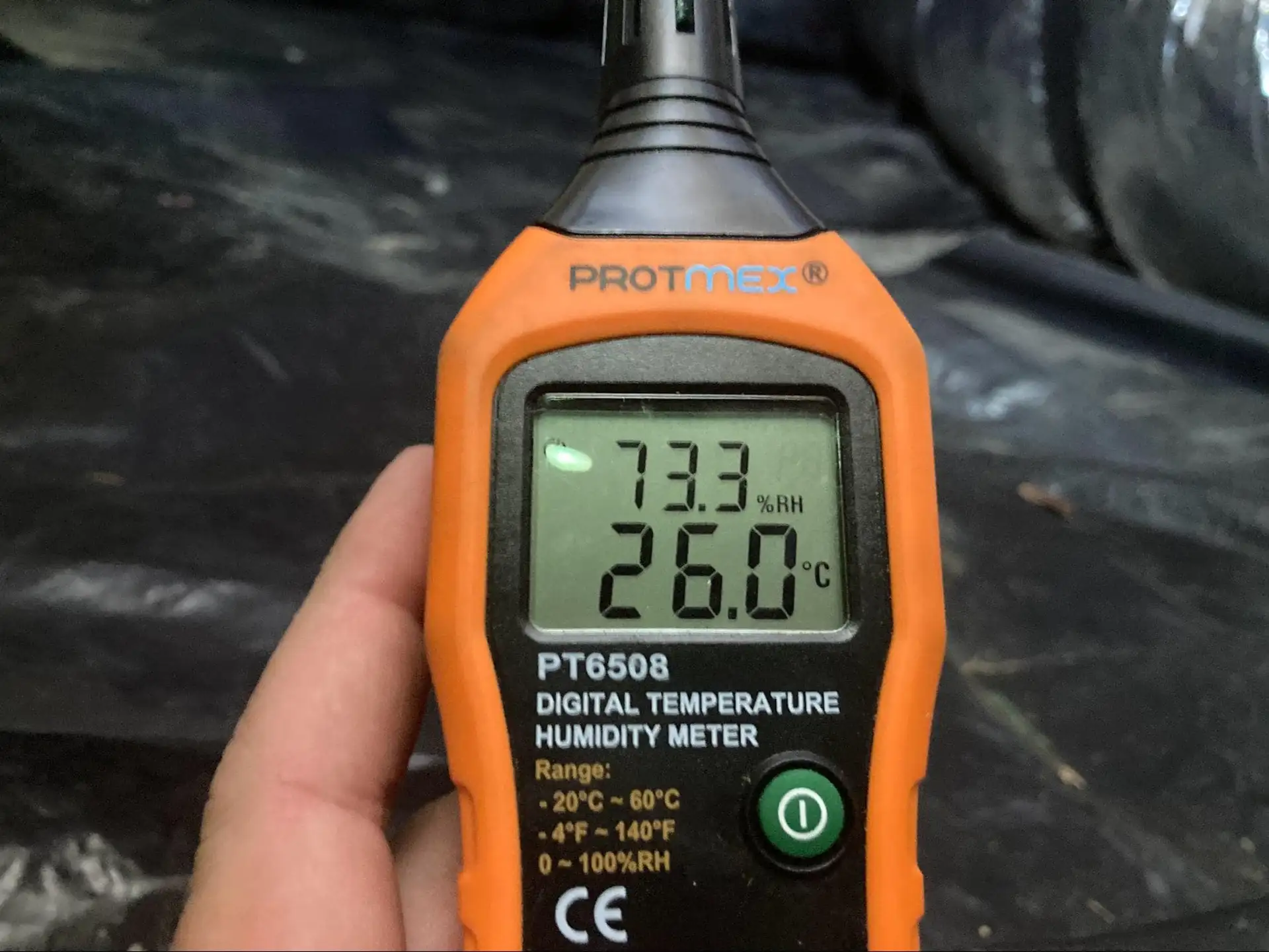
High humidity is the waterproofing problem that gets ignored the longest because nothing is visibly wrong yet. But by the time a homeowner can see mold or smell that musty odor, the moisture has usually been elevated for months. A $15 hygrometer can tell you whether you have a problem before it becomes expensive.
[ 05 ] Why Ground Up
The difference is in the diagnosis
Get several quotes and you'll see a wide range of prices. The gap isn't luck. It's whether the contractor finds the actual cause and stands behind the work.
- In-house certified crews: we never subcontract your repair
- Optional independent third-party engineer review on larger jobs
- Honest three-tier triage: we tell you what can wait, in writing
- Family owned from the same Shelbyville Highway address since 2009
[ 06 ] FAQ
High Basement Humidity questions
Basement relative humidity should stay below 50 to 60 percent to prevent mold growth and protect stored items. Ideally, target 45 to 55 percent year-round. A digital hygrometer (available for under $20) placed in the basement will give you a continuous reading. Anything consistently above 60 percent warrants investigation of the moisture source.
A properly sized dehumidifier can maintain acceptable humidity levels in many basements, but it treats the symptom rather than the cause. It also requires regular emptying or a drain connection, consumes electricity, and will run continuously if the underlying moisture source is not addressed. Combining a vapor barrier with improved drainage reduces the workload on the dehumidifier significantly.
Yes. Moisture from a humid basement migrates upward through the floor assembly. Hardwood floors above a humid unencapsulated basement are prone to cupping, squeaking, and dimensional instability. HVAC systems that pull return air from the basement circulate that humid air throughout the living space, raising whole-house humidity and reducing comfort and efficiency.
A vapor barrier installed on basement walls and under a slab overlay creates a physical barrier to soil moisture vapor, dramatically reducing the rate at which moisture enters the basement air from the surrounding soil. When combined with proper drainage to address liquid water, a vapor barrier can reduce basement relative humidity by 15 to 25 percentage points without any mechanical dehumidification.
It is common but not acceptable. Many homeowners assume summer basement humidity is unavoidable in our climate, but properly waterproofed basements with vapor barriers and adequate drainage maintain comfortable humidity levels year-round. The problem is almost always addressable with the right combination of moisture control measures.

Free guide
Get the free dry basement guide
- Where basement water comes from in Middle Tennessee
- A checklist of signs to look for
- How a drain and sump pump system works
Your guide is on its way.
Check your inbox for an email from Ground Up Foundation Repair. If it is not there in a few minutes, check your spam or promotions folder.
More Problem Signs
Other signs to watch for
Basement Flooding
Basement flooding is one of the most alarming and costly water damage events a Middle Tennessee homeowner can face. Whether water is pooling across the entire floor or entering in a concentrated area near a wall or floor joint, flooding indicates that more water is entering the space than any existing drainage can handle. Nashville and surrounding Middle Tennessee communities average over 50 inches of rain annually, with heavy storm events common from March through November. Clay-dense soils in Rutherford, Williamson, and Davidson counties become saturated quickly during intense rain, driving hydrostatic pressure, the force that saturated soil exerts against a foundation wall, and forcing water through every available entry point. Without an interior drainage system and sump pump sized for the water volume your basement receives, flooding is the result.
Basement Water Intrusion
Basement water intrusion occurs when groundwater, surface runoff, or hydrostatic pressure, the force saturated soil exerts against a foundation, forces moisture through foundation walls, floor joints, or cracks. Middle Tennessee homeowners face this problem at higher-than-average rates because of the region's heavy annual rainfall (averaging 47 inches per year), its dense red clay soil that holds moisture rather than draining it, and the natural topography that funnels water toward residential foundations. Water intrusion can appear as a slow seep along a wall joint, puddles on the floor after heavy rain, or a chronic dampness that never fully dries between storms. Left unaddressed, it accelerates concrete deterioration, supports mold colonies, and undermines the structural integrity of the foundation itself.
Condensation on Basement Windows
Condensation on basement windows appears as water droplets or streaks on the glass surface, most commonly during summer months when outdoor air is warm and humid. The window glass stays cooler than the surrounding air because the basement itself is cooler than grade-level spaces. When warm, moisture-laden air contacts that cool glass surface, water vapor drops below its dew point and condenses into liquid. In Middle Tennessee, where summer relative humidity routinely exceeds 80 percent and outdoor temperatures climb above 90°F from June through September, basement window condensation is a reliable seasonal indicator that basement humidity is elevated. While condensation on the glass itself is a surface phenomenon, it reflects a broader moisture environment that also saturates wall materials, wood framing, stored items, and insulation. Persistent condensation indicates that the basement is not adequately sealed or dehumidified and that conditions favorable to mold growth exist throughout the space.
Efflorescence on Basement Walls
Efflorescence is the white or grayish chalky crust that forms on masonry surfaces when water carries dissolved minerals through concrete, block, or brick and deposits them on the surface as it evaporates. It looks like salt, chalk, or a powdery coating and often appears on basement walls, foundation blocks, and concrete floors near walls. While efflorescence itself is not structurally damaging, it is an unmistakable indicator of water movement through the masonry, which is the real concern.
Mold Growth in the Basement
Basement mold growth appears in several forms depending on the moisture source and affected material. Black, green, gray, or white fuzzy patches on concrete block, drywall, wood framing, insulation, or stored cardboard are the most visible signs. Dark staining on wood floor joists and the bottom chord of framing in the floor assembly above the basement is common in spaces with chronically elevated humidity. A musty, earthy odor throughout the basement and often migrating into the home's main living areas is the olfactory signature of active mold colonies producing microbial volatile organic compounds. In Middle Tennessee, where basement relative humidity during summer months frequently reaches 75 to 90 percent in unprotected spaces, mold growth is an expected consequence of inadequate waterproofing rather than an anomaly. Mold requires both moisture and an organic material to colonize, concrete alone does not support mold, but wood framing, drywall paper, cardboard, and fabric storage items provide the organic substrate. Any basement with elevated moisture will eventually develop mold colonies on these materials. Remediation of existing mold followed by elimination of the moisture source is the only path to a permanently mold-free basement.
Musty Odors in the Basement
A musty or earthy smell in the basement is one of the clearest indicators that moisture levels are elevated and mold has established. Unlike odors from products or furnishings, musty basement smells are persistent, worsen after rain or in humid weather, and do not respond to ventilation or air fresheners because the source, damp surfaces and mold growth, is continuously generating the odor compounds. In finished or semi-finished basements, the odor often penetrates walls and flooring and affects upper living areas.
Seeing these signs in your home?
We'll find the cause and tell you honestly what it needs, free.