
Don't Replace Your Sunken Patio, Lift It for a Fraction of the Cost
Polyurethane foam lifting restores settled patios in Nashville and Murfreesboro the same day.
Not sure which fix applies to your situation? Browse our full range of solutions for concrete repair.
[ 01 ] Watch For These Signs
Signs Your Patio Has Settled and Needs Attention
Visible Tilt Toward the House
A patio slab that tilts toward the home is draining water toward the foundation rather than away from it. This is simultaneously a safety issue (slip hazard when wet), a comfort issue, and a foundation drainage concern.
Standing Water After Rain
Low spots on a settled patio collect standing water after rain events. Persistent puddles indicate the original drainage slope has been compromised by settlement and the slab needs to be lifted back to grade.
Cracks Running Across the Slab
Cracking that follows the direction of soil voids beneath the slab signals that the concrete is spanning unsupported areas and flexing under load. These cracks will widen and multiply if settlement continues.
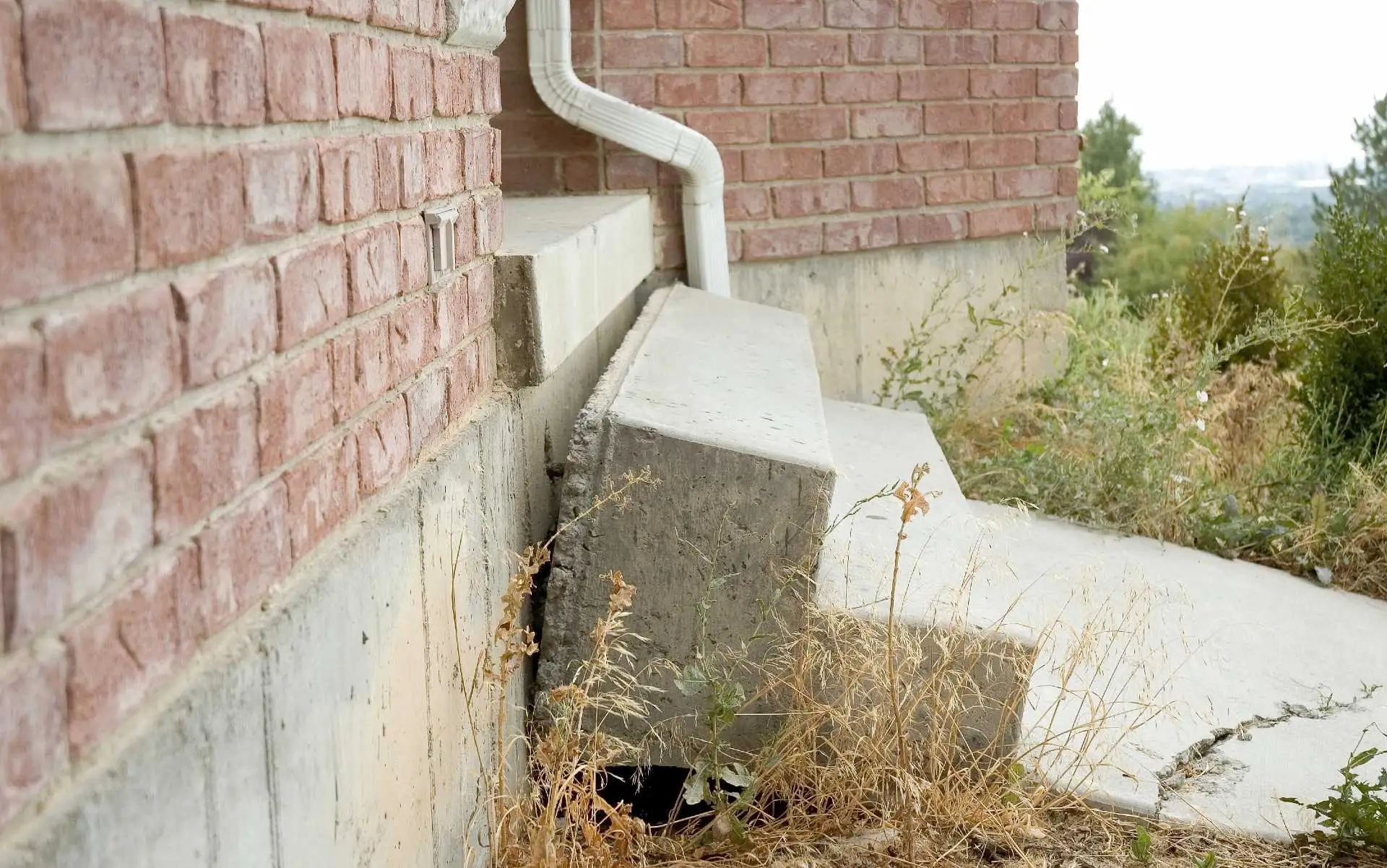
Gap at the House-to-Patio Transition
When the patio slab settles away from the home's foundation or door threshold, a gap opens at the connection point. This gap allows water to flow directly alongside the foundation and is a red flag for both concrete and foundation health.
Roof downspouts that discharge near or onto a patio send large volumes of water directly against or beneath the slab during rain events. This concentrated water infiltration is one of the leading causes of patio settlement in Middle Tennessee, where annual rainfall averages 47 inches.
Patios are sometimes poured over minimally prepared soil without the crushed stone base used beneath driveways. Without adequate sub-base drainage and compaction, the soil beneath the slab compresses under the weight of the concrete and any furniture or foot traffic it supports.
The expansive red clay soils throughout Rutherford, Williamson, and Davidson Counties swell in wet seasons and shrink in dry ones, applying uneven pressure to patio slabs. When different portions of the slab sit over soil with different moisture levels, they move at different rates, causing settlement that is irregular rather than uniform.
Garden beds and planters adjacent to patios are frequently irrigated and retain water. This constant moisture source can saturate the soil along one edge of the patio, causing that edge to heave and then settle disproportionately compared to the drier portions of the slab.
[ 03 ] Recommended Solutions
How Ground Up fixes this
[ 04 ] Regional Context
Why Middle Tennessee foundations fail
Middle Tennessee's expansive clay soils shrink in dry summers and swell after rain, cycling significantly in volume. Davidson, Williamson, and Rutherford County homes built on this clay face ongoing movement pressure. Ground Up diagnoses and permanently stabilizes foundations across the region.
Patios settle because they're often poured on minimal sub-base and they receive a lot of water from downspouts and landscaping. Polyurethane foam lifts them cleanly and fills the void so water can't continue eroding beneath the slab.
[ 05 ] Why Ground Up
The difference is in the diagnosis
Get several quotes and you'll see a wide range of prices. The gap isn't luck. It's whether the contractor finds the actual cause and stands behind the work.
- In-house certified crews: we never subcontract your repair
- Optional independent third-party engineer review on larger jobs
- Honest three-tier triage: we tell you what can wait, in writing
- Family owned from the same Shelbyville Highway address since 2009
[ 06 ] FAQ
Patio Settlement and Sinking questions
Yes. We'll ask you to clear the work area of furniture and planters during the lifting process, usually just for the morning of the appointment. Once the foam has cured and the injection holes are patched, your patio is ready for furniture, grills, and normal use the same day.
Polyurethane foam injection requires drilling small holes through the concrete slab, no excavation around the slab edges. Adjacent landscaping, garden beds, and grass are not disturbed during the process. This is a key advantage over mudjacking, which requires larger equipment and more invasive access.
Foam lifting for a typical residential patio in the Nashville area generally runs $600–$2,000 depending on the size and degree of settlement. Tearing out and replacing an equivalent patio can cost $4,000–$12,000 or more. Lifting makes economic sense whenever the slab itself is structurally sound.
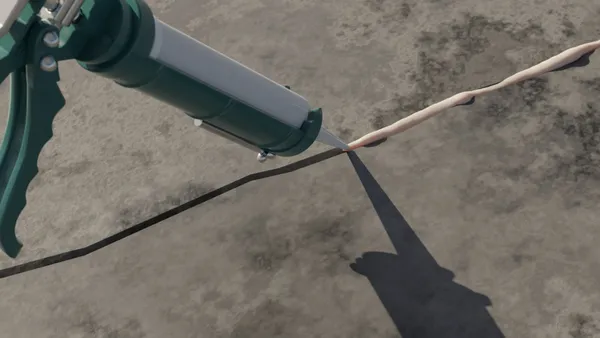
We address both in the same project. First, we lift the slab back to level using polyurethane foam. Once the slab is properly positioned, we seal any cracks and open joints with a flexible polyurethane sealant. The result is a level, sealed patio ready for outdoor living.
The most effective preventive steps are: redirect downspouts at least 6 feet from the patio edge, ensure landscape beds adjacent to the patio have good drainage, and seal all patio joints annually to keep surface water from infiltrating beneath the slab. Addressing the water source is the single biggest factor in preventing repeat settlement.

Free guide
Get the free sinking concrete guide
- Why driveways and patios sink
- A checklist for your slabs
- How foam leveling lifts concrete in hours
Your guide is on its way.
Check your inbox for an email from Ground Up Foundation Repair. If it is not there in a few minutes, check your spam or promotions folder.
More Problem Signs
Other signs to watch for
Cracked Concrete Driveways and Patios
Concrete cracks are one of the most common exterior problems homeowners in Middle Tennessee encounter. A freshly poured slab looks pristine, but within a few years the combination of expansive red clay soil, heavy rainfall, freeze-thaw cycles, and vehicle loads almost inevitably produces cracks of some kind. Not all cracks are equal: hairline surface cracks are often cosmetic, while wide, growing, or offset cracks signal deeper structural movement. Understanding what type of crack you have determines whether sealing alone will solve the problem or whether the slab also needs to be lifted and stabilized before sealing.
Cracking or Failed Expansion Joints
Expansion joints, the planned gaps between concrete slab sections, are designed to allow the concrete to move with temperature and moisture changes without cracking. When the flexible sealant in these joints fails, cracks form, or the joint edges chip and deteriorate, the joints become open pathways for water to enter directly beneath the concrete. In Middle Tennessee, where annual rainfall averages 47 inches and temperature swings drive significant concrete movement, joint maintenance is critical to long-term concrete performance. Failed expansion joints are not just a cosmetic problem, they are the single most common entry point for the water erosion that leads to slab settlement.
Gaps Between Concrete Slabs
Gaps that open between adjacent concrete slabs, at driveways, sidewalks, patios, and pool decks, are an early indicator of slab movement and a direct water infiltration pathway. Unlike expansion joints, which are designed gaps filled with flexible material, unplanned gaps form when one or both slabs move horizontally or settle vertically. These gaps allow water to flow directly beneath the concrete, eroding the sub-base and creating voids that eventually cause the slab to sink and crack further. In Middle Tennessee, where seasonal clay soil movement is significant, gaps that appear small in spring may widen substantially by fall as the soil contracts beneath the slabs.
Concrete Pitting, Flaking, and Staining
Pitting, flaking, spalling, and staining are concrete surface deterioration issues that range from cosmetic to moderately structural depending on severity and depth. In Middle Tennessee, these problems are most commonly caused by freeze-thaw cycling, chemical exposure from de-icing salts, oil and fluid contamination from vehicles, and the natural aging of concrete surfaces. While surface deterioration rarely affects the structural load-bearing capacity of a slab in its early stages, untreated deterioration accelerates: pitting and spalling expose the concrete aggregate and reinforcing steel to moisture, increasing the rate of damage and eventually compromising the slab's surface integrity. Addressing surface deterioration early with appropriate sealing or resurfacing is far less costly than full slab replacement.
Settling or Sinking Pool Deck
Pool deck settling is one of the more dangerous forms of concrete settlement because the surfaces are frequently used barefoot and the risk of tripping near water is significant. A pool deck that has dropped, even by a single inch, creates uneven surfaces, trip hazards at the pool edge, and gaps that accelerate drainage problems. In Middle Tennessee, pool decks are especially vulnerable to settlement because they are poured directly on disturbed fill soil around a newly excavated pool shell. That fill never reaches the compaction density of undisturbed native soil, so it continues to consolidate under load for years. The region's alternating wet winters and dry summers further accelerate this process through repeated clay soil expansion and contraction cycles.
Sinking or Sunken Driveway
A sinking driveway is one of the most visually obvious signs of concrete settlement, yet many homeowners delay repairs because the slab itself appears intact. The problem is almost always below the surface: soil that was once compact and load-bearing has washed away, compressed under weight, or contracted during a dry season, creating a void that allows the heavy concrete slab to shift downward. In Rutherford, Davidson, Williamson, and Wilson Counties, the native red clay soil is especially prone to this cycle, swelling with winter rains and shrinking back during summer droughts, never quite returning to the same position. Over time, sections of the driveway sink independently, creating lips, slopes, and drainage problems that worsen every year.
Seeing these signs in your home?
We'll find the cause and tell you honestly what it needs, free.