
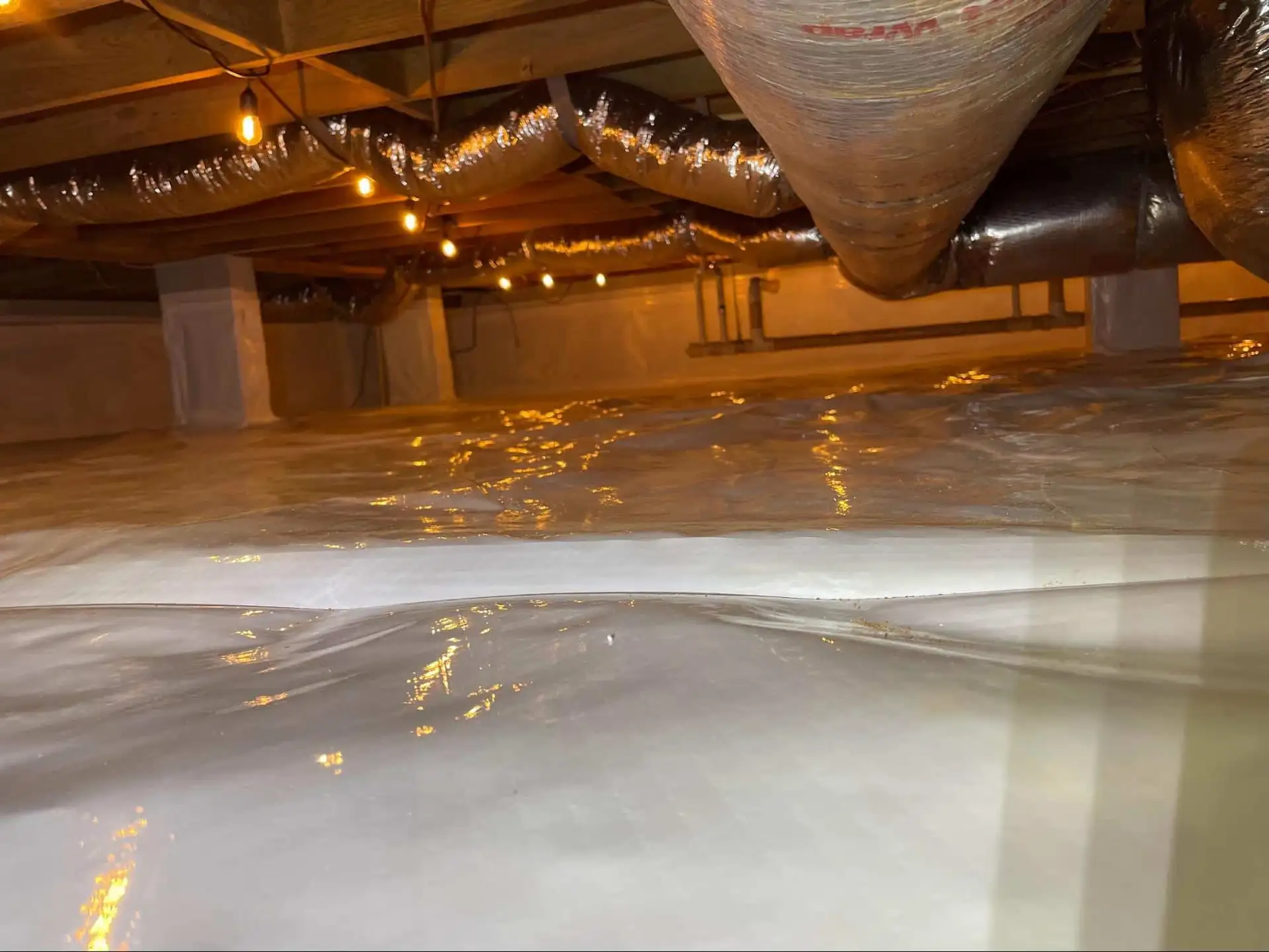
Condensation on Crawl Space Pipes Means Humidity Is Too High
Water dripping from pipes and ductwork beneath your home is a signal that crawl space relative humidity has exceeded the dew point, and the damage is building every day.
Not sure which fix applies to your situation? Browse our full range of solutions for crawl space encapsulation.
[ 01 ] Watch For These Signs
Signs that indicate foundation movement
Dripping or wet metal surfaces on pipes visible from crawl hatch
Visible water droplets on cold water pipes or metal drain lines indicate the crawl space humidity is at or above the dew point for extended periods.
Water staining or rust on pipe hangers and duct straps
Rust and water staining on metal hardware indicates chronic condensation, not an isolated event.
Deteriorated duct insulation wrapping
Duct insulation wrap that is wet, compressed, or falling apart has been exposed to sustained high humidity and condensation.
Wood staining directly beneath pipes
Drip staining on joist faces and subfloor sheathing directly below pipes indicates condensation has been dripping for an extended time.
Soil moisture evaporates into the crawl space and maintains humidity levels high enough to reach dew point on cold water supply lines and ductwork.
When outdoor summer air enters a cooler crawl space, it cools toward its dew point and deposits moisture on the coldest surfaces, pipes and metal ductwork.
Cold water pipes running through a humid crawl space are reliable condensation sites. The surface temperature of the pipe stays near the incoming water temperature, well below the dew point of humid crawl space air.
Cold air flowing through supply ducts creates a cold duct surface that condenses humid crawl space air, accelerating duct liner deterioration and mold growth inside ductwork.
[ 03 ] Recommended Solutions
How Ground Up fixes this
[ 04 ] Regional Context
Why Middle Tennessee foundations fail
Middle Tennessee's expansive clay soils shrink in dry summers and swell after rain, cycling significantly in volume. Davidson, Williamson, and Rutherford County homes built on this clay face ongoing movement pressure. Ground Up diagnoses and permanently stabilizes foundations across the region.
When I see pipes sweating in a crawl space, the humidity is usually in the mid-70s or higher. That is well above what wood and ductwork can tolerate long-term.
[ 05 ] Why Ground Up
The difference is in the diagnosis
Get several quotes and you'll see a wide range of prices. The gap isn't luck. It's whether the contractor finds the actual cause and stands behind the work.
- In-house certified crews: we never subcontract your repair
- Optional independent third-party engineer review on larger jobs
- Honest three-tier triage: we tell you what can wait, in writing
- Family owned from the same Shelbyville Highway address since 2009
[ 06 ] FAQ
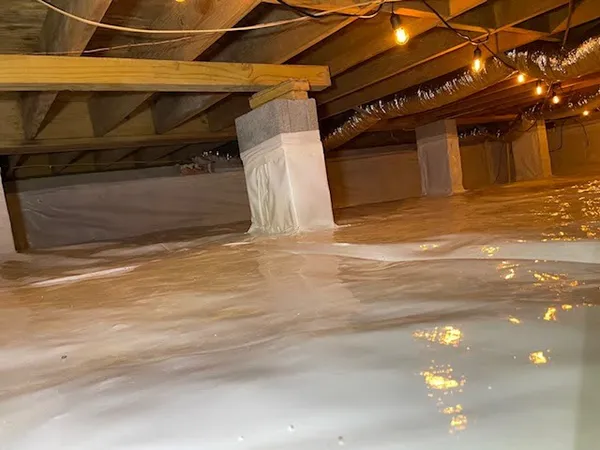
Condensation on Crawl Space Pipes and Ductwork questions
Copper and PVC water supply pipes are not typically damaged by condensation, but the wood framing that pipe hangers attach to can be damaged by sustained dripping. Metal hangers and straps corrode. Ductwork insulation deteriorates and can allow mold to grow inside supply ducts.
Pipe insulation raises the outer surface temperature, which reduces condensation on the pipe itself, but it does not address the high humidity in the crawl space. The humid air still reaches dew point on other surfaces including ductwork, joist faces, and the subfloor.

Free guide
Get the free crawl space guide
- Why Middle Tennessee crawl spaces get damp
- A checklist for your crawl space
- What encapsulation includes
Your guide is on its way.
Check your inbox for an email from Ground Up Foundation Repair. If it is not there in a few minutes, check your spam or promotions folder.
More Problem Signs
Other signs to watch for
Allergy Symptoms Worsening Indoors
Homes with open crawl spaces have a direct air pathway from below-grade soil and framing to living areas above. The stack effect, warm air rising through the home, continuously draws air in from the crawl space. If that space contains mold colonies, high humidity that supports dust mites, or soil-borne particulates, these contaminants travel with the air and end up in rooms where your family lives and breathes.
Cold Floors Above the Crawl Space
Floors above a vented crawl space are naturally cooler than those above a heated basement. But floors that are noticeably cold in winter, cold enough that walking barefoot is uncomfortable at normal thermostat settings, usually indicate that the insulation beneath the floor has been compromised by moisture.
Condensation on Crawl Space HVAC Vents and Ducts
Condensation forming on HVAC supply ducts, return air plenums, flex duct runs, and refrigerant lines in the crawl space is a precise physical indicator that crawl space relative humidity is at or above the dew point of the air inside the crawl space. When moisture-laden crawl space air contacts the cool surface of an air-conditioned supply duct, it releases its water content as liquid condensation on the duct exterior. In Middle Tennessee's summer climate, crawl space dew points can reach 70°F or higher in unencapsulated spaces, which means any duct surface carrying air-conditioned air at 55 to 60°F will produce visible condensation. This water drips onto the crawl space floor, saturating the soil and insulation, and provides direct moisture contact to wooden structural members above. Beyond the immediate moisture damage, wet duct insulation loses R-value, reducing the efficiency of HVAC equipment. Sustained condensation on supply ducts is also associated with mold growth on the duct exterior insulation itself, which introduces contaminated air directly into the HVAC distribution system.
High Humidity in the Crawl Space
Crawl space humidity is the most common and most consequential moisture problem beneath Middle Tennessee homes. The crawl space is particularly vulnerable because it sits directly over bare soil, a continuous source of moisture vapor, and typically receives unconditioned outside air through foundation vents. During Middle Tennessee's hot, humid summers, outside air entering the vents carries substantial moisture that condenses on cooler crawl space surfaces: floor joists, subfloor sheathing, insulation, and HVAC equipment. Combined with vapor rising from the soil floor, crawl space relative humidity can reach 80, 90, or even 100 percent for extended periods. At those levels, wood structural members absorb moisture until they reach the moisture content required for mold spore germination and wood-decay fungus growth. Elevated crawl space humidity also raises indoor humidity throughout the home, increases HVAC load, and creates conditions that attract wood-destroying insects. Professional encapsulation, sealing the crawl space from soil and outside air and installing a dehumidifier, is the proven solution for bringing crawl space humidity under control permanently.
Musty Odors Rising from an Unencapsulated Crawl Space
A musty smell that lingers in first-floor rooms, intensifies after rain, and doesn't respond to air fresheners is almost always crawl space air migrating into your living space. Through the stack effect, warm air rising and drawing crawl space air upward, an unencapsulated crawl space continuously delivers mold spores, mildew, and humid air into the rooms above it.
Pest Activity in Your Crawl Space
Crawl spaces without vapor barriers and sealing are ideal environments for pests. Bare soil stays moist, wood framing exposed to humidity softens over time, and open foundation vents and penetrations provide easy access. Termites, wood-boring beetles, rodents, and moisture-loving insects all find unencapsulated Middle Tennessee crawl spaces hospitable.
Seeing these signs in your home?
We'll find the cause and tell you honestly what it needs, free.