
Pier and Beam Foundation Repair for Older Middle Tennessee Homes
Sloping floors, bouncing joists, rotted beams, we fix the whole system, not just the symptom.
On cost: $2,000–$8,000 depending on scope.
Overview
Pier and Beam Foundation Repair
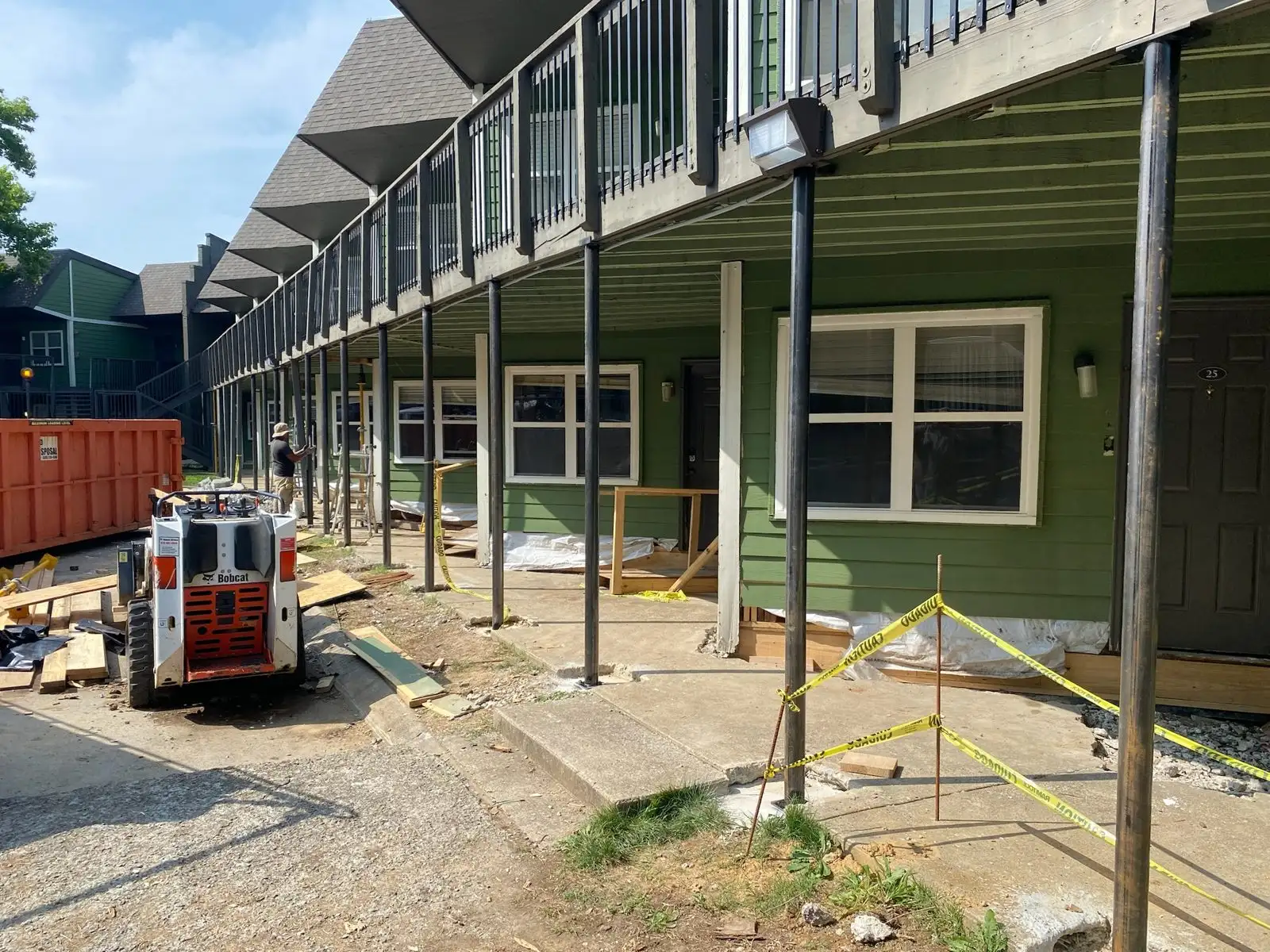
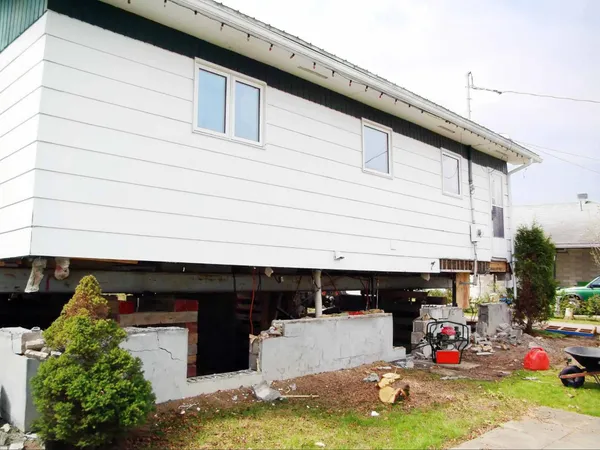
Many homes built before the 1970s across Murfreesboro, Nashville, Franklin, and the surrounding counties use pier-and-beam construction rather than a poured slab, a wood beam and joist system supported by masonry or concrete piers in a crawl space below the living area. Over decades, these systems develop problems: the original piers settle into clay soil, wood beams and sill plates absorb crawl space moisture and soften or rot, and shim stacks shift out of position. The result is floors that slope noticeably, feel spongy underfoot, or cause doors and windows to stick. Pier-and-beam repair targets the actual structural components, re-leveling the beam system, adding or replacing piers, and addressing the wood decay that makes the floor feel wrong.
Repair begins in the crawl space with a full inspection of every accessible pier, beam, and joist. We look for settled or cracked piers, beams that have deflected or lost their bearing, rotted sill plates or posts, and evidence of moisture damage. Depending on findings, repair may involve shimming or re-leveling the beam system at existing piers, installing new concrete or adjustable steel piers at points where the beam has lost support, sistering or replacing weakened joists and beams, and treating or replacing wood that has been compromised by fungal decay. Where the original piers have settled into the clay subsoil, new helical or push piers can be installed alongside them to provide a stable, deep-bearing support point. Crawl space encapsulation or vapor barrier installation is often recommended alongside structural repair to prevent moisture from causing the same problems again.
Wondering if this is the right fix for what you are seeing? Learn more about the warning signs: Uneven or Sloping Floors and Bouncing or Springy Floors and Rotted Wood in Crawl Space . Or browse the full Problem Signs library for foundation repair.
Installation Process
How we install pier and beam foundation repair
Crawl Space Inspection
Our crew accesses the crawl space and walks the full perimeter and interior, inspecting every pier, beam connection, and joist bay. We photograph problem areas, measure floor slopes from the crawl space side, and identify the cause of each deficiency, settlement, rot, original under-building, or a combination.
Wood Damage Assessment and Removal
Rotted or severely damaged beams, posts, and sill plates are identified and marked. Structurally compromised wood is removed after temporary shoring is installed to maintain support during the repair sequence.
New Pier Installation Where Needed
Where the existing pier system has settled or where new bearing points are required, we install concrete poured piers, precast cylinders, or helical micro piers depending on site access and load. New piers are located to maximize beam support.
Beam Re-leveling and Shimming
Using hydraulic jacks, we carefully re-level the beam system from the lowest point outward. Re-leveling is done in stages, aggressive all-at-once lifting can crack plaster ceilings or pop door frames. Steel shim plates are set between the pier caps and beam bearing points at the target elevation.
Wood Replacement and Sistering
Treated lumber replaces rotted beams, sill plates, and posts. Weakened joists are sistered with new dimensional lumber fastened alongside. All replacement wood in the crawl space is pressure-treated or species-selected for moisture resistance.
Moisture Control Recommendations
We walk the crawl space with you (or show photos) and identify drainage, ventilation, or encapsulation improvements that will protect the repaired structure. Many pier-and-beam failures trace to chronically wet crawl spaces, fixing the wood without addressing the water source shortens the life of the repair.
Pier-and-beam homes are some of the most repairable foundations we work on, everything is accessible and the individual components can be addressed directly. The mistake is waiting. Once a beam is actively rotting in a wet crawl space, the damage compounds fast. We'd rather catch it early and do a straightforward re-level than come back two years later to replace the entire center beam.
Why Ground Up
The difference is in the diagnosis
Get several quotes and you'll see a wide range of prices. The gap isn't luck. It's whether the contractor finds the actual cause and stands behind the work.
- In-house certified crews: we never subcontract your repair
- Optional independent third-party engineer review on larger jobs
- Honest three-tier triage: we tell you what can wait, in writing
- Family owned from the same Shelbyville Highway address since 2009
FAQ
Pier and Beam Foundation Repair questions
If your home was built before the mid-1970s in Middle Tennessee and you have a crawl space underneath, accessible through a hatch in the floor or an exterior vent opening, it's almost certainly pier-and-beam construction. Homes with full basements or homes built on slabs don't have this system.
In most cases, yes. The structural work is done from inside the crawl space, we access the joists and beams from below. Finished flooring above is typically not disturbed unless a joist or subfloor panel needs to be replaced from above due to severe damage.
Sloping toward the center is a classic sign that the interior beam support, the girder or center beam, has settled or lost its bearing. The perimeter sill plates may still be in position while the middle of the house sags. This is one of the most common pier-and-beam repairs we do in older Murfreesboro and Nashville homes.
Middle Tennessee's clay soils expand when wet and compress when dry, causing cyclical movement under pier footings that were often undersized by today's standards. Crawl spaces that hold moisture soften the soil directly under pier bases over time. Some original piers were simply set on grade without footings, making settlement inevitable.
We strongly recommend it. A vented, dirt-floor crawl space continuously introduces moisture to the wood structure. Installing a vapor barrier and improving drainage while we're already in the crawl space is far less expensive than doing it as a separate project later, and it directly protects the structural repairs we've made.

Free guide
Get the free foundation settlement guide
- A room by room checklist of warning signs
- How Middle Tennessee red clay can move a house
- What happens at a free inspection
Your guide is on its way.
Check your inbox for an email from Ground Up Foundation Repair. If it is not there in a few minutes, check your spam or promotions folder.
More Solutions
Other solutions we offer
Carbon Fiber Strap Installation
Carbon fiber straps are high-tensile-strength composite straps bonded vertically to the face of a bowing basement wall to prevent further inward deflection. The straps are made from the same carbon fiber used in aerospace and structural engineering applications, rated at tensile strengths far exceeding steel by weight. When epoxy-bonded to a properly prepared wall surface from floor plate to sill plate, carbon fiber straps transfer the lateral soil pressure load into the top and bottom bearing points of the wall system rather than allowing the wall face to deflect. Carbon fiber reinforcement is best suited for walls that have deflected less than 2 inches and have not experienced significant cracking through the wall section. It is a hold-in-place system, not a restoration system, it prevents further movement but does not push the wall back toward its original position.
Deep Foundation Systems
Deep foundation systems transfer structural loads from the ground surface to soil or rock at a depth where bearing capacity is reliable and unaffected by surface conditions. In Middle Tennessee, the primary driver for deep foundation work is the region's expansive clay geology: the top several feet of soil shrink in dry weather and swell in wet weather, making them unreliable bearing material for foundations that must remain stable year-round. Deep foundation elements including helical piers, push piers, and micropiles penetrate through this active zone and reach bedrock, dense gravels, or competent clay at depth where moisture variation has minimal effect. These systems are used for both new construction on difficult sites and for repair of existing foundations that have settled due to inadequate bearing in the near-surface soils. Ground Up designs and installs deep foundation systems for residential and light commercial applications throughout the Middle Tennessee region.
Epoxy Crack Injection
Epoxy crack injection is a structural repair method for concrete foundation walls, slabs, and beams that have developed cracks due to settlement, curing shrinkage, hydrostatic pressure, the outward force of water pushing against a foundation wall from saturated soil, or thermal movement. Low-viscosity epoxy resin is injected under low pressure through surface ports installed across the crack at regular intervals, filling the crack from its deepest point outward. As the epoxy cures, it bonds the two concrete faces together with tensile strength greater than the surrounding concrete. The result is a monolithic repair that restores the structural continuity of the cracked section. Epoxy injection is appropriate for dry or dormant cracks, cracks that are not actively wet and not in active movement. For cracks with active water seeping through them, polyurethane foam injection (which expands and seals in the presence of moisture) is often the appropriate first step, followed by epoxy once the wall has been dried out.
Expansion Joint Installation
Concrete is a rigid material that nonetheless moves with temperature, moisture, and loading. In Middle Tennessee's climate, with summer temperatures regularly exceeding 95 degrees and occasional hard freezes in winter, the thermal expansion and contraction of concrete slabs, driveways, sidewalks, and foundation walls is significant. When concrete cannot move freely, it builds up internal stress that is released suddenly as a crack. Expansion joints and control joints are planned gaps in the concrete that give it a place to move without cracking in the field of the slab or through a structural element. Ground Up installs expansion joints during new concrete work and cuts or installs retrofit joints in existing concrete to prevent crack propagation and protect adjacent structural elements from impact loading caused by slab movement.
Foundation Underpinning and Stabilization
Foundation underpinning, also called foundation stabilization, is the process of extending the effective depth of a foundation's bearing capacity by installing structural support elements that bypass inadequate near-surface soils and transfer load to competent material at depth. In Middle Tennessee, where expansive clay soils lose and regain bearing capacity with every moisture cycle, underpinning is the most durable long-term foundation repair strategy available. Ground Up installs two primary types of underpinning: helical pier underpinning, which uses rotating steel shafts with helical plates to reach bearing at a torque-confirmed depth; and push pier underpinning, which drives steel pipe sections hydraulically using the building's weight as a reaction force, meaning the home's own weight gives the hydraulic ram something to push against, until the pier reaches refusal in competent soil or rock. Both systems transfer the structural load from the clay soils that are causing settlement to deep bearing material that is unaffected by surface moisture variation, stopping settlement and in most cases allowing partial to full elevation recovery.
Concrete Piers for Foundation Support
Concrete piers are cast-in-place or pre-cast reinforced concrete elements that extend from the foundation footing down through unstable near-surface soils to a bearing stratum with adequate capacity. They are one of the most durable underpinning approaches available for residential and commercial foundations in Middle Tennessee, providing a permanent structural connection between the foundation and the stable soil or rock below the depth at which seasonal and moisture-driven soil movement occurs.
Found a problem? Get a straight answer
Free inspection, written estimate, honest triage. No pressure.