
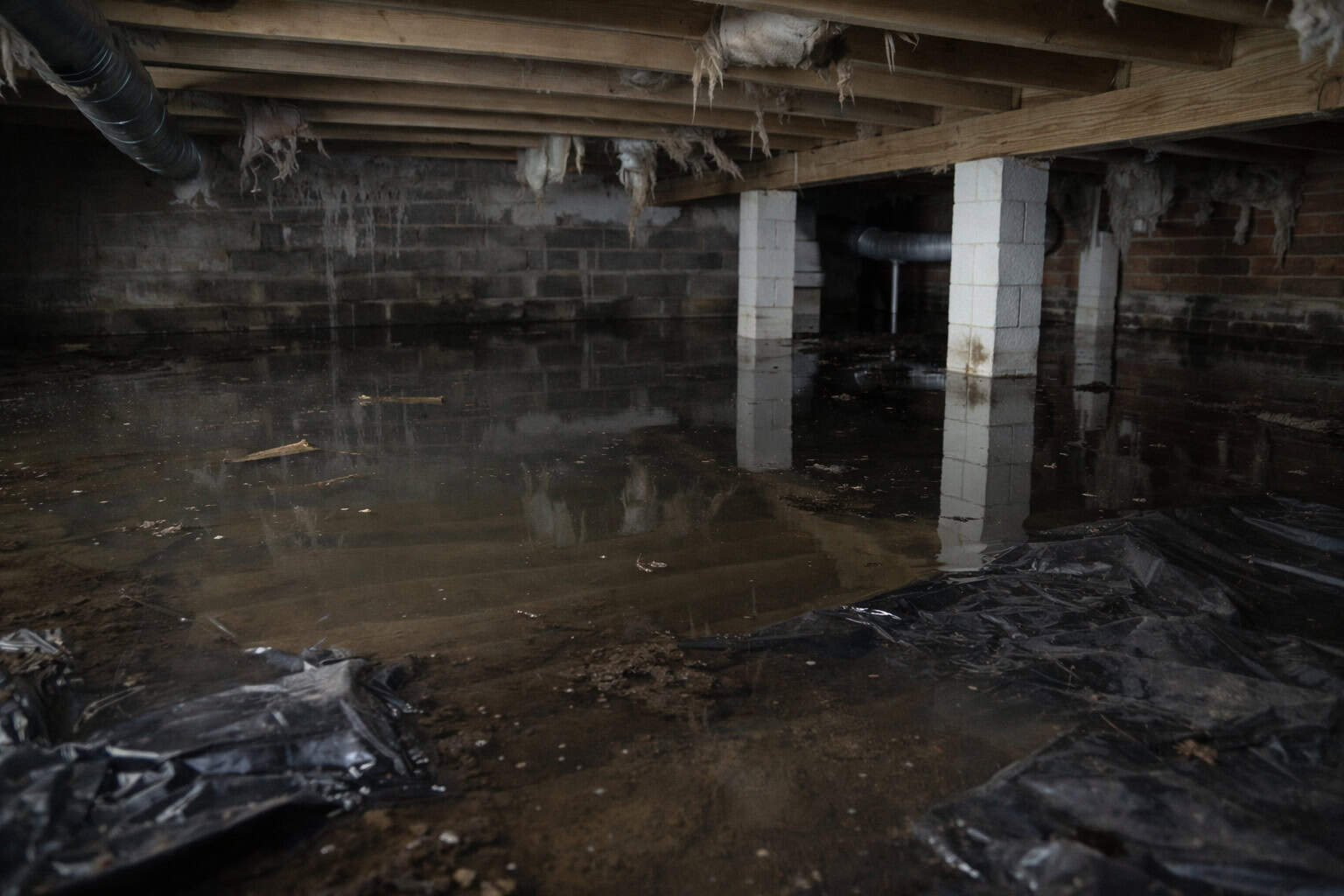
Crawl Space Mold Remediation Before Encapsulation
Active mold on crawl space framing should be treated before sealing the space. Encapsulating over active mold without treatment allows it to continue growing in a sealed environment.
On cost: Mold remediation cost depends on the extent of affected area and mold type. Contact us for a crawl space assessment and remediation estimate.
Overview
Crawl Space Mold Remediation
Crawl space mold remediation treats existing mold colonies on floor joists, subfloor sheathing, and rim board before encapsulation is completed. Sealing a crawl space with active mold without treatment can allow mold to continue producing spores in a sealed environment, a different problem than the original one. Proper remediation combined with vapor barrier installation and dehumidification addresses both the existing mold and the moisture conditions that allowed it to grow.
Affected wood surfaces are treated with EPA-registered antimicrobial solution applied by brush, roller, or spray, depending on the extent and location of mold growth. Heavily deteriorated wood that has significant structural compromise from fungal decay may require encapsulation of the damaged wood or outright replacement. After treatment, the space is allowed to dry before vapor barrier installation proceeds. Dehumidification is then added to maintain the low humidity conditions that prevent mold from returning.
Wondering if this is the right fix for what you are seeing? Learn more about the warning signs: Allergy Symptoms Worsening Indoors and Cold Floors Above the Crawl Space . Or browse the full Problem Signs library for crawl space encapsulation.
Installation Process
How we install crawl space mold remediation
Mold Extent Assessment
We assess the extent and type of mold growth, identify moisture sources that enabled it, and determine which areas require treatment versus replacement.
Wet Insulation and Debris Removal
Any insulation, debris, or organic material that is mold-colonized is removed from the crawl space before surface treatment begins.
Antimicrobial Treatment Application
Affected wood surfaces are treated with EPA-registered antimicrobial solution appropriate for the wood substrate and mold type present.
Drying Period Before Sealing
The treated crawl space is allowed to dry before vapor barrier installation, ensuring treatment is complete before moisture control work begins.
Vapor Barrier and Dehumidifier Installation
After treatment and drying, vapor barrier and dehumidifier installation proceeds to eliminate the moisture conditions that enabled mold growth.
We treat the mold, then we fix why the mold was there. Skipping either step means you are back in the same situation in six to twelve months.
Why Ground Up
The difference is in the diagnosis
Get several quotes and you'll see a wide range of prices. The gap isn't luck. It's whether the contractor finds the actual cause and stands behind the work.
- In-house certified crews: we never subcontract your repair
- Optional independent third-party engineer review on larger jobs
- Honest three-tier triage: we tell you what can wait, in writing
- Family owned from the same Shelbyville Highway address since 2009
FAQ
Crawl Space Mold Remediation questions
Mold in the crawl space is not truly contained, spores and volatile organic compounds from mold colonies migrate into living areas through the stack effect and HVAC pathways. Family members with allergies, asthma, or immune vulnerabilities are especially susceptible, but chronic low-level mold exposure is a concern for all occupants.
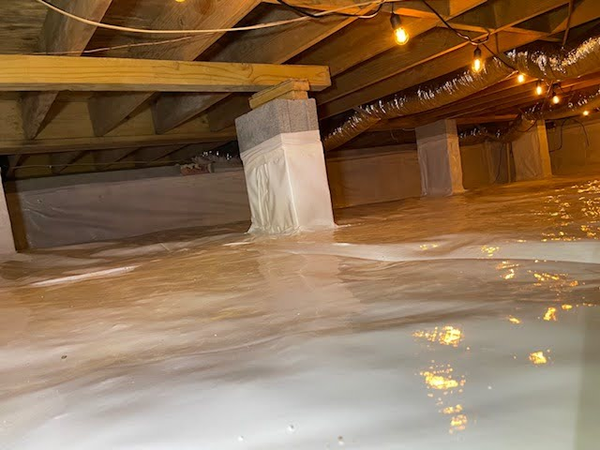
Mold returns when moisture conditions allow it, which is why treatment alone without addressing the moisture source produces temporary results. Treatment combined with vapor barrier installation and dehumidification eliminates the conditions that support mold growth. In a properly encapsulated crawl space maintained below 55% relative humidity, mold cannot establish.
More Solutions
Other solutions we offer
Crawl Space Dehumidifier Installation
Ground moisture blocked by a vapor barrier handles most of the moisture load in a crawl space, but airborne humidity from any remaining air exchange still needs to be managed. A crawl space-rated dehumidifier runs continuously at low power, maintaining relative humidity at or below 55% throughout the year. Standard portable dehumidifiers are not designed for crawl space conditions, temperature ranges, or continuous drainage, we install units built specifically for below-grade crawl space environments.
Crawl Space Sealing
Crawl space sealing encompasses all the steps that complete a fully encapsulated crawl space: sealing foundation vents, air-sealing the rim joist (the wood framing where the floor system meets the foundation wall), sealing all pipe and wire penetrations, and weather-stripping or replacing the crawl space access door. Each unsealed location is a path for humid air, pests, or conditioned-air loss.
Downspout Extensions for Crawl Space Protection
Downspout extensions are one of the most cost-effective steps in crawl space moisture management. When gutters discharge at the foundation through a short downspout, they concentrate the entire roof's drainage directly against the stem wall. Over the course of a Tennessee rainy season, this can mean hundreds of thousands of gallons discharged within feet of the crawl space foundation. This sustained water concentration saturates the soil adjacent to the foundation, raises the local water table, and creates sustained hydrostatic pressure, the steady force that saturated soil places against the stem wall. Extending the downspout discharge to 6 to 10 feet from the foundation significantly reduces this load. For crawl spaces with existing moisture problems, downspout extensions are almost always part of the full moisture management solution alongside drainage systems and encapsulation.
Crawl Space Drainage Systems
A vapor barrier and dehumidifier address moisture vapor rising from the soil and airborne humidity. But when a crawl space has active water intrusion, water physically entering through cracks in foundation walls, through the wall-floor joint, or through low points in the floor, drainage must be added to the encapsulation system. A crawl space drainage system intercepts that intruding water at the perimeter, channels it to a sump basin, and removes it automatically before it can pool on the vapor barrier or create a high-humidity environment that challenges the dehumidifier.
Crawl Space Sump Pumps
A crawl space sump pump is a submersible pump installed in a basin at the lowest point of the crawl space floor. When water accumulates in the basin, routed there by a perimeter drainage channel or from direct accumulation in the low area, the pump activates automatically and discharges water through a pipe to a safe discharge point outside the foundation. In Middle Tennessee, where heavy rain events and seasonal water table elevation regularly affect crawl spaces, a properly sized sump pump with battery backup is a fundamental component of any crawl space with active water entry. Before encapsulation can be installed in a crawl space with water intrusion, a sump pump and drainage system must be in place and the space must be confirmed dry.
Surface Drains for Crawl Space Protection
Surface drains are an exterior drainage solution that captures rainwater and surface runoff at specific collection points on the property and directs it away from the home through underground piping. Unlike interior crawl space drainage that manages water after it has entered the structure, surface drains address water before it reaches the foundation. In Middle Tennessee, where intense summer storms and clay soils that resist infiltration create rapid surface runoff, surface drains at strategic yard locations, along driveways, and at the foundation perimeter significantly reduce the water volume that migrates toward the crawl space. When paired with a complete encapsulation system, surface drains reduce the load on interior drainage and help maintain the dry environment that encapsulation requires.
Found a problem? Get a straight answer
Free inspection, written estimate, honest triage. No pressure.