
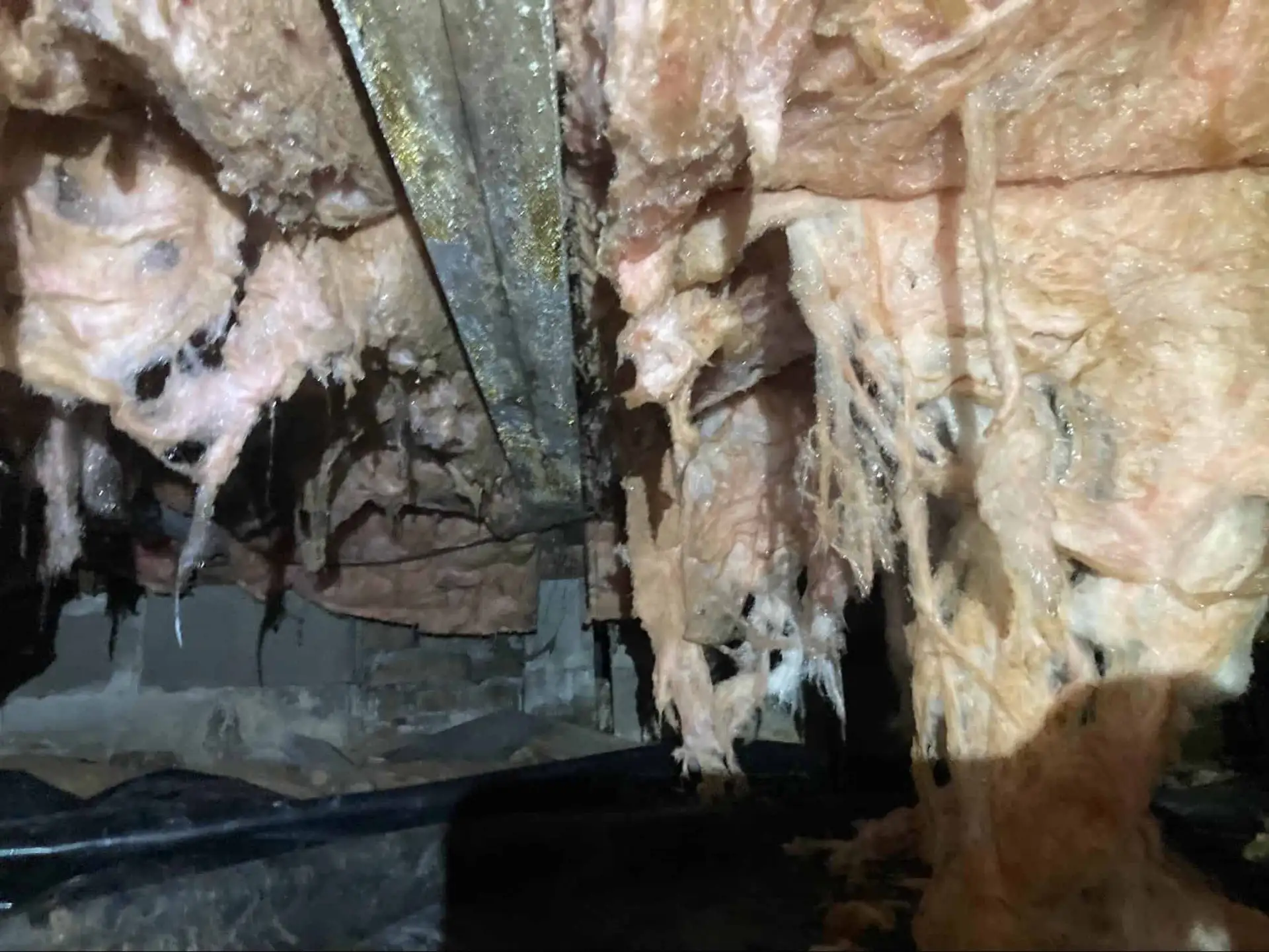
Pest Damage to Crawl Space Framing Is Often Invisible Until It Is Severe
In Middle Tennessee, termites and other wood-destroying organisms work silently inside floor joists and beams, compromising structural integrity long before you see any sign from above.
Not sure which fix applies to your situation? Browse our full range of solutions for framing repair.
[ 01 ] Watch For These Signs
Warning Signs of Pest Damage to Your Crawl Space Framing
Mud Tubes on Foundation Walls or Piers
Subterranean termites construct pencil-sized mud tubes along foundation walls, piers, and framing members to protect their foraging trails from exposure. Finding these tubes in your crawl space is a definitive sign of an active or recent termite colony. They should be reported to a licensed pest control professional and to your structural repair contractor immediately.
Hollow-Sounding Wood When Tapped
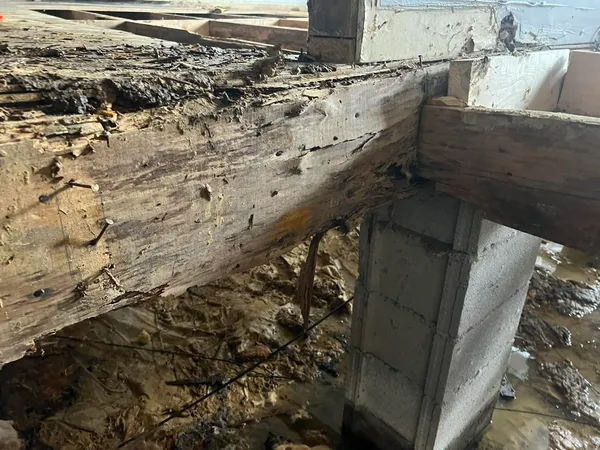
Tapping on a floor joist with a hard object and hearing a hollow, papery sound rather than a solid thud indicates that the interior has been consumed or excavated by pests. This test is a standard part of a structural framing inspection and can reveal damage that is not visible on the surface.
Fine Powder or Frass Near Framing Members
Wood-boring beetles and carpenter ants both leave behind fine wood powder or frass near their entry holes. Termites leave pellet-shaped frass. Finding either of these materials on or below framing members indicates active or recent pest activity.
Unexplained Soft Spots or Sagging Floors
When floors soften or sag in an area that has no history of water exposure or obvious damage, pest infestation should be included in the differential diagnosis. A crawl space inspection to assess framing condition and look for pest evidence is the appropriate next step.
Subterranean termites are the most destructive wood pest in Tennessee and across the Southeast. They build mud tubes from the soil to wood framing, entering from beneath the foundation and consuming cellulose from the inside out. A mature colony can cause significant structural damage within a year or two and can go completely undetected without regular inspections.
Carpenter ants do not consume wood the way termites do, but they excavate galleries inside moist or rotting lumber to establish nesting chambers. Their preferred habitat is wood that has already been softened by moisture, making them a secondary pest that compounds existing moisture damage. Their presence often signals that the framing has already been compromised.
Several species of wood-boring beetles, including old house borers, lyctid powder post beetles, and bostrichid beetles, lay eggs in wood framing. The larvae then tunnel through the wood for months or years before emerging as adults, leaving a network of galleries that dramatically weaken structural members.
Damp crawl spaces are preferred habitat for most wood-destroying pests. Subterranean termites require contact with moist soil, carpenter ants prefer already-softened wood, and beetles favor high-moisture environments. Controlling moisture through vapor barriers and dehumidification is a critical part of pest prevention as well as framing protection.
[ 03 ] Recommended Solutions
How Ground Up fixes this
[ 04 ] Regional Context
Why Middle Tennessee foundations fail
Middle Tennessee's expansive clay soils shrink in dry summers and swell after rain, cycling significantly in volume. Davidson, Williamson, and Rutherford County homes built on this clay face ongoing movement pressure. Ground Up diagnoses and permanently stabilizes foundations across the region.
Pest damage and moisture damage almost always come together in our crawl spaces. The termites and carpenter ants are drawn to the damp, and the damp is what made the wood soft enough for them to get in easily. When we find pest damage, we make sure the moisture problem is solved at the same time as the structural repair, because a dry crawl space is a hostile environment for the pests that cause this kind of damage.
[ 05 ] Why Ground Up
The difference is in the diagnosis
Get several quotes and you'll see a wide range of prices. The gap isn't luck. It's whether the contractor finds the actual cause and stands behind the work.
- In-house certified crews: we never subcontract your repair
- Optional independent third-party engineer review on larger jobs
- Honest three-tier triage: we tell you what can wait, in writing
- Family owned from the same Shelbyville Highway address since 2009
[ 06 ] FAQ
Pest Damage to Wood Framing questions
Both, in the right order. The pest problem must be addressed by a licensed pest control professional before structural repairs are made, otherwise the new or reinforced framing is at risk of re-infestation. Ground Up coordinates with pest control partners and performs the structural repair, including sistering damaged joists and replacing compromised beams, once the active infestation has been treated.
Subterranean termites almost never appear in the open. The most reliable detection methods are finding mud tubes on foundation surfaces, identifying damaged wood using a probe or hollow-tap test, or scheduling a licensed termite inspection. We recommend annual termite inspections for all homes in Middle Tennessee given the region's high termite pressure.
It depends on the extent and location of the damage. Joists that retain a significant portion of their cross-section and are not located in high-load areas can often be reinforced by sistering a new joist alongside the damaged one. Joists that have been heavily hollowed or compromised along their full length typically need full replacement. A professional assessment determines the right approach for each member.
Standard homeowners insurance policies in Tennessee almost universally exclude termite and pest damage. Coverage for this type of damage typically requires a separate termite bond or warranty purchased from a pest control company. We recommend reviewing your existing coverage and consulting your insurer about adding protection.
The most effective long-term prevention strategy combines regular pest inspections and treatment with comprehensive moisture management. A sealed crawl space with a heavy-duty vapor barrier, active dehumidification, and encapsulation dramatically reduces the habitat appeal for subterranean termites and carpenter ants. Ground Up can integrate these moisture control measures into the framing repair project.
More Problem Signs
Other signs to watch for
Broken or Cracked Floor Joists in the Crawl Space
Floor joists are the horizontal framing members that span between the foundation walls or beams and support the subfloor, and everything above it. Broken or cracked joists occur when a single joist or multiple joists fail due to overloading, moisture-induced decay, insect damage, or improper notching and boring during past repairs. The result is a floor system that flexes, sags, or bounces in the affected area, and a structural problem that grows worse with continued loading.
Mold on Crawl Space Framing
Mold on crawl space framing is frequently discussed as a health issue, and it absolutely is one. But in the context of structural framing, mold is also one of the earliest and most reliable indicators that moisture conditions are severe enough to eventually cause wood rot. The same high humidity that allows mold to colonize the surface of floor joists and beams will, over time, allow rot fungi to penetrate and degrade the structural core of the wood. Catching and correcting mold on framing early is an opportunity to prevent the costlier structural repairs that follow if conditions persist.
Rotted Deck Joists
Deck joists are exposed to weather in a way that interior floor joists are not. Rain, snow melt, condensation, and seasonal moisture cycling make deck framing the part of any home most vulnerable to rot. In Middle Tennessee's humid subtropical climate, untreated deck wood can begin to show meaningful rot within a few years if the deck design does not allow for adequate drainage and drying. Rotted deck joists are particularly dangerous because the damage is often invisible from above, the decking boards look fine while the structure beneath them has lost significant load capacity.
Rotted Floor Joists
Wood rot is caused by fungi that consume the cellulose and lignin that give wood its strength. Once rot establishes in a floor joist, it is not reversible, the destroyed wood fibers cannot regenerate. A joist in early-stage rot loses stiffness; in advanced rot, it loses load capacity. Middle Tennessee crawl spaces are particularly prone to wood rot because of the region's high annual rainfall, clay soils that hold moisture, and seasonal temperature swings that drive condensation on framing members. Without moisture control, rot in one joist spreads to adjacent framing, sill plates, and subfloor sheathing.
Sagging Floor Joists
Floor joists are designed to span horizontally between supports and resist the vertical loads placed on them. When a joist sags, it has deflected beyond acceptable limits, meaning the wood is bending more than it should under normal household loads. Sagging joists produce floors that feel bouncy or soft, tile finishes that crack, and in serious cases, floors that visibly slope toward a low point. In Middle Tennessee crawl space homes, joist sagging is driven by moisture deterioration, inadequate mid-span support, or original framing that was undersized for the span.
Soft or Weak Floors
Soft, spongy, bouncy, or visibly sagging floors are a clear signal that the structural framing beneath your home is compromised. Floor joists and support beams in crawl spaces are particularly vulnerable in Middle Tennessee, where high annual rainfall, clay soils, and humid summers create persistently damp conditions. When wood framing absorbs moisture over months or years, it softens, loses load-bearing capacity, and eventually rots, leaving your floors with no solid support.
Seeing these signs in your home?
We'll find the cause and tell you honestly what it needs, free.